
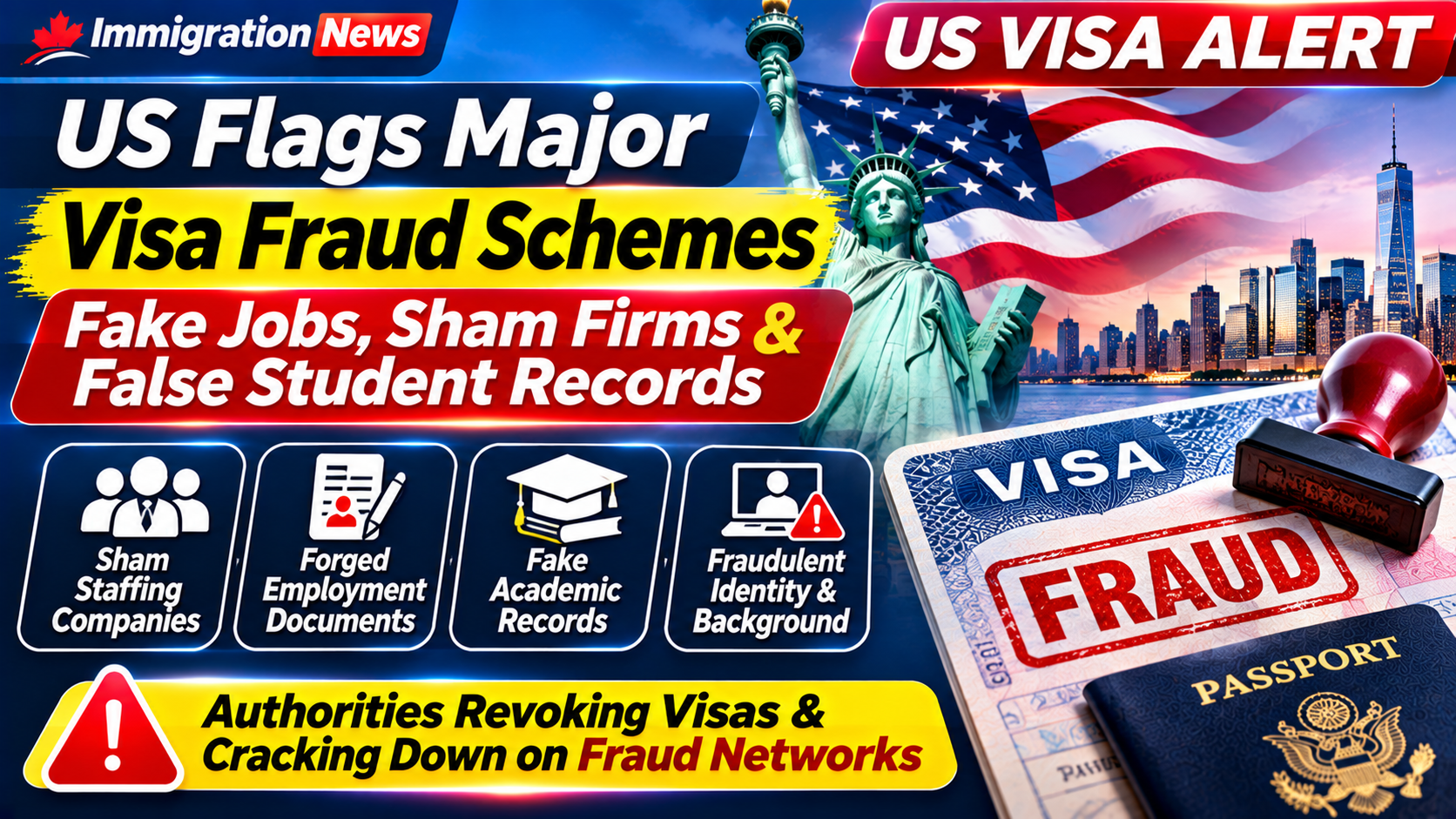
The US State Department has warned international students, foreign workers and prospective immigrants about growing US visa fraud schemes involving sham staffing companies, forged employment documents and fabricated academic records.
In a series of statements published on its official X account on November 10, 2026, the department described multiple fraud networks operating across different international jurisdictions. These schemes allegedly involved fake recruitment agencies, false student enrolment information, forged criminal records and counterfeit nationality documents designed to bypass US immigration requirements.
The department said authorities were identifying fraudulent networks, strengthening screening procedures and taking enforcement action, including visa revocations and criminal investigations.
The latest warning is particularly relevant to Indian students and professionals considering US employment-based, student and exchange visa pathways. It highlights the risks of relying on unverified recruitment agents, fabricated job offers or academic documents that do not accurately represent an applicant’s background.
US Visa Fraud Schemes: What Has the State Department Revealed?
The State Department identified several types of US visa fraud schemes involving different visa categories and recruitment networks.
The cases highlighted by the department included:
- Sham staffing companies recruiting foreign workers through unregistered intermediaries.
- Forged employment agreements and placements in unauthorised jobs.
- Fabricated academic transcripts and false student enrolment records.
- Fraudulent court, police and criminal records submitted by immigrant visa applicants.
- Counterfeit nationality documents used to misrepresent applicants’ identities.
According to the department, these networks attempted to exploit weaknesses in recruitment, documentation and identity verification processes.
Authorities said they had responded by strengthening consular screening, identifying suspicious networks, rejecting applications and working with local law enforcement agencies.
The department also encouraged people to report suspected immigration fraud through its online reporting portal.
Fake Staffing Companies Used to Recruit Foreign Workers
One of the cases involved an unnamed Caribbean country, where individuals allegedly operated under the appearance of legitimate staffing companies.
According to the State Department, these organisations used unregistered intermediaries to recruit foreign workers for employment opportunities in the United States.
The alleged activities included:
- Charging workers excessive and unlawful recruitment fees.
- Using falsified employment agreements.
- Placing foreign workers in jobs that had not been approved.
- Misrepresenting the actual employment arrangements.
The department said the scheme contributed to regional visa overstay rates increasing more than fourfold.
A US embassy identified dozens of suspicious petitions involving hundreds of workers and initiated joint criminal investigations.
This case highlights the risks associated with recruitment companies that promise US employment without providing verifiable information about the employer, job position or immigration process.
For applicants, a genuine employment opportunity and accurate supporting documentation are essential. A recruitment agency’s claims should never be treated as proof that a job or visa arrangement is legitimate.
Fake Academic Records Used to Secure US Student and Exchange Visas
Another case involved a recruitment network allegedly using fabricated academic transcripts and false student enrolment information to secure placements in US educational and cultural exchange programmes.
The network reportedly helped candidates who did not meet the relevant eligibility requirements obtain placements by misrepresenting their academic backgrounds and enrolment status.
Following the discovery, consular authorities strengthened screening procedures.
According to the State Department, the investigation and additional screening resulted in:
- 30 additional fraudulent networks identified.
- 250 visa applications rejected.
The case demonstrates the importance of authentic academic records when applying for US student and exchange programmes.
Applicants should ensure that their educational qualifications, transcripts, admission records and enrolment details are genuine and can be verified by the relevant institutions.
Using fabricated academic documents or knowingly submitting false information can lead to visa refusal and potentially further immigration consequences.
Fraudulent Police and Court Records Led to Visa Refusals and Arrests
The State Department also described a case involving immigrant visa applicants in an unnamed South American territory.
According to the department, some applicants allegedly submitted fraudulent court, police and criminal records to conceal information about their backgrounds.
The US embassy responded by introducing digital document verification and working with local law enforcement authorities.
The investigation reportedly resulted in:
- Dozens of visa refusals.
- More than 15 arrests.
- Stronger verification procedures for supporting documents.
This case illustrates that immigration authorities may verify documents through official records and cooperation with local agencies.
Applicants should disclose relevant information accurately and provide genuine police certificates, court records and other documents requested during the immigration process.
Counterfeit Nationality Documents Used in Another Fraud Network
In a separate investigation, US authorities uncovered a network that allegedly helped East African nationals misrepresent their nationalities.
The network reportedly used compromised intermediaries and counterfeit documents to help individuals claim a different nationality when dealing with US consular authorities.
The department said some individuals involved in the network presented potential security concerns.
US embassy officials worked with local authorities to dismantle the alleged corruption network and strengthen identity checks.
This case adds another dimension to the US visa fraud schemes identified by the department: fraudulent identity documents can undermine the verification of an applicant’s nationality and personal history.
US Government Encourages People to Report Immigration Fraud
The State Department has urged members of the public to report suspected immigration fraud through its online reporting portal.
The reporting portal was launched on September 23, 2026, and is intended to help authorities identify fraudulent activities and suspicious immigration arrangements.
The department has identified several types of suspected fraud, including:
- Fabricated international travel histories.
- Fraudulent marriages arranged through brokers.
- Shell companies created to support false immigration applications.
- Fictitious employment offers.
- Birth tourism arrangements involving misrepresentation.
The department has also warned that enforcement action may include visa revocations and referrals to criminal law enforcement agencies.
Anyone who suspects a recruitment agency, immigration intermediary or other organisation is involved in fraudulent activity can consult the official US Department of State reporting portal.
More Than 300,000 US Visas Revoked Under the Trump Administration
The latest warning comes amid a wider increase in US visa enforcement activity.
The State Department has separately reported that more than 300,000 visas have been revoked under Secretary of State Marco Rubio’s direction during the Trump administration.
The department has cited several reasons for visa revocations, including:
- Criminal activity.
- Public safety concerns.
- Immigration violations.
- Fraud and misrepresentation.
- Other information indicating that an individual was no longer eligible for a visa.
The figure covers a wider range of enforcement cases and should not be interpreted as the number of visas revoked specifically because of the fraud networks described in the November 10 warning.
The department has emphasised that visa holders must comply with US immigration laws and the conditions attached to their visas.
What Indian Students and Professionals Should Know
The latest US visa fraud schemes warning is particularly relevant to Indian nationals pursuing education, employment and other immigration opportunities in the United States.
Students and professionals often rely on universities, recruitment companies, staffing agencies and immigration consultants when preparing applications.
However, applicants remain responsible for ensuring that the information and documents submitted in their names are accurate.
Indian applicants should take the following precautions:
- Verify recruitment agencies: Check the company’s registration, business details and reputation before paying recruitment fees.
- Confirm the employer: Independently verify the US employer, job position and employment arrangement.
- Check university admission: Confirm admission and enrolment information directly with the educational institution.
- Use genuine academic records: Never submit altered transcripts, certificates or fabricated enrolment details.
- Avoid false job offers: Do not rely on employment agreements that cannot be independently verified.
- Disclose information accurately: Provide truthful details about previous travel, immigration history, identity and legal records.
- Keep payment records: Maintain receipts, written agreements and correspondence with recruitment agencies or consultants.
Applicants should also be cautious of intermediaries who guarantee visa approval, promise shortcuts or suggest that false documents can help overcome eligibility requirements.
A legitimate immigration process does not require applicants to conceal their backgrounds or misrepresent their qualifications.
What Happens If an Applicant Submits False Documents?
Submitting forged documents or deliberately providing misleading information can have serious consequences.
Depending on the circumstances and applicable US immigration laws, consequences may include:
- Visa application refusal.
- Visa revocation.
- Findings of fraud or material misrepresentation.
- Ineligibility for certain future immigration benefits.
- Criminal investigation or prosecution where applicable.
The consequences depend on the nature of the false information, the applicant’s involvement and the relevant legal provisions.
Importantly, applicants should distinguish between an honest mistake and deliberate misrepresentation. Anyone who discovers an error in an application should seek appropriate professional advice rather than attempting to conceal or further alter the information.
FAQs : US Visa Fraud Schemes
What US Visa Fraud Schemes has the US State Department identified?
The department has highlighted sham staffing companies, forged employment documents, fake academic records, fraudulent criminal records and counterfeit nationality documents.
How many fraudulent networks were identified in the student visa-related case?
The State Department said strengthened screening helped identify 30 additional fraudulent networks and resulted in 250 visa application rejections.
How many arrests were reported in the South American document fraud case?
The investigation reportedly resulted in more than 15 arrests, along with dozens of visa refusals.
Have more than 300,000 US visas been revoked?
Yes. The State Department has reported more than 300,000 visa revocations under the Trump administration. These revocations involved several categories of cases, including criminal activity, public safety concerns, immigration violations and fraud.
Are Indian students and professionals affected by the warning?
The warning is relevant to Indian applicants because it concerns employment-based, student and exchange visa pathways. However, the department’s reported cases do not establish that Indian applicants were specifically involved in the identified networks.
How can applicants report suspected US visa fraud?
People can report suspected fraud through the official US Department of State visa fraud reporting portal at travel.state.gov/reportvisafraud.
Conclusion On US Visa Fraud Schemes
The latest warning about US visa fraud schemes highlights the growing importance of document verification, genuine employment arrangements and accurate academic records in the US immigration process.
The cases described by the State Department involve alleged recruitment fraud, fabricated student information, false criminal records and counterfeit identity documents. Authorities have reported visa refusals, arrests, investigations and stronger screening measures in response.
For Indian students and professionals, the key lesson is to verify employers, recruitment agencies and educational institutions before proceeding with an application.
Submitting genuine documents and providing accurate information remain essential. Applicants should avoid intermediaries promising guaranteed visas or shortcuts through fabricated records, as fraudulent practices can put their US immigration plans at serious risk.
Source : Economic Times
Read About : Migrant Caravan Visa Restrictions 2026 : What The US State Department Announced

One thought on “US Visa Fraud Schemes 2026: State Department Warns of Fake Staffing Firms and Student Records”