
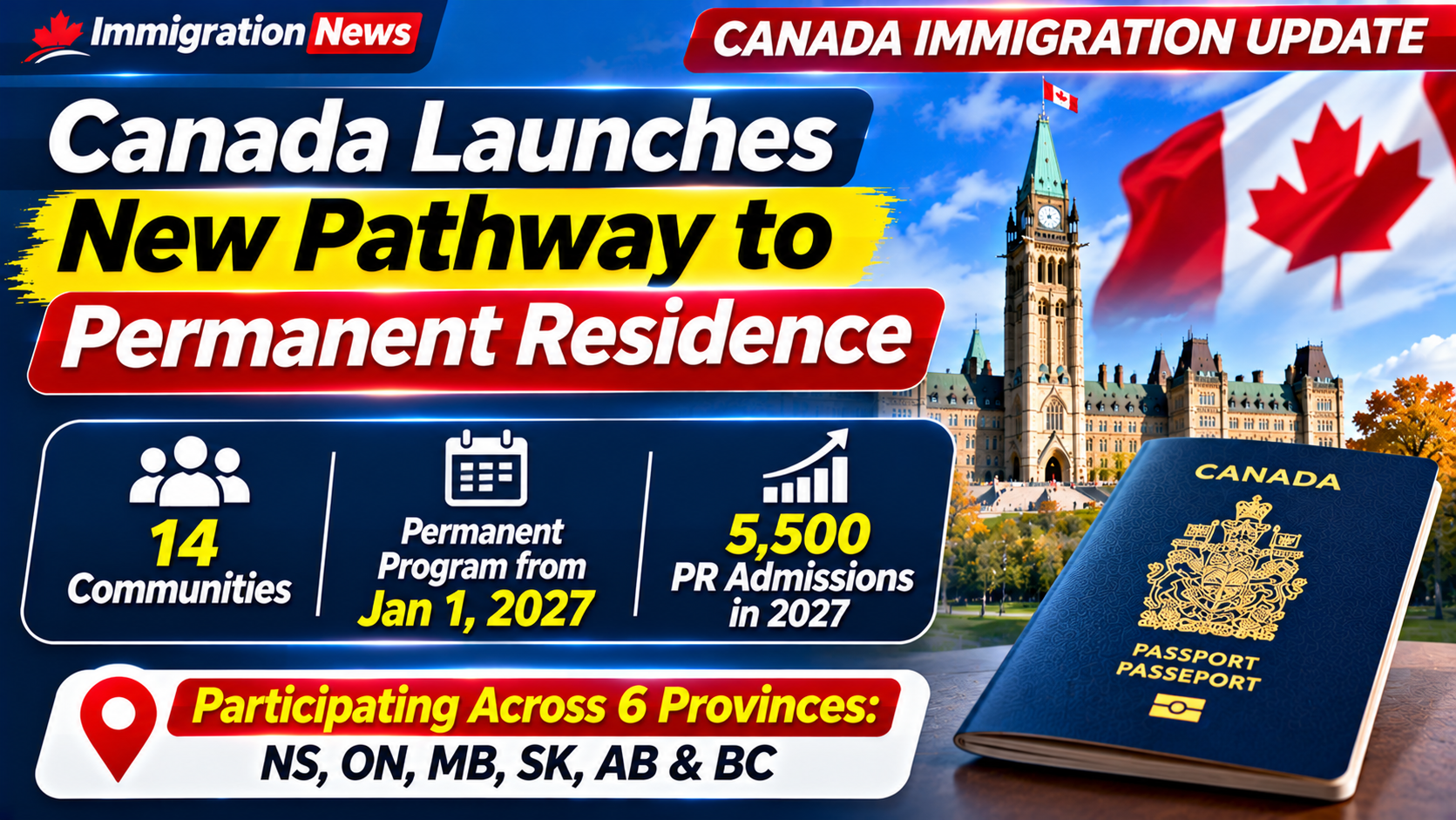
The Canada Rural Community Immigration Program is set to become a permanent immigration pathway from January 1, 2027, giving skilled foreign workers another route to Canadian permanent residence (PR) through employment in smaller communities.
Immigration Minister Lena Metlege Diab announced the decision on November 9, 2026, in Stellarton, Nova Scotia. The announcement confirms that the existing Rural Community Immigration Pilot (RCIP) will transition into a permanent programme, with 14 participating communities expected to continue.
The Canada Rural Community Immigration Program will retain its employer- and community-driven approach. Foreign nationals will need a qualifying job offer from an employer designated by a participating community, along with a community recommendation and other eligibility requirements.
Canada has allocated 5,500 permanent resident admissions to the programme for 2027. The government has also outlined higher notional admission targets for 2028 and 2029, indicating its intention to expand rural immigration over the coming years.
Canada Rural Community Immigration Program: What Has Changed?
The federal government announced that the existing Rural Community Immigration Pilot will become a permanent economic immigration programme on January 1, 2027.
The new Canada Rural Community Immigration Program will continue the model established during the pilot phase, connecting local employers with skilled foreign workers who can address labour shortages in participating communities.
The main changes include:
- Permanent status: The pilot is transitioning into an ongoing immigration programme.
- 14 participating communities: All 14 communities currently involved in the pilot are expected to continue.
- New admission targets: Canada has allocated 5,500 PR admissions for 2027.
- Future expansion: The government plans to consider additional communities in the future.
- Continued community involvement: Local economic development organizations will continue identifying workforce priorities and participating employers.
The existing RCIP pilot will officially close in its current format on January 1, 2027. The permanent programme will operate under a separate application process.
List of 14 Communities Participating in the New Programme
The Canada Rural Community Immigration Program is expected to continue operating in the 14 communities that participated in the original pilot.
These communities are located across six Canadian provinces.
| Province | Participating communities |
|---|---|
| Nova Scotia | Pictou County |
| Ontario | North Bay, Sudbury, Timmins, Sault Ste. Marie, Thunder Bay |
| Manitoba | Steinbach, Altona/Rhineland, Brandon |
| Saskatchewan | Moose Jaw |
| Alberta | Claresholm |
| British Columbia | West Kootenay, North Okanagan Shuswap, Peace Liard |
These locations were selected because of their economic needs, workforce shortages and capacity to welcome and support newcomers.
Unlike major Canadian immigration programmes that focus on national or provincial selection, the Canada Rural Community Immigration Program gives participating communities a direct role in identifying the workers they need.
The federal government has also indicated that additional communities may join the programme in the future. However, it has not yet announced which locations will be considered or when an expansion will take place.
Canada Sets 5,500 PR Admissions for 2027
One of the most significant details of the announcement is the admission allocation for the Canada Rural Community Immigration Program.
Under Canada’s 2027–2029 Immigration Levels Plan, the government has established the following targets:
| Year | Planned PR admissions |
|---|---|
| 2027 | 5,500 |
| 2028 | 6,000 |
| 2029 | 6,500 |
The 2027 target represents the planned number of permanent resident admissions through the programme, rather than the number of job offers, community recommendations or applications that will be issued.
The government expects admissions to increase over the following two years, reaching 6,500 in 2029.
For comparison, the existing RCIP was among several federal economic immigration pilots that shared a combined admission target of 8,175 permanent residents in 2026.
The new Canada Rural Community Immigration Program will therefore have its own dedicated admission target within the federal immigration plan.
Who Can Apply for the Canada Rural Community Immigration Program?
The Canada Rural Community Immigration Program is designed for skilled foreign workers and eligible international graduates who want to work and settle in participating rural communities.
A qualifying job offer is a central requirement. Applicants must secure employment with an employer designated by the participating community.
The employer and job offer must also meet the programme’s requirements and align with the community’s identified workforce priorities.
Applicants must meet applicable eligibility conditions, which include requirements relating to:
- Job offer: A qualifying offer from a designated employer in a participating community.
- Community recommendation: A recommendation from the relevant local economic development organization.
- Work experience: Relevant work experience, unless an applicable exemption is available.
- Education: The required educational qualifications.
- Language proficiency: Minimum English or French language requirements.
- Settlement funds: Proof of sufficient funds where required.
Meeting these requirements does not automatically guarantee permanent residence. Applicants must satisfy the federal immigration requirements and receive approval from Immigration, Refugees and Citizenship Canada (IRCC).
Prospective applicants should check the official programme eligibility criteria before accepting a job offer or making an application.
How the Employer and Community Recommendation Process Works
The Canada Rural Community Immigration Program follows an employer- and community-led selection model.
The process is different from a traditional Express Entry invitation round because participating communities play an important role in identifying local labour shortages and recommending suitable candidates.
The general process involves the following stages:
Find a designated employer
Applicants must identify an employer approved by the relevant participating community.
Only designated employers can make qualifying job offers under the programme. Employers are assessed based on their workforce requirements, standing and ability to support newcomer employees.
Obtain a qualifying job offer
The applicant must receive a job offer that meets the programme’s occupational and employment requirements.
The position should correspond to the priority sectors or occupations identified by the participating community.
Receive a community recommendation
After receiving a qualifying job offer, the applicant must go through the community recommendation process.
The local organization reviews whether the job offer is genuine, whether it meets local workforce priorities and whether the candidate satisfies the relevant programme conditions.
Apply for permanent residence
Once the required community recommendation is issued, the candidate can submit a permanent residence application to IRCC using the appropriate application package.
The federal government then assesses the application and makes the final immigration decision.
What Happens to Existing RCIP Applicants After January 1, 2027?
The transition to the Canada Rural Community Immigration Program includes separate arrangements for people who have already applied or received a community recommendation under the existing pilot.
IRCC has confirmed that permanent residence applications already submitted under the pilot will continue to be processed.
The application forms required will depend on the date of the community recommendation.
| Community recommendation date | What applicants must do |
|---|---|
| December 31, 2026, or earlier | Apply using the existing RCIP application forms before the recommendation expires. |
| January 1, 2027, or later | Use the application forms for the new permanent programme. |
Applicants with recommendations issued before January 1, 2027, should pay close attention to their recommendation’s expiry date.
The transition does not mean that existing recommendations can be used indefinitely. Candidates must submit their applications before the recommendation expires and follow the applicable application instructions.
The new Canada Rural Community Immigration Program will use a different set of application forms for recommendations issued from January 1, 2027.
Can Applicants Receive a Work Permit While Waiting for PR?
Eligible candidates may also have an option to obtain a temporary work permit while their permanent residence application is being processed.
Under the existing pilot model, foreign nationals who receive a qualifying job offer and community recommendation may be eligible for a two-year, employer-specific work permit, subject to the applicable requirements.
Spouses or common-law partners may also qualify for open work permits, although employment may be restricted to the participating community under the programme’s conditions.
These work permit options can help eligible applicants begin working in the community while their permanent residence applications are under assessment.
Applicants should confirm the current work permit requirements and eligibility rules before making employment or travel arrangements.
More Than 1,950 Employers Have Participated in the Pilot
The federal government’s decision to make the Canada Rural Community Immigration Program permanent follows the early results of the existing pilot.
According to IRCC, participating communities designated more than 1,950 employers between January 2025 and August 2026.
These employers issued more than 4,700 job offers and community recommendations during the same period.
The government has also highlighted the contribution of newcomers to sectors facing persistent labour shortages, including:
- Healthcare
- Education
- Sales and services
The programme is intended to help rural employers fill positions that cannot be filled locally while supporting the long-term settlement of newcomers and their families.
Its predecessor, the Rural and Northern Immigration Pilot, operated between 2019 and 2024. More than 12,500 candidates and their family members were admitted to rural and smaller Canadian communities through that earlier programme.
The experience of these earlier initiatives has contributed to the federal government’s decision to establish a permanent rural immigration pathway.
Will Canada Add More Communities to the Programme?
The federal government has confirmed that it plans to expand the Canada Rural Community Immigration Program to additional communities in the future.
However, the November 9 announcement did not identify any new locations or provide a specific expansion date.
The government’s background information explains that future rural communities will need to demonstrate both economic needs and the ability to welcome and support newcomers.
For the existing programme, participating communities are responsible for identifying local workforce priorities, designating eligible employers and supporting newcomer integration.
This community-driven approach is intended to ensure that immigration responds to actual regional labour requirements rather than simply increasing the number of available immigration places.
FAQs : Canada Rural Community Immigration Program
When will the Rural Community Immigration Program become permanent?
The permanent programme will open on January 1, 2027. The existing Rural Community Immigration Pilot will close in its current format on the same date.
How many communities are included in the programme?
Fourteen communities are expected to continue participating across Nova Scotia, Ontario, Manitoba, Saskatchewan, Alberta and British Columbia.
How many PR admissions are planned for 2027?
Canada has allocated 5,500 permanent resident admissions through the programme for 2027.
Do applicants need a job offer?
Yes. Applicants need a qualifying job offer from an employer designated by a participating community, along with a community recommendation and other eligibility requirements.
Can international graduates apply?
Eligible international graduates may qualify if they meet the programme’s requirements, including the applicable job offer and community recommendation conditions.
What happens to existing RCIP applications?
Applications already submitted under the pilot will continue to be processed. Applicants must use the correct application forms based on the date of their community recommendation.
Can applicants bring their spouses to Canada?
Eligible spouses or common-law partners may qualify for open work permits, subject to the applicable programme and federal requirements.
Will more Canadian communities be added?
The government plans to expand the programme in the future, but no additional communities or expansion dates have been announced.
Conclusion On Canada Rural Community Immigration Program
The transition of the Rural Community Immigration Pilot into a permanent programme creates a continuing pathway for skilled foreign workers interested in settling outside Canada’s largest cities.
With 14 communities expected to continue participating and 5,500 planned admissions in 2027, the Canada Rural Community Immigration Program will provide rural employers with a structured way to recruit international talent and address persistent labour shortages.
For prospective applicants, securing a job offer from a designated employer and obtaining a community recommendation will remain central to the process.
Candidates who already hold an RCIP recommendation should also review the transition rules carefully, particularly the application forms and expiry dates that apply to their recommendations.
More details about future community expansion and programme implementation may be announced by IRCC as the January 2027 launch approaches.
Source : CIC News
Read About : Canada Reveals Who Qualifies for 200000 PR Spaces in 2027: PNP Workers, Families and Humanitarian Applicants Included


One thought on “Canada Rural Community Immigration Program Becomes Permanent: 14 Communities Included from 2027”