
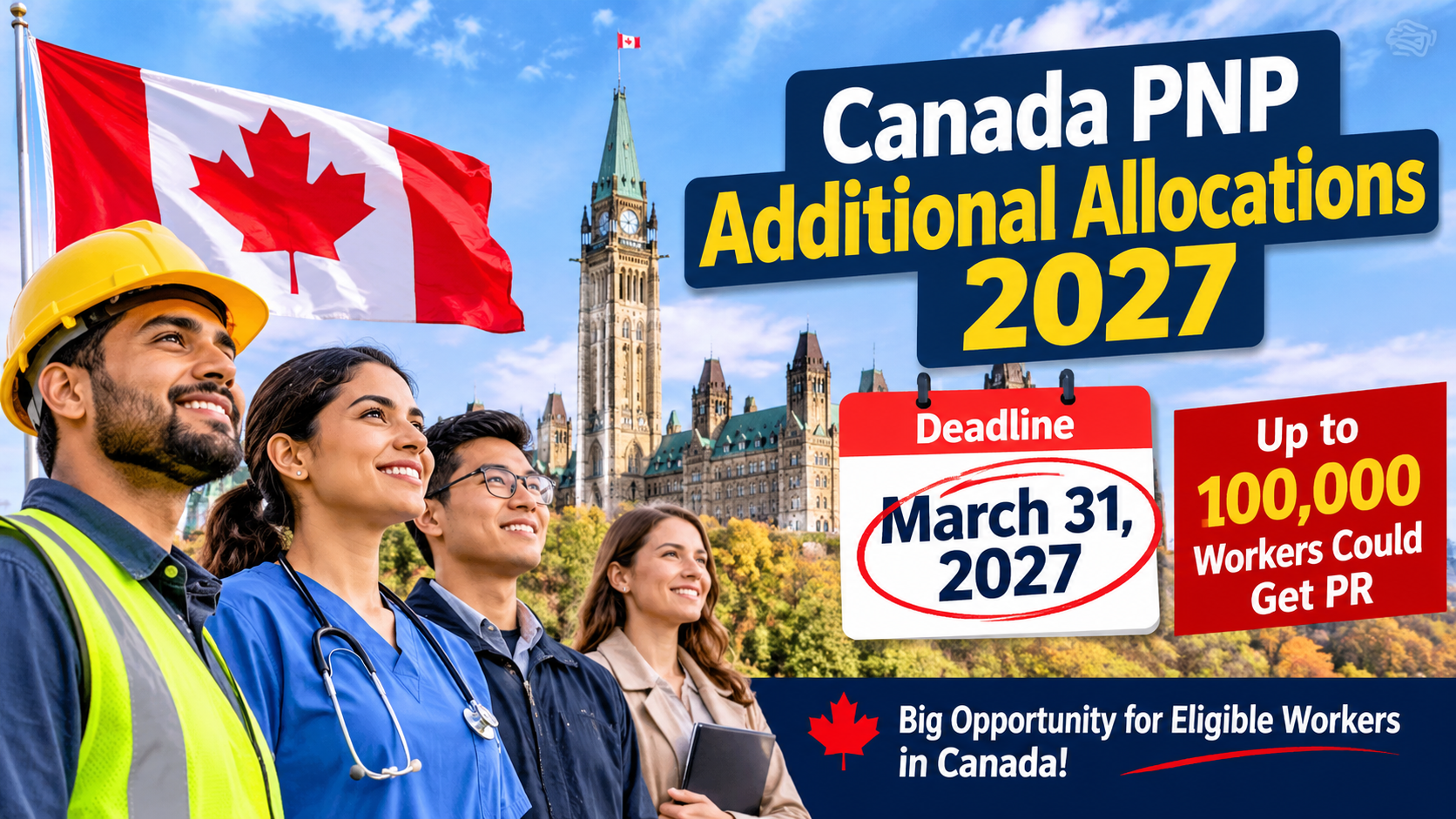
Canada has given provinces and territories until March 31, 2027, to use additional Provincial Nominee Program (PNP) allocations to help eligible workers already living in the country transition to permanent residence. The announcement, made on November 12, 2026, is part of a new time-limited immigration measure that could support up to 100,000 workers and their accompanying family members.
The Canada PNP additional allocations 2027 initiative gives provincial and territorial governments more flexibility to retain established workers who are contributing to local economies and meeting regional labour market needs. However, participation is optional, meaning each jurisdiction will decide how much of its additional allocation it wants to use.
The deadline leaves provinces and territories approximately 139 days from the November 12 announcement to use the additional allocations. The federal government intends to transition eligible workers and their families to permanent residence during 2027.
Importantly, these additional spaces are separate from Canada’s regular 2027 PNP target of 95,000 permanent resident admissions. They are also part of a broader plan to transition up to 200,000 people already in Canada to permanent residence through separate economic and humanitarian measures.
Canada PNP Additional Allocations 2027: What Has Ottawa Announced?
Immigration, Refugees and Citizenship Canada (IRCC) has confirmed that provinces and territories will receive optional additional PNP allocation space under a time-limited measure announced in Budget 2026.
The initiative is designed to help up to 100,000 workers already living in Canada, along with their accompanying family members, transition to permanent residence in 2027.
Under the arrangement, provinces and territories will be able to nominate eligible workers who are established in their communities and whose skills meet local employment needs.
The additional allocations are intended to be used by March 31, 2027.
| Key detail | Announcement |
|---|---|
| Announcement date | November 12, 2026 |
| Deadline for using additional allocations | March 31, 2027 |
| Potential economic cohort | Up to 100,000 workers and their families |
| Main immigration mechanism | Additional Provincial Nominee Program allocations |
| Eligible workers | Workers already living in Canada outside Quebec |
| Participating authorities | Provincial and territorial governments |
| Participation | Optional |
| Intended PR transition year | 2027 |
The Canada PNP additional allocations 2027 initiative is intended to support employers and communities by helping retain workers who are already contributing to Canada’s economy.
It does not automatically guarantee a provincial nomination or permanent residence approval.
Why Has Canada Given Provinces Only 139 Days?
The November 12 announcement gives provinces and territories until March 31, 2027, to use their additional allocation space.
This creates a relatively short implementation period for provincial governments to identify suitable workers, assess their regional labour market requirements and make use of the additional nomination opportunities.
The federal government wants eligible workers and their families to transition to permanent residence during 2027. Consequently, the deadline is designed to support the implementation of the measure within the same calendar year.
The timeline also gives IRCC time to process resulting permanent residence applications. However, the March 31 deadline relates to the intended use of additional allocations, not a guarantee that every application will be approved by that date.
Provinces may need to determine their priorities based on employer requirements, local labour shortages and the workers already established in their jurisdictions.
Who Can Benefit From Canada PNP Additional Allocations 2027?
The additional spaces are primarily intended for workers already living in Canada outside Quebec.
There are two broad groups that may benefit through the worker-focused measure.
Workers Eligible for Permanent Residence Through the PNP
Workers who are eligible to apply for permanent residence through the Provincial Nominee Program may benefit from additional nomination opportunities.
Provincial and territorial governments will be able to identify workers who are already established in their communities and whose employment supports regional labour market needs.
However, being employed in Canada does not automatically make someone eligible.
Candidates must still meet the applicable requirements of the relevant provincial or territorial immigration stream. These may include employment conditions, occupation requirements, work experience, language proficiency, education and other province-specific criteria.
The Canada PNP additional allocations 2027 measure gives provinces more nomination capacity, but it does not remove existing eligibility requirements.
Workers Who Have Already Applied for Permanent Residence
The initiative also covers certain workers who have already submitted permanent residence applications and are waiting for a decision.
Provincial and territorial governments will be able to identify eligible workers in their jurisdictions whose applications were submitted through selected immigration programmes.
This is particularly important for applicants who have been waiting for decisions under federal economic programmes that are now closed to new applications.
The measure allows these existing applications to be considered for processing under the additional permanent residence spaces.
Which Immigration Programmes Are Included?
In addition to PNP applicants, the federal government has identified workers who have already applied for permanent residence through the following programmes.
| Immigration programme | Who may be covered |
|---|---|
| Atlantic Immigration Program (AIP) | Eligible workers who have already submitted PR applications |
| Start-up Visa Program | Existing applicants waiting for a PR decision |
| Self-Employed Persons Program | Existing applicants waiting for a PR decision |
| Agri-Food Pilot | Existing applicants waiting for a PR decision |
| Home care worker programmes | Eligible existing applicants waiting for a PR decision |
These programmes have different eligibility and application requirements. The additional measure does not reopen programmes that have stopped accepting new applications.
For applicants who have already submitted applications, provincial or territorial authorities may identify eligible workers for consideration under the measure.
The Canada PNP additional allocations 2027 announcement therefore has implications beyond people who are preparing to apply through a provincial nominee stream.
Can Provinces Use Additional Allocations Through Express Entry and Base PNP Streams?
The additional nomination spaces are intended to provide flexibility within the Provincial Nominee Program.
The PNP operates through two main mechanisms:
Base Provincial Nominee Streams
Base PNP streams operate outside the Express Entry system. Candidates apply through a provincial or territorial immigration programme and, if nominated, generally submit a separate permanent residence application to IRCC.
Enhanced PNP Streams Linked to Express Entry
Enhanced streams are aligned with the federal Express Entry system.
Candidates who receive an enhanced provincial nomination obtain an additional 600 Comprehensive Ranking System (CRS) points, subject to the applicable Express Entry rules.
This can significantly improve their position in the Express Entry pool and increase their chances of receiving an invitation to apply in a subsequent eligible draw.
The additional allocation initiative provides provinces with more flexibility to select workers through their available PNP mechanisms. However, individual stream requirements and federal processing procedures continue to apply.
How Many Additional PNP Spaces Will Each Province Receive?
As of November 13, 2026, the federal announcement has not provided a province-by-province breakdown of the additional allocation spaces.
It is also not yet clear how many provinces and territories will use the full additional capacity offered to them.
Participation is optional. Each jurisdiction can decide how much additional space it wants to use based on its regional labour market needs and the workers it wants to retain.
This means applicants should not assume that every province will introduce a new immigration draw or issue the same number of additional nominations.
The Canada PNP additional allocations 2027 initiative could lead to different approaches across jurisdictions, depending on their employment priorities and immigration strategies.
Applicants should monitor announcements from their provincial or territorial immigration authorities for details about selection criteria, nomination opportunities and application procedures.
How Are the Additional Spaces Different From Canada’s Regular 2027 PNP Target?
One of the most important aspects of the announcement is that the additional worker spaces are separate from Canada’s regular permanent residence admission targets.
Under the 2027–2029 Immigration Levels Plan, Canada has set its regular permanent residence admission target at 380,000 for 2027.
The Provincial Nominee Program has a regular target of 95,000 admissions for the same year.
The new worker-focused measure provides additional space outside the regular levels plan.
| Immigration allocation | 2027 figure |
|---|---|
| Overall regular PR admissions target | 380,000 |
| Regular PNP admissions target | 95,000 |
| Additional worker-focused measure | Up to 100,000 workers and accompanying family members |
| Additional humanitarian measure | Up to 100,000 people |
These figures represent different components of Canada’s immigration planning. The additional 100,000 worker spaces should not be interpreted as 100,000 extra PNP nominations alone because the measure also covers eligible workers and families with existing applications under selected federal programmes.
The distinction matters because the additional measure is designed to accelerate the transition of people already living in Canada rather than create a general new immigration route for overseas applicants.
Canada Plans to Transition Up to 200,000 People to Permanent Residence in 2027
The worker-focused initiative is one part of a broader time-limited measure announced by the federal government.
Canada plans to provide up to 200,000 additional permanent residence spaces for selected groups already living in the country.
The initiative is divided into two main cohorts.
Economic Cohort: Up to 100,000 Workers and Their Families
The economic component focuses on retaining workers who are already contributing to Canadian communities.
It includes eligible workers who may qualify through the PNP and certain existing federal immigration applications.
Provincial and territorial governments will play an important role in identifying workers who meet local labour market requirements.
Humanitarian Cohort: Up to 100,000 People
The second component focuses on specific humanitarian and family-related groups.
The government has identified the following potential groups:
| Eligible group | Potential number |
|---|---|
| Applicants under Hong Kong permanent residence pathways | Up to 32,000 |
| Applicants under the Ukraine Family Reunification Pathway | Up to 18,800 |
| Applicants already found eligible on humanitarian and compassionate grounds | Up to 12,600 |
| Spouses, common-law partners and dependent children of Canadian citizens or permanent residents living in Canada | Up to 45,000 |
| Total potential humanitarian spaces | Up to 108,400 |
The figures above are individual group estimates as stated in the announcement. They should not be added together as a guaranteed admission total: the overall humanitarian cohort is capped at up to 100,000 spaces.
The two cohorts together form the government’s broader plan to transition up to 200,000 people already in Canada to permanent residence in 2027.
Do Existing PR Applicants Need to Apply Again?
No. IRCC has stated that applicants do not need to submit a separate application or contact the department to be considered for processing under these additional spaces.
This is particularly relevant for people who have already applied through the eligible programmes and are waiting for a final decision.
However, this does not mean that every pending applicant will automatically receive permanent residence. Eligibility under the relevant measure, provincial or territorial identification where applicable, and the normal immigration decision-making process remain important.
Applicants should continue monitoring their application accounts and responding to any requests from IRCC.
The Canada PNP additional allocations 2027 measure is intended to support the processing of selected existing applications, not to create an automatic approval mechanism.
What Should Workers and Applicants Do Now?
Although IRCC has said that applicants do not need to take separate action to be considered under the additional spaces, workers can take practical steps to stay informed.
- Check provincial immigration updates: Follow the official PNP website of the province or territory where you live and work.
- Maintain valid immigration status: Ensure that your temporary resident status and work authorisation remain valid.
- Keep employment documents updated: Maintain employment letters, pay statements, contracts and other supporting records.
- Monitor your PR application: Check your IRCC account and respond to requests within the specified deadlines.
- Review provincial eligibility: If you have not applied for permanent residence, check whether you qualify under an existing PNP stream.
- Avoid unofficial promises: Do not pay anyone claiming to guarantee access to the additional nomination spaces.
- Wait for provincial instructions: Do not assume that a new application intake or special draw has opened until the relevant authority confirms it.
Workers should also remember that the measure is limited to eligible people already living in Canada outside Quebec. It is not a general overseas immigration programme.
Conclusion On Canada PNP Additional Allocations 2027
Canada’s decision to offer additional PNP allocation space to provinces and territories creates a significant opportunity to retain eligible workers who are already established in the country.
The March 31, 2027, deadline gives provincial and territorial governments approximately 139 days from the November 12 announcement to use the additional allocations. The initiative could help up to 100,000 workers and their families transition to permanent residence as part of Canada’s broader 2027 plan.
However, the additional spaces are optional, and provinces will determine how much capacity they use and which workers they prioritise. No province-by-province allocation breakdown has been announced yet.
For applicants, the key next step is to monitor official provincial immigration announcements and understand the requirements of their respective immigration programmes. The measure offers additional processing and nomination capacity, but it does not guarantee a nomination or permanent residence approval.
FAQs : Canada PNP Additional Allocations 2027
1. What are Canada PNP additional allocations 2027?
They are optional additional Provincial Nominee Program allocation spaces being offered to provinces and territories to help eligible workers already living in Canada and their families transition to permanent residence in 2027.
2. What is the deadline for provinces to use the additional PNP allocations?
The additional allocations are intended to be used by March 31, 2027.
3. How many people could benefit from the new worker measure under Canada PNP Additional Allocations 2027?
The worker-focused economic cohort could support up to 100,000 workers and their accompanying family members.
4. Can workers outside Canada benefit from this announcement?
The measure is specifically intended for workers already living in Canada outside Quebec. It is not a general pathway for applicants living overseas.
5. Will every province receive additional PNP nominations like Canada PNP Additional Allocations 2027?
Provinces and territories are being offered optional additional allocation space. They can decide how much of it to use according to their regional labour market needs.
6. Are the additional spaces separate from the regular 2027 PNP target?
Yes. The additional worker-focused measure is separate from the regular 2027 PNP target of 95,000 permanent resident admissions.
7. Can existing Atlantic Immigration Program applicants benefit?
Eligible workers who have already submitted permanent residence applications through the Atlantic Immigration Program and are awaiting decisions may be identified by their provincial or territorial governments under the measure.
8. Are new applications opening under the Start-up Visa or Agri-Food Pilot?
No. The additional measure does not reopen closed immigration programmes. It may cover eligible existing applicants who have already submitted permanent residence applications.
9. Do applicants need to contact IRCC to be considered?
No. IRCC says applicants do not need to take separate action or contact the department for their applications to be considered under the additional spaces.
10. Does receiving an additional PNP allocation guarantee permanent residence?
No. Additional allocation space does not guarantee a provincial nomination or PR approval. Applicants must meet the applicable requirements, and final decisions remain subject to immigration procedures.
Source : CIC News
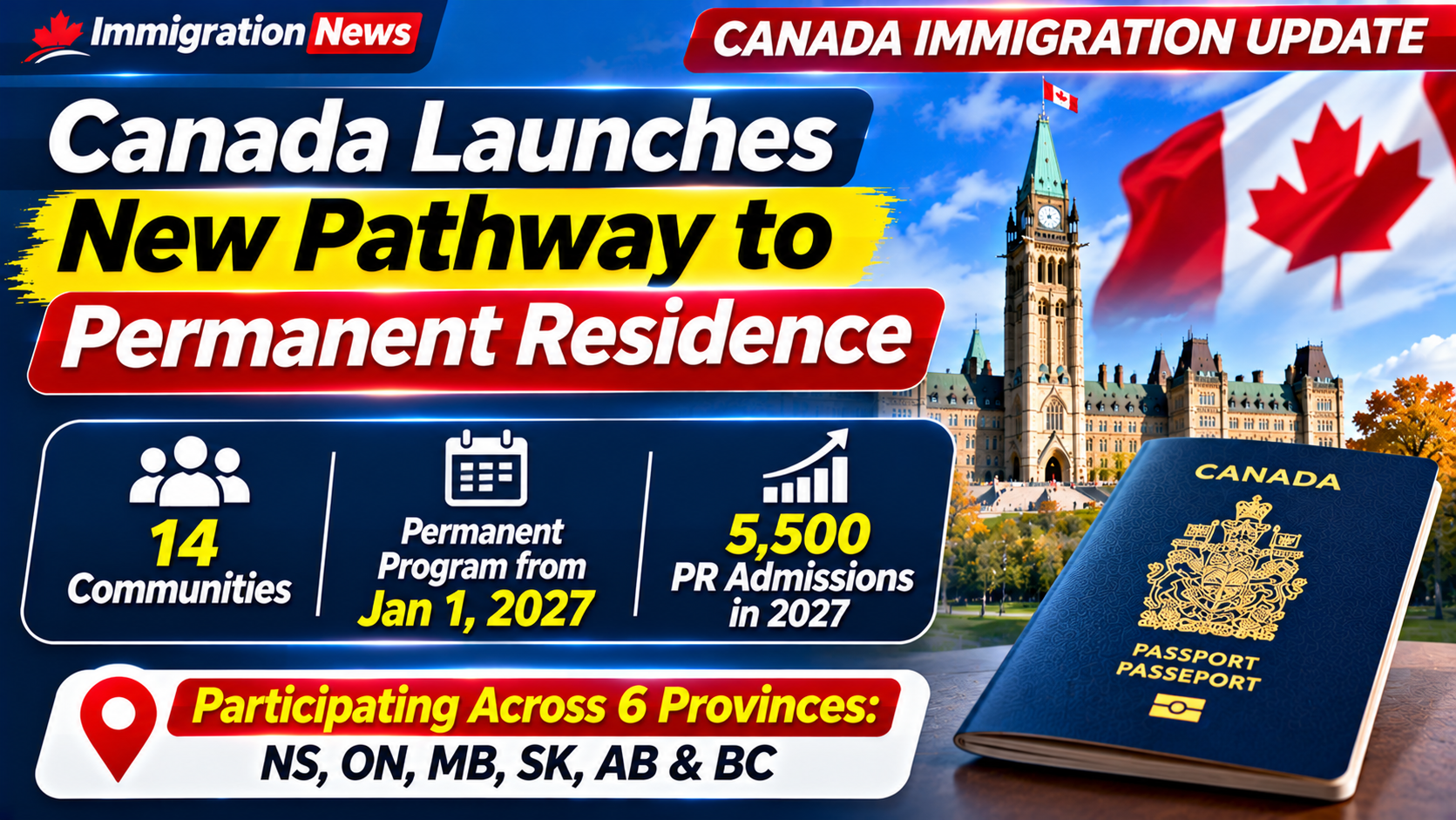
Read About : Canada Rural Community Immigration Program Becomes Permanent: 14 Communities Included from 2027


One thought on “Canada PNP Additional Allocations 2027: Provinces Given Until March 31 to Nominate More Workers for PR”