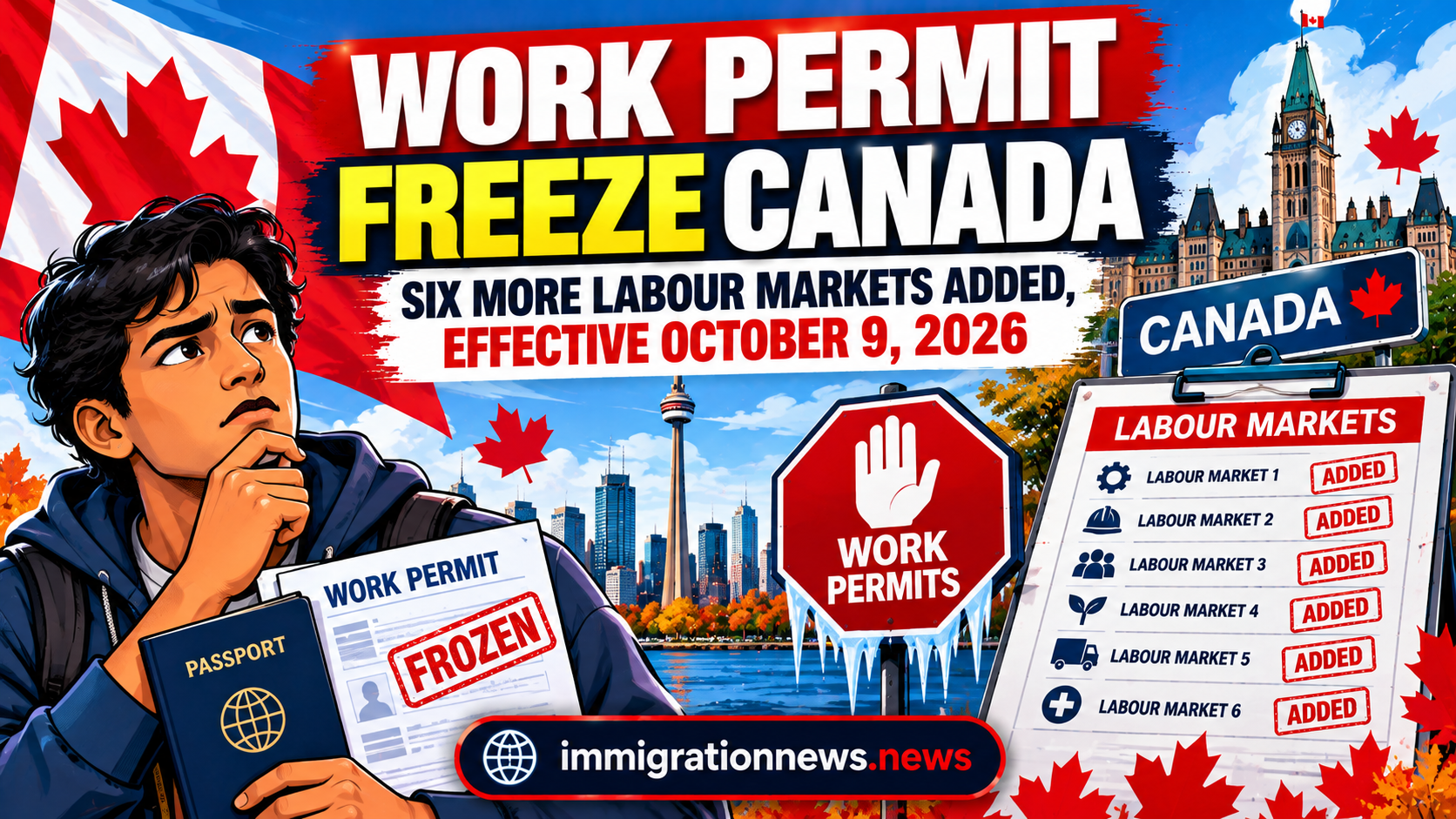
The work permit freeze Canada has spread to six more census metropolitan areas, extending the restriction on low-wage hiring across the Maritimes, Ontario, and the Prairies. Halifax, Fredericton, Kingston, St. Catharines-Niagara, Regina, and Lethbridge are now covered, while the 24 regions already affected remain in place. Kamloops and Chilliwack have come off the list.
The update, posted to the government web page on October 9, 2026, applies from October 9, 2026 to January 7, 2027. During that window, employers cannot initiate hiring or renewal of work permits in affected regions for non-exempt jobs paying less than 120% of the provincial or territorial median wage.
Quick Highlights : Work Permit Freeze Canada
- The work permit freeze Canada now covers 30 census metropolitan areas
- Six areas were added: Halifax, Fredericton, Kingston, St. Catharines-Niagara, Regina, and Lethbridge
- Kamloops and Chilliwack were removed from the list
- The freeze runs from October 9, 2026 to January 7, 2027
- It applies to low-wage Labour Market Impact Assessments in areas with unemployment of 6% or higher
- The next update to the list is scheduled for January 8, 2027
- Exemptions remain for agriculture, construction, food manufacturing, hospitals, and care facilities
Which Areas Are Affected
The freeze covers low-wage LMIAs under the Temporary Foreign Worker Program in any census metropolitan area with an unemployment rate of 6% or higher. The current list and rates are below.
| CMA | Unemployment Rate (%) |
|---|---|
| St. John’s | 6.4 |
| Halifax | 6.1 |
| Moncton | 8.1 |
| Fredericton | 6.2 |
| Montréal | 7.2 |
| Ottawa-Gatineau | 7.9 |
| Kingston | 6.3 |
| Belleville – Quinte West | 6.4 |
| Peterborough | 6.3 |
| Oshawa | 9.8 |
| Toronto | 7.5 |
| Hamilton | 7.4 |
| St. Catharines-Niagara | 6.5 |
| Kitchener-Cambridge-Waterloo | 7.6 |
| Brantford | 6.3 |
| Guelph | 7.5 |
| London | 9.1 |
| Windsor | 7.9 |
| Barrie | 6.2 |
| Greater Sudbury | 6.2 |
| Regina | 6.7 |
| Saskatoon | 6.5 |
| Lethbridge | 6.0 |
| Calgary | 6.4 |
| Red Deer | 6.9 |
| Edmonton | 7.6 |
| Kelowna | 8.6 |
| Abbotsford-Mission | 7.6 |
| Vancouver | 7.0 |
| Nanaimo | 6.6 |
Lethbridge sits at exactly 6.0%, the minimum that triggers the freeze, so a small change in its rate could move it in or out of scope at the next update.
What the Low-Wage Threshold Means
A job is covered by the work permit freeze Canada if it pays below 120% of the provincial or territorial median wage. The government calculates the thresholds from Job Bank data, and they apply to LMIAs received on or after July 17, 2026.
| Province/Territory | Low-Wage Threshold (Hourly) |
|---|---|
| Alberta | $37.50 |
| British Columbia | $38.40 |
| Manitoba | $31.33 |
| New Brunswick | $31.73 |
| Newfoundland and Labrador | $33.60 |
| Northwest Territories | $48.00 |
| Nova Scotia | $31.96 |
| Nunavut | $45.00 |
| Ontario | $36.92 |
| Prince Edward Island | $31.20 |
| Quebec | $36.00 |
| Saskatchewan | $34.62 |
| Yukon | $45.60 |
An employer offering a wage at or above the threshold for the province is outside the low-wage stream, and the freeze does not apply to that position.
Exemptions Still in Place
The work permit freeze Canada does not cover every low-wage job. Exemptions apply to positions in:
- Primary agriculture
- Construction
- Food manufacturing
- Hospitals
- Nursing and residential care facilities
A separate exemption covers private households hiring nurses, childcare providers, or personal support workers as in-home caregivers. By request, employers can also obtain case-specific exemptions for temporary and highly mobile work, such as workers for concerts, carnivals, or fairs.
How the Freeze Developed
The government introduced the moratorium on September 26, 2024, by refusing to process low-wage LMIAs in affected areas. On November 8, 2024, it raised the low-wage cut-off from the provincial median to 120% of the median, widening the number of positions caught.
The list of affected areas is revised on a schedule, which is why regions move in and out as unemployment rates change. The latest revision added six areas and removed two, and the next is due on January 8, 2027.
How an LMIA Fits Into the Process
A positive or neutral LMIA is required before a foreign national can apply for or renew a work permit through the Temporary Foreign Worker Program. The LMIA confirms that the employer could not hire a qualified Canadian citizen or permanent resident for the position.
Employment and Social Development Canada issues the LMIA to the employer, and the foreign worker then attaches it to the work permit application submitted to Immigration, Refugees and Citizenship Canada. Because the freeze stops low-wage LMIAs from being processed in affected areas, it blocks the first step for many employers and workers there.
Concurrent Processing and Maintained Status
Workers already in Canada with soon-to-expire permits can, in some circumstances, submit their work permit application to be processed alongside the LMIA. On August 21, 2026, IRCC extended the concurrent processing hold from 60 to 90 days, giving the applicant more time to provide proof of a positive or neutral LMIA.
Workers who apply for an extension before their current permit expires benefit from maintained status. They can keep working under the conditions of the expired permit until a decision is made, as long as they stay in Canada. Concurrent processing is narrow: it generally requires that the permit expires within two weeks, the employer filed a complete LMIA with enough lead time, and no LMIA decision has yet been made.
What Employers and Workers Should Do Now
Employers in the newly added areas should check whether their positions pay below the provincial threshold and whether an exemption applies. If neither applies, a new low-wage LMIA is unlikely to be processed before January 2027.
Workers in Halifax, Fredericton, Kingston, St. Catharines-Niagara, Regina, and Lethbridge should check permit expiry dates now and speak with their employer about timing. Employers in Kamloops and Chilliwack can see the restriction lifted, but should watch the January update for any change. Anyone unsure of their position should consult a regulated immigration professional.
Key Takeaways Of Work Permit Freeze Canada
The work permit freeze Canada now reaches 30 census metropolitan areas after six additions and two removals, and it runs until January 7, 2027. Low-wage jobs paying under 120% of the provincial median are affected unless an exemption applies, with the next list update due January 8, 2027. Employers and workers in the new areas should plan around the freeze and confirm their wage and exemption status directly with official sources.
FAQs : Work Permit Freeze Canada
Which areas were added to the work permit freeze Canada in October 2026?
Halifax, Fredericton, Kingston, St. Catharines-Niagara, Regina, and Lethbridge were added, bringing the total to 30 census metropolitan areas.
Which areas were removed from the freeze?
Kamloops and Chilliwack were removed from the list.
How long does the current freeze last?
It applies from October 9, 2026 to January 7, 2027, with the next list update scheduled for January 8, 2027.
Which jobs are exempt?
Primary agriculture, construction, food manufacturing, hospitals, nursing and residential care facilities, and in-home caregivers hired by private households are exempt.
What wage puts a job outside the freeze?
A job paying at or above the provincial threshold, such as $36.92 an hour in Ontario or $38.40 in British Columbia, falls outside the low-wage stream.
Source : CIC News
Read About : Practice Ready Ontario Gets $20 Million To Fast-Track 200 Internationally Trained Physicians