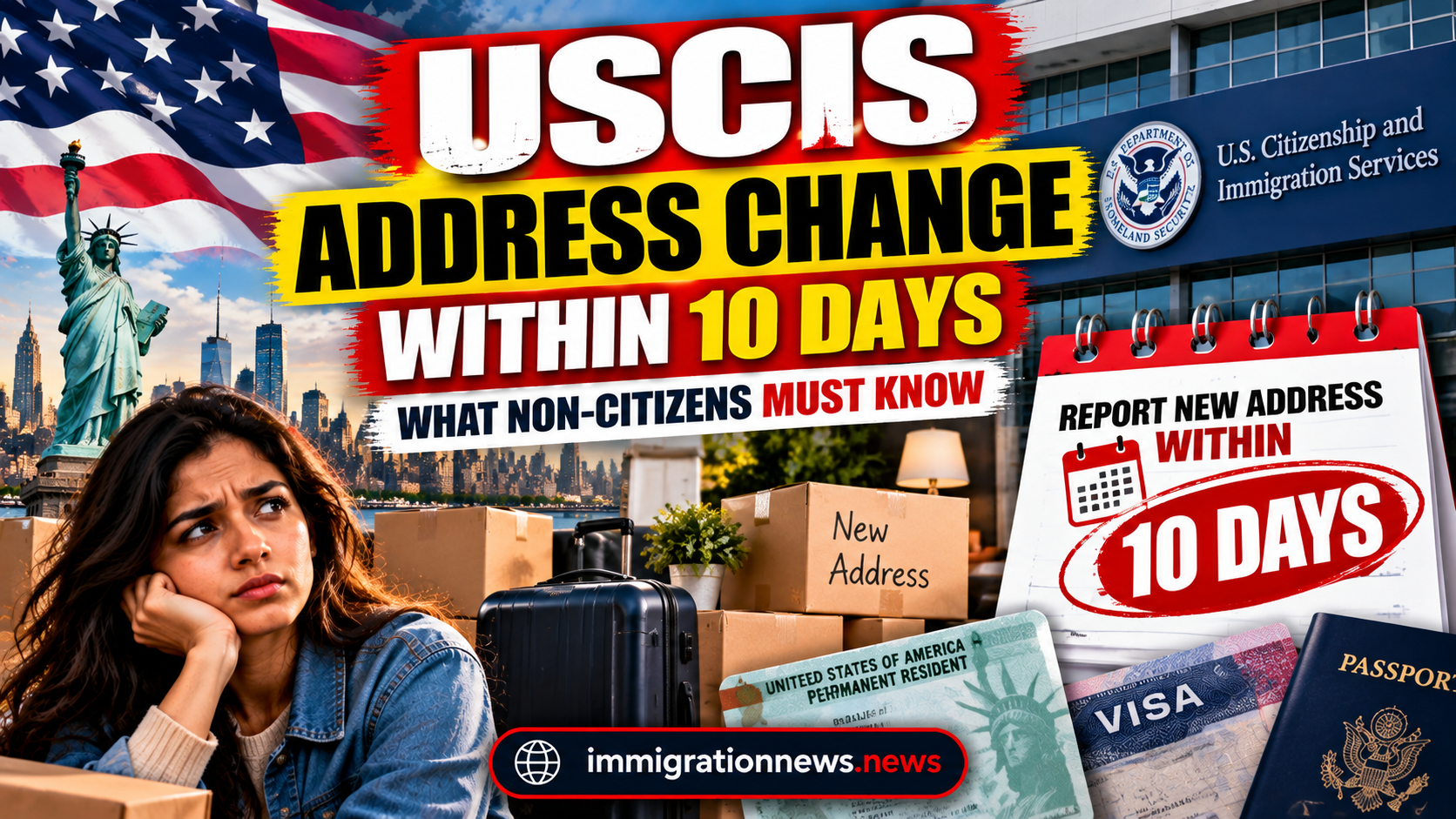
Non-citizens living in the United States must generally report a change of residential address to U.S. Citizenship and Immigration Services (USCIS) within 10 days of moving, an important immigration requirement that can affect people with pending applications as well as many others residing in the country.
The USCIS address change within 10 days requirement applies to most non-citizens covered by the applicable reporting rules, including many Indian professionals, international students, temporary visa holders and green card applicants. Certain categories, including A and G visa holders and visitors admitted under the Visa Waiver Program, are exempt from this general reporting requirement.
USCIS encourages people to update their address through its online system as soon as they move. Failing to update immigration records can result in missed notices, delays in processing applications and problems receiving important documents.
One important point is that changing an address with the United States Postal Service (USPS) does not automatically update USCIS records. People who move should complete the appropriate updates separately.
USCIS Address Change Within 10 Days: Who Must Follow the Rule?
The federal address-reporting requirement applies to most non-citizens residing in the United States who are subject to the applicable registration requirements. The obligation is not limited to people who have an immigration application currently being processed.
This means that eligible non-citizens may need to report a move even if they do not have a pending green card application, work authorisation request or other immigration benefit request.
The requirement is particularly relevant to Indian nationals living in the US under different immigration categories.
These may include:
- H-1B visa holders: Indian professionals working in qualifying specialty occupations.
- L-1 visa holders: Employees transferring within multinational companies.
- F-1 students: International students studying at US educational institutions.
- Green card applicants: People waiting for employment-based or family-based permanent residence decisions.
- Lawful permanent residents: Green card holders who are subject to the applicable address-reporting rules.
The exact reporting obligations can vary according to immigration category and individual circumstances. Affected individuals should check the current USCIS instructions before submitting an address change.
USCIS identifies A and G visa holders and Visa Waiver Program visitors as exceptions to the general 10-day requirement. Certain other groups may have specific procedures that differ from the standard process.
Why the 10-Day USCIS Address Change Deadline Matters
The USCIS address change within 10 days rule is important because the agency uses its records to communicate with applicants and other individuals regarding immigration matters.
USCIS may send appointment notices, requests for evidence, decisions, employment authorisation documents and other official correspondence to the address associated with a person’s records.
If someone moves but does not update their address, important correspondence may be sent to their previous residence. The individual may then miss a deadline or fail to attend a scheduled appointment.
Depending on the type of application and the circumstances, missing an interview, biometrics appointment or request for additional evidence could create serious procedural complications.
For example, an applicant waiting for a green card may need to respond to a request for evidence by a specified date. If the notice is sent to an old address and the applicant does not respond, the case could be delayed or face an adverse decision.
Keeping contact details current is therefore an important part of maintaining an accurate immigration record.
How to Update Your Address With USCIS Online
USCIS encourages eligible individuals to use its Enterprise Change of Address (E-COA) tool, available through a USCIS online account. The online process allows most people to report a move without mailing a paper address-change form.
The process can also be used by many people whose immigration applications were originally submitted by mail.
Step 1: Access Your USCIS Online Account
Visit the official USCIS website and sign in to your online account. If you do not have an account, follow the agency’s instructions for creating one.
Step 2: Open the Change-of-Address Tool
Find the address-change option under the account menu and follow the instructions for reporting a new address.
Step 3: Enter Your New Address
Provide your new residential address and any other information requested. Check the spelling, apartment or unit number, ZIP code and other details carefully.
Step 4: Include Relevant Receipt Numbers
If you have pending immigration applications or petitions, enter the relevant receipt numbers as instructed. USCIS says that providing the receipt number for each pending benefit request helps ensure the address change is applied to the appropriate records.
Do not assume that updating one case automatically covers every other pending application. Confirm that all relevant receipt numbers have been included.
Step 5: Review and Submit
Review the information before submitting the request. Retain the confirmation or other available record of your submission.
Online reporting satisfies the address-notification requirement for people who can use the applicable online process. Most eligible users do not need to mail a separate Form AR-11 after successfully completing the online update.
Can You Change Your USCIS Address by Mail?
Yes. USCIS also allows eligible individuals to submit Form AR-11, the Alien’s Change of Address Card, by mail.
However, the agency strongly encourages online reporting where available because a paper submission does not provide the same automated address update across USCIS systems.
Anyone using the paper process should follow the latest official instructions and ensure that the form is sent to the correct address. The individual should also check whether additional steps are required for pending applications or particular immigration categories.
People who cannot access the online tool or who fall into a category with special procedures should consult USCIS guidance rather than assuming the standard process applies to them.
Official information is available through the USCIS address-change page.
Why Updating Your USPS Address Is Not Enough
One of the most important points for people moving within the United States is that the postal service and the immigration agency maintain separate records.
Changing an address with USPS does not update the address held by USCIS. USCIS also warns that USPS will not forward its mail through the ordinary postal change-of-address process.
Anyone moving to a new home should therefore consider two separate actions:
- Update the address with USCIS through the appropriate immigration process.
- Submit a separate change-of-address request to USPS to manage other eligible mail.
Both steps can help reduce the risk of losing important correspondence.
People should also use a complete and correctly formatted address. USCIS recommends checking the standard address format recognised by USPS to help ensure the new details are entered accurately.
Special Address-Reporting Rules for Certain Immigration Cases
Although the standard online process works for many people, some immigration situations require additional steps.
Applicants in immigration court proceedings
People involved in immigration court proceedings may need to notify the immigration court separately. Filing Form AR-11 with USCIS does not automatically update an address with the immigration court.
Failing to notify the appropriate authority can create problems with hearing notices and other proceedings.
VAWA, T visa and U visa cases
Certain individuals with cases involving the Violence Against Women Act (VAWA), T nonimmigrant status or U nonimmigrant status may need to follow special procedures designed for their circumstances.
Individuals in these categories should review the relevant USCIS instructions carefully, particularly if privacy or the safety of their address is a concern.
Cases transferred to the National Visa Center
If an approved petition has already been forwarded to the National Visa Center (NVC), an applicant may also need to notify that office of the address change.
Updating USCIS alone may not update the records held by another agency handling a different stage of the immigration process.
Sponsors who filed an Affidavit of Support
A separate rule applies to certain sponsors who have filed Form I-864, Affidavit of Support, on behalf of an immigrant.
US citizens, US nationals and lawful permanent residents who are subject to the sponsor reporting requirement generally need to submit Form I-865 within 30 days of a qualifying address change.
This sponsor obligation is separate from the general address-reporting rules that may apply to a non-citizen living in the United States.
People who fall into more than one category should check which forms and deadlines apply to their circumstances.
What Indian Immigrants in the US Should Do After Moving
For Indian nationals living in the United States, updating immigration records should be part of the relocation checklist rather than an afterthought.
The following practical steps can help reduce avoidable problems.
Report the move promptly. Complete the applicable USCIS address update within the required 10-day period. USCIS recommends updating the information as soon as possible after moving.
Check every pending application. If you have several immigration cases, make sure the relevant receipt numbers are included in the address-change request.
Update USPS separately. Do not rely on postal forwarding to update USCIS records or deliver all immigration correspondence.
Retain confirmation. Keep a record of the address-change submission and any confirmation provided by USCIS.
Review special requirements. Check whether your visa category, immigration court proceedings or case stage requires a separate notification.
Monitor your immigration account. Continue checking your USCIS account and follow any notices or deadlines associated with your application.
Taking these steps can help prevent missed correspondence while an employment authorisation, green card or other immigration matter is being processed.
What Happens If You Miss the USCIS Address Change Deadline?
Failing to report a move within the required period can have legal consequences for people subject to the address-reporting rules.
Federal law provides for penalties for certain failures to comply, and the applicable consequences depend on the individual’s circumstances and the relevant legal provisions. The law also provides for an exception where a failure was reasonably excusable or not willful in the context of the applicable deportability provision.
Individuals who have already missed the deadline should not assume that it is too late to update their address. They should report the change as soon as possible and follow the current USCIS instructions.
If the move affects an active application, immigration court case or other time-sensitive proceeding, the individual may wish to consult a qualified immigration attorney or accredited representative about the appropriate next steps.
An address update does not automatically resolve a missed appointment, an expired response deadline or another procedural issue. Those matters may require separate action.
FAQs : USCIS Address Change Within 10 Days
Do non-citizens have to report an address change within 10 days in the US?
Most non-citizens covered by the applicable reporting requirements must notify USCIS of a change of address within 10 days of moving. A and G visa holders and Visa Waiver Program visitors are among the exceptions identified by USCIS.
Does the 10-day rule apply if I do not have a pending immigration application?
The requirement is not limited to people with pending applications. Eligible non-citizens may still have an address-reporting obligation even if they do not currently have a case being processed by USCIS.
Can I update my USCIS address online?
Yes. Most people can use the Enterprise Change of Address tool through a USCIS online account. Some categories or case types may require additional or different procedures.
Is changing my address with USPS enough?
No. USPS does not automatically update USCIS records, and USCIS warns that USPS will not forward its mail through the ordinary change-of-address service. Both updates may be necessary.
Do I need to update every pending USCIS application?
When using the online process, USCIS instructs people with pending benefit requests to provide the receipt number for each relevant application or petition so that the address change can be applied appropriately.
What if I have already moved and missed the 10-day deadline?
Update your address as soon as possible and check whether any additional action is required for your immigration category or pending case. If a deadline or immigration court matter is involved, seek qualified guidance.
Do green card holders need to report an address change?
Lawful permanent residents are generally subject to the applicable address-reporting requirement unless a specific exception applies. They should follow the current USCIS instructions for reporting a move.
Does filing Form AR-11 update my immigration court address?
No. USCIS states that people in immigration court proceedings must separately notify the immigration court of address changes.
Final Takeaway On USCIS Address Change Within 10 Days
The USCIS address change within 10 days requirement is an important administrative obligation for most non-citizens covered by US immigration reporting rules. Moving without updating immigration records can result in missed notices, processing delays and other complications.
Indian professionals, international students, green card applicants and other affected residents should report their new address promptly, include relevant pending-case receipt numbers, and update USPS separately.
Anyone with a special immigration category, court proceeding or sponsor obligation should check the rules that apply to their particular situation. Keeping address records accurate is a simple but important step toward protecting immigration correspondence and avoiding preventable administrative problems.
Source : Business Standard
Read About : J-1 Visa Fraud Investigation Targets Nine Major US Universities