
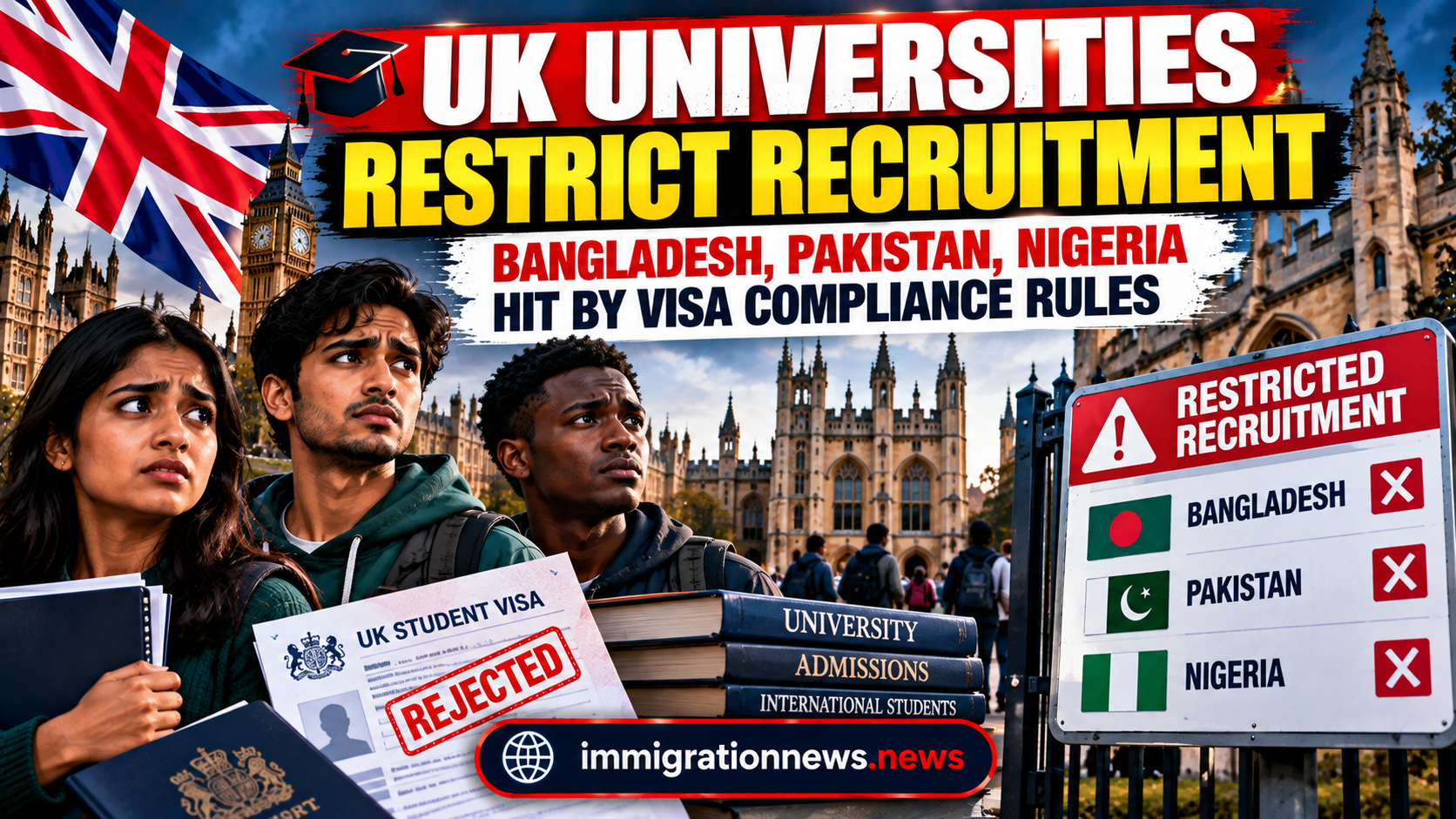
British universities are pulling back from some of their biggest overseas student markets. UK universities restrict recruitment from Bangladesh, Pakistan, and Nigeria, withdrawing offers and pausing sponsorships to protect their licences to sponsor international students.
The shift follows stricter Home Office compliance rules that force institutions to keep student visa refusal rates low and meet minimum enrolment and course-completion targets. Falling short repeatedly could cost a university its sponsor licence, which is why some are acting before they reach the limits.
Quick Highlights : UK Universities Restrict Recruitment
- UK universities restrict recruitment in markets where visa refusals and withdrawals have risen
- The maximum refusal rate under the Basic Compliance Assessment is now below 5%, down from 10%
- Universities must also enrol at least 95% of sponsored students and keep an 85% completion rate
- 10.5% of UK study visa applications were withdrawn in the first half of 2026, against 2.3% a year earlier
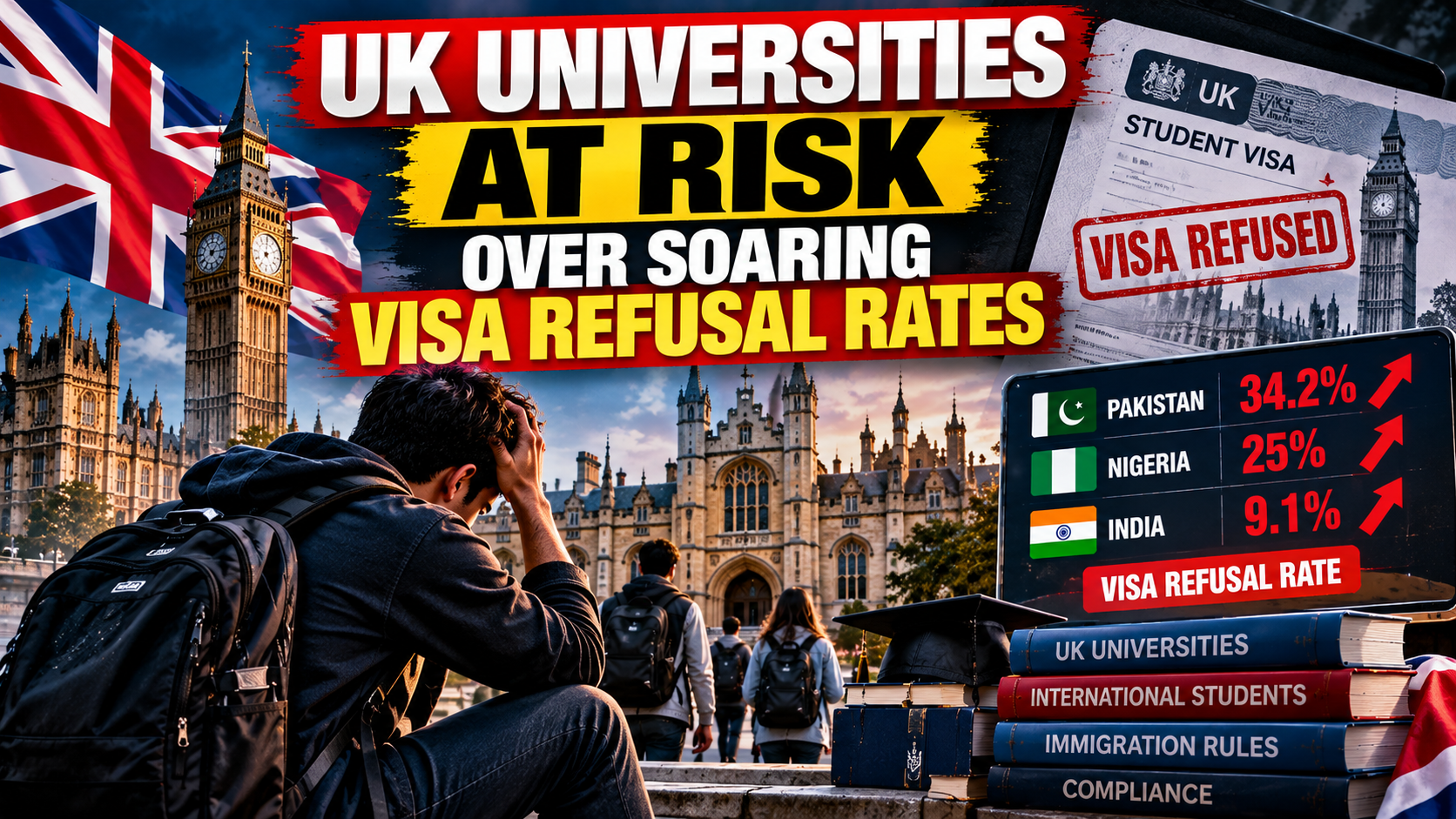
- Pakistan’s withdrawal rate was 40.9%, Bangladesh 23.5%, Nigeria 22.7%, and India 5.2%
- Oxford Brookes paused sponsorship for Bangladesh and Pakistan and added extra screening for Nigeria and India
- International students brought in £12.4 billion in tuition in 2024/25, 23% of sector income
What the New Compliance Rules Require
Under the Basic Compliance Assessment (BCA), the Home Office measures sponsors on three things. The student visa refusal rate must be below 5%, down from the previous 10% ceiling. The sponsor must enrol at least 95% of the students it sponsors, and at least 85% of students must complete their courses.
Business Insider reports the tighter ceiling took effect on 1 June, although the thresholds were first announced in September 2025. Migration and Citizenship Minister Mike Tapp said the policy aims to stop the student route being used as a “backdoor to asylum and illegal working.” Repeated failure to meet the thresholds can put a university’s student sponsor licence at risk.
Withdrawals Are Surging
A Financial Times analysis of Home Office data found 10.5% of UK study visa applications were withdrawn in the first half of 2026. That compares with 2.3% in the same period of 2025 and 0.4% in 2023.
| Nationality | Withdrawal Rate, H1 2026 |
|---|---|
| Pakistan | 40.9% |
| Bangladesh | 23.5% |
| Nigeria | 22.7% |
| India | 5.2% |
The Financial Times data show the year-on-year jumps clearly: Nigeria rose from 4.5%, Bangladesh from 7.1%, and India from 1.2%. About 15 universities are thought to have suspended recruitment from Pakistan entirely this year, and data from admissions platform Enroly suggest almost half of universities have refusal rates above the 5% line.
Which Universities Have Acted
Universities taking pre-emptive action include Sunderland, Chester, Wolverhampton, East London, Coventry, Hertfordshire, Oxford Brookes, Glasgow Caledonian, and BPP University.
Oxford Brookes paused sponsorship for applicants from Bangladesh and Pakistan while adding extra compliance screening for students from Nigeria and India. Sunderland’s Vice-Chancellor Sir David Bell said sudden increases in refusals led universities to act before hitting the thresholds that could trigger sanctions. The common logic is that a small number of refused applications can push a mid-sized sponsor over a 5% line quickly.
Why Universities Are Cautious
When UK universities restrict recruitment, they are managing a risk that falls on the institution rather than the student. A refusal counts against the sponsor’s rate whether or not the university did anything wrong, so recruiters in high-refusal markets expose the whole licence.
Some education consultants in affected countries say the problem is partly in the recruitment chain, with some overseas agents prioritising volume over quality. Students whose offers are withdrawn late in the process bear the cost, including fees already paid for tests, documents, and applications.
The Financial Pressure Behind the Decision
The restrictions land on a sector that relies heavily on overseas fees. International students generated £12.4 billion in tuition revenue in 2024/25, accounting for 23% of total income across UK higher education. In the same year, 48 publicly funded universities in England, 40% of the total, were running at a deficit.
University Alliance Chief Executive Vanessa Wilson warned that sustained drops in overseas enrolment would force universities to restructure, cut jobs, close courses, and consolidate campuses. That tension between compliance and revenue is why the pullback is a difficult choice for many institutions.
What Applicants Should Do Now
Students from Bangladesh, Pakistan, and Nigeria should check directly with each university before paying deposits, because policies differ and change quickly. A university that is accepting applications today may restrict a country later in the cycle.
Applicants can improve their own position by providing complete, accurate financial and academic documents, using only licensed agents, and keeping evidence of funds in line with Home Office rules. Having a backup list of universities in more than one tier, and considering other destinations where appropriate, reduces the risk of a late withdrawal. Students should also read each offer carefully for conditions linked to visa outcomes.
Key Takeaways On UK Universities Restrict Recruitment
UK universities restrict recruitment from Bangladesh, Pakistan, and Nigeria because a refusal rate above 5% can threaten their sponsor licences. With withdrawals up sharply and Pakistan at 40.9%, institutions are pausing sponsorships and adding checks, even as they depend on overseas fees for a large share of income. Applicants should confirm each university’s current position before committing money and prepare documents carefully.
FAQs : UK Universities Restrict Recruitment
Why do UK universities restrict recruitment from certain countries?
Because the Basic Compliance Assessment now requires visa refusal rates below 5%, and a high rate could put a university’s sponsor licence at risk.
What are the other Home Office thresholds?
Universities must enrol at least 95% of sponsored students and maintain an 85% course-completion rate.
Which countries have the highest withdrawal rates?
In the first half of 2026, Pakistan was 40.9%, Bangladesh 23.5%, Nigeria 22.7%, and India 5.2%.
Which universities have taken action?
Sunderland, Chester, Wolverhampton, East London, Coventry, Hertfordshire, Oxford Brookes, Glasgow Caledonian, and BPP University are among them.
What should a student do if their offer is withdrawn?
Ask the university for the reason in writing, check whether fees are refundable, and apply to other institutions while the intake is still open.
Source : The Business Standard
Read About : UK University Visa Refusal Rates 2026 Put More Universities at Risk as Immigration Rules Tighten

One thought on “UK Universities Restrict Recruitment From Bangladesh, Pakistan And Nigeria Over Visa Rules in 2026”