
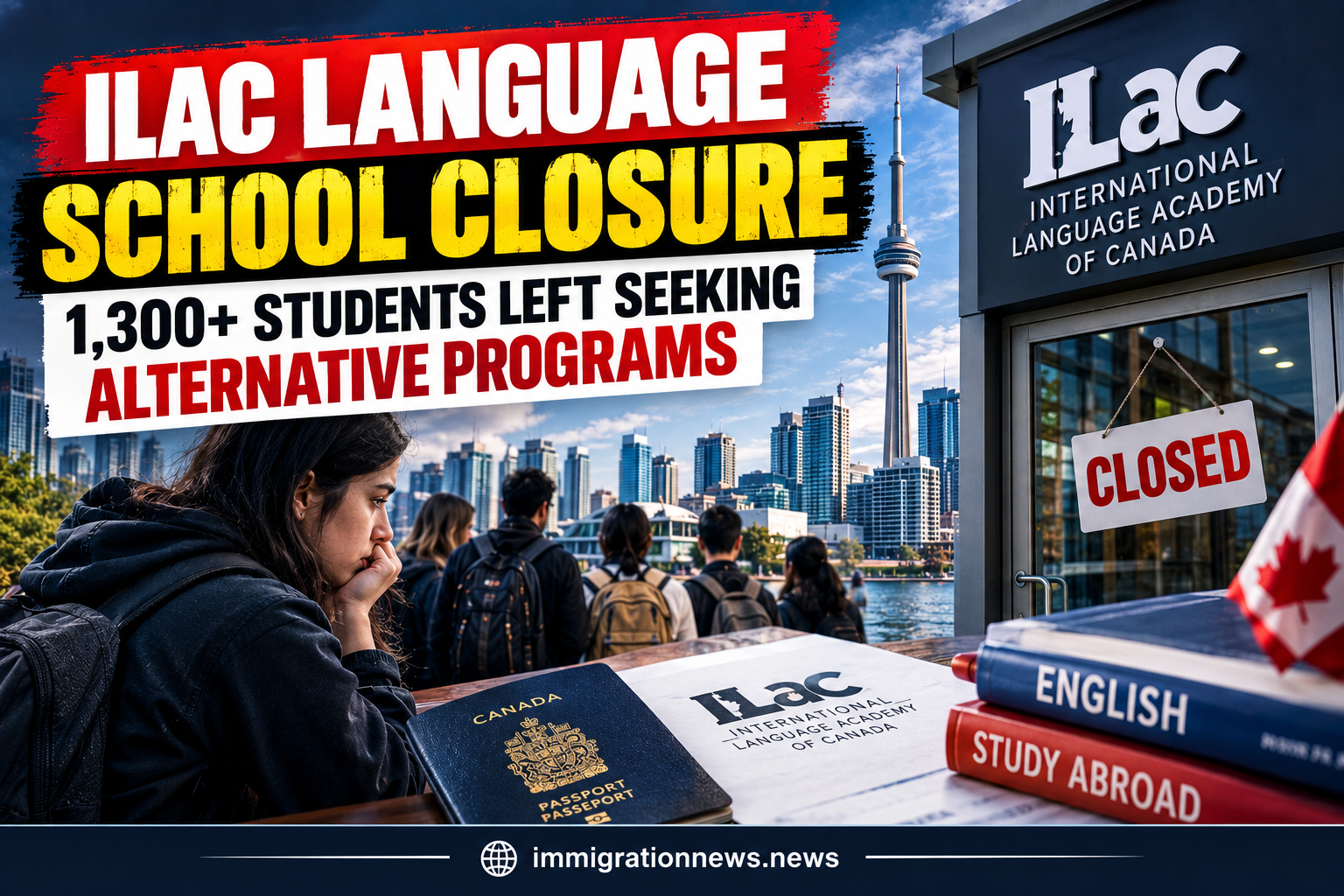
One of Canada’s largest private language schools has shut its doors abruptly. The International Language Academy of Canada, widely known as ILAC, filed for bankruptcy and closed its operations in Toronto and Vancouver, according to a September 23, 2026 report. The ILAC language school closure directly affects more than 1,300 students who were actively enrolled in English-language programs at the time of the shutdown.
Despite ILAC’s significant size within Canada’s private language education sector, immigration experts say the broader impact of this closure on the country’s international student population is comparatively limited—a distinction that matters considerably for anyone trying to understand what comes next.
Quick Highlights : ILAC Language School Closure
- The ILAC language school closure affects more than 1,300 students in Toronto and Vancouver
- ILAC filed for bankruptcy, ending operations abruptly across both campuses
- Languages Canada is coordinating placement of affected students into alternative programs at no additional tuition cost
- Most ILAC students held visitor status rather than study permits, limiting the immigration fallout
- ILAC students were never eligible for a Post-Graduation Work Permit regardless of the closure
- International enrollment at private language schools fell nearly 46% between 2019 and 2025
- EC English also recently shut its Canadian operations, affecting 471 additional students
Why the ILAC Language School Closure Has a Limited Immigration Impact
Despite the scale of the school itself, the ILAC language school closure carries a more contained immigration impact than its size might suggest. Languages Canada, the organization representing English and French language schools across the country, is actively working with member institutions to place affected students into alternative language programs without requiring them to pay additional tuition.
For a significant portion of the ILAC’s student body, this closure won’t directly affect their immigration status at all. The International Language Academy of Canada (ILAC) was a private school offering language instruction, and its students were never eligible for a Post-Graduation Work Permit after completing their programs there. ILAC also ran several short-term courses of six months or less, and many of its language students were actually in Canada as visitors rather than holders of a study permit—a critical distinction that shapes how disruptive this closure genuinely is for those affected.
Recent policy changes have also made these language programs progressively less attractive to international students more broadly. Tighter spousal open work permit rules now generally prevent students in language programs from bringing a spouse or partner to Canada on an open work permit. At the same time, Canada’s study permit cap has reduced the overall number of international students who need language training before pursuing further studies in the country.
Pathway Students Face a More Complicated Situation
While the direct immigration consequences of the ILAC language school closure are limited for many, one specific group faces a genuinely more complicated path forward: students enrolled in ILAC’s Pathway Programs.
These programs allowed international students to improve their English proficiency before transferring into participating Canadian colleges and universities, and ILAC maintained pathway agreements with dozens of post-secondary institutions across the country. However, studying at ILAC itself never made a student eligible for a PGWP, nor did time spent at ILAC count toward the eventual length of a PGWP. Students would complete the ILAC portion of their studies, then transfer to a partner institution—only becoming potentially PGWP-eligible after graduating from a program and institution that both met IRCC’s specific eligibility requirements.
For students who were using ILAC as a stepping stone toward further Canadian study, the ILAC language school closure means finding an entirely different route into their intended college or university. It remains genuinely unclear whether students being transferred to other language schools following this closure will retain access to similar pathway agreements with the same colleges and universities ILAC had partnered with.
Why Language Schools Keep Closing in Canada
The ILAC language school closure is unfolding against a backdrop of sharply declining demand across Canada’s entire private language education sector. The number of international students studying English or French at private language schools fell from 150,112 in 2019 to just 81,636 in 2025—a decline of nearly 46 percent over that period.
Several policy shifts have directly contributed to this downward trend. The study permit cap has meaningfully reduced the flow of new international students into Canada, including those who might otherwise have needed language training before beginning further studies. Language programs have also become considerably less attractive to students hoping to bring their families along, since current spousal open work permit rules prevent students in private schools or language programs from bringing a spouse or partner to Canada on an open work permit.
ILAC is not the only casualty of these combined pressures. EC English shut down its Canadian operations shortly before the ILAC language school closure, affecting an additional 471 international students across Montreal, Toronto, and Vancouver.
What Currently Enrolled Students Should Do
What comes next depends heavily on whether a student was already studying at ILAC when the closure happened, or was still planning to attend. Students already enrolled don’t need to independently find a replacement school—Languages Canada is actively working with its member institutions to place affected students into alternative language programs at no additional tuition cost.
Before enrolling elsewhere, students should confirm exactly where they are being transferred and whether that new program genuinely meets their needs. This step is particularly important for anyone who was enrolled in an ILAC Pathway Program specifically, since it remains unclear whether replacement language schools will offer equivalent pathways to PGWP-eligible partner colleges and universities.
Students who were in a short-term program as visitors to Canada may find that transferring to another short language program has no meaningful impact on their status. Those holding an actual study permit, however, will need to apply for a new study permit reflecting their change of school. Students who had separately paid ILAC for accommodation or other services should also check independently whether those arrangements will continue or need to be renegotiated entirely.
What Students Who Hadn’t Started Yet Should Do
For international students who were planning to attend ILAC but had not yet begun their studies, the ILAC language school closure means reconsidering their plans and securing admission to a different institution entirely.
Anyone who was planning to take a short language course simply as a visitor may need only to choose a different language school. Those who were planning to apply for a study permit specifically to attend ILAC will need to secure admission to another eligible school and use that new letter of acceptance for a fresh study permit application.
Students should be especially careful if ILAC was intended as the first stage of a broader Pathway Program. Before committing to another language school, it’s worth confirming whether that new school has its own agreement with a PGWP-eligible college or university that aligns with the student’s actual long-term academic goals. Anyone still deciding which Canadian school is right for them should weigh factors including their ability to bring family members and their work eligibility after graduation, and consider speaking with a regulated immigration consultant to ensure their chosen path genuinely aligns with their broader immigration objectives.
Key Takeaways Of ILAC Language School Closure
The ILAC language school closure has left more than 1,300 students needing to find alternative arrangements, but its overall impact on Canada’s international student population remains relatively contained given that most ILAC students held visitor status and were never PGWP-eligible in the first place. Students enrolled in ILAC’s Pathway Programs face the most significant disruption, given the uncertainty around whether equivalent transfer agreements will be available elsewhere. This closure, alongside EC English’s recent shutdown, reflects a broader, sustained decline in Canada’s private language education sector driven by the study permit cap and tighter spousal work permit rules.
FAQs : ILAC Language School Closure
How many students were affected by the ILAC language school closure?
More than 1,300 students enrolled at ILAC’s Toronto and Vancouver campuses were affected when the school filed for bankruptcy and closed.
Will affected ILAC students have to pay extra tuition to continue their studies?
No. Languages Canada is coordinating with member institutions to place affected students into alternative language programs at no additional tuition cost.
Did ILAC students qualify for a Post-Graduation Work Permit?
No. ILAC was a private language school, and its students were never eligible for a PGWP regardless of this closure, nor did time at ILAC count toward PGWP length.
What happens to students in ILAC’s Pathway Programs?
This group faces the most uncertainty, since it’s unclear whether replacement language schools will offer equivalent pathway agreements to the same partner colleges and universities ILAC worked with.
Why are private language schools closing across Canada?
International enrollment at private language schools fell nearly 46% between 2019 and 2025, driven largely by Canada’s study permit cap and spousal open work permit restrictions that make these programs less attractive.
Source : Moving 2 Canada
Read About : Canada Resumes Removals to Bahrain, Kuwait, Qatar and the UAE After Temporary Halt in 2026




One thought on “ILAC Language School Closure Leaves 1,300 Students Scrambling For Alternatives”