
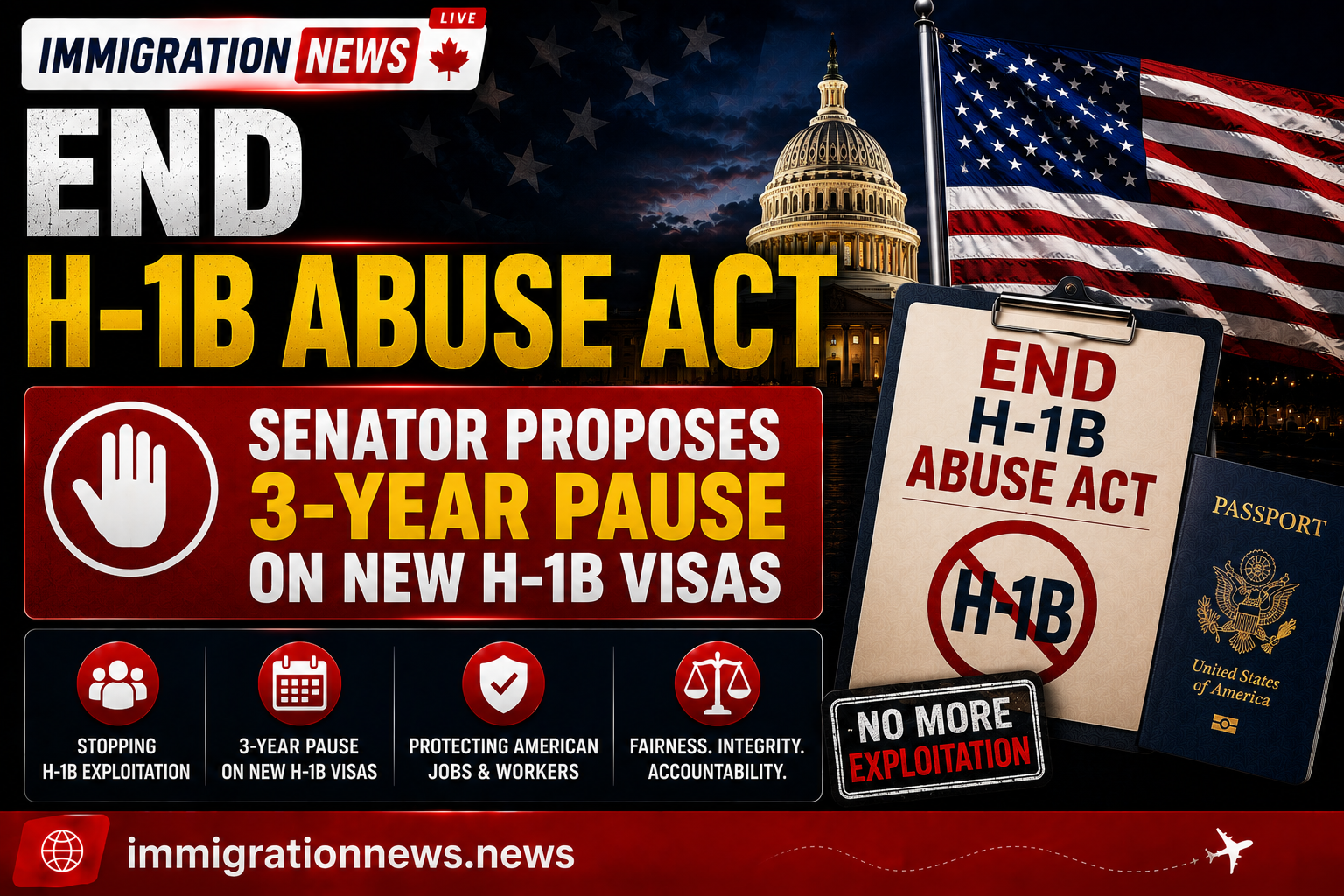
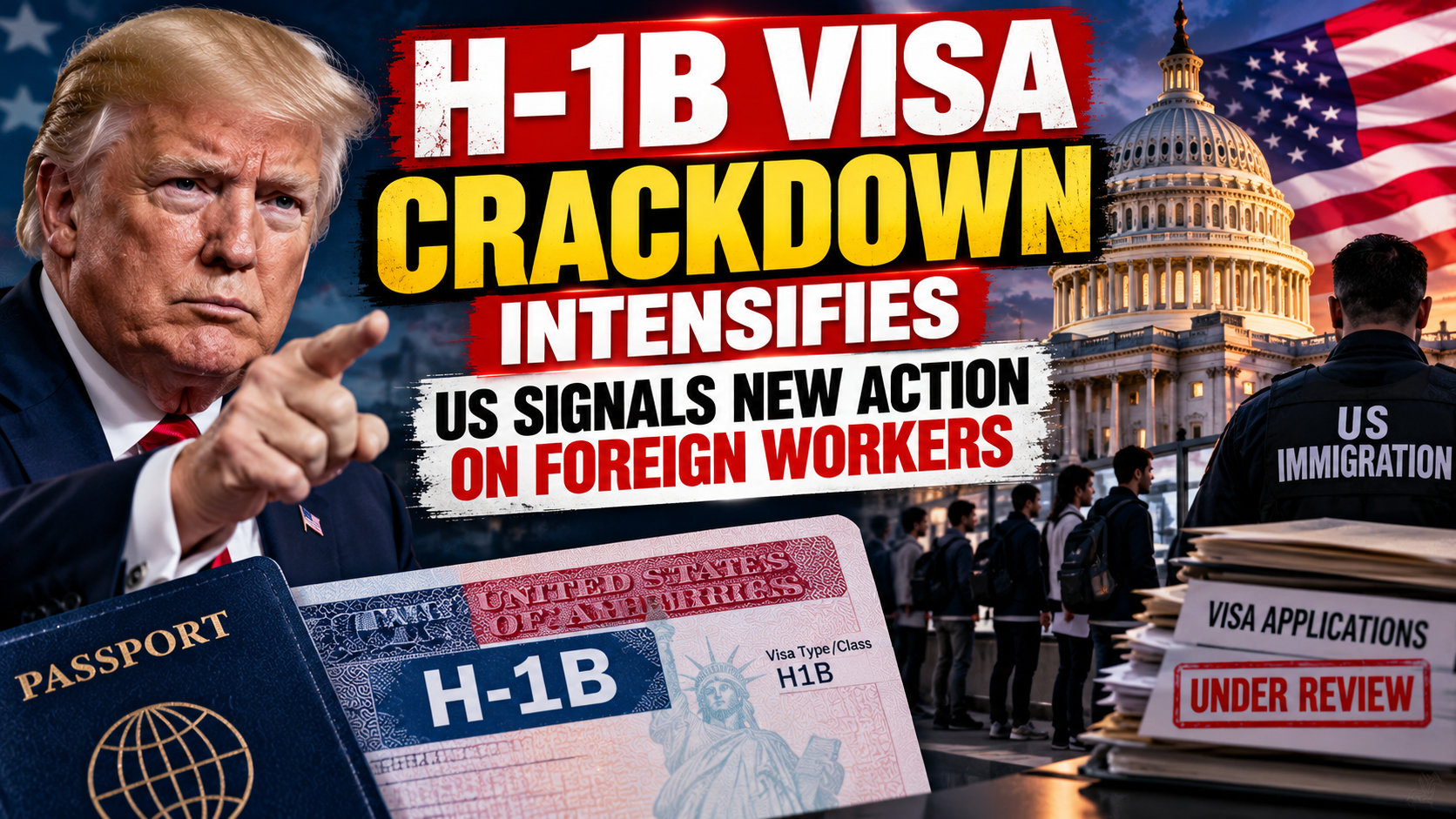
A sweeping new piece of legislation could reshape the H-1B visa program entirely. Senator Tim Sheehy, a Republican from Montana, introduced the End H-1B Abuse Act on Thursday, July 23, 2026—a bill that proposes suspending all new H-1B visa issuance for three years, permanently codifying the Trump administration’s $100,000 fee, and imposing some of the most far-reaching restrictions the program has ever faced.
“We shouldn’t be issuing work permits that make it easier to undercut American workers when we have the talent right here at home,” Sheehy said in a statement announcing the legislation, formally titled the End H-1B Visa Abuse Act of 2026.
Quick Highlights : End H-1B Abuse Act
- The End H-1B Abuse Act proposes a three-year suspension of all new H-1B visa issuance
- The bill would permanently codify Trump’s $100,000 H-1B petition fee into law
- The annual H-1B cap would be reduced from 65,000 to 25,000 once the program resumes
- A new $200,000 minimum salary requirement would apply to H-1B workers
- The bill would eliminate the lottery system in favor of wage-based selection
- It would end the “dual intent” provision allowing H-1B holders to pursue green cards
- The legislation would effectively end OPT-style work authorization for foreign students
- The bill arrives just days after a federal appeals court declined to stay a ruling invalidating the existing $100,000 fee
What the End H-1B Abuse Act Actually Proposes
At its core, the End H-1B Abuse Act would halt the issuance of new H-1B visas entirely for three years. After that suspension period, the program would resume under significantly stricter terms, with the annual cap on new H-1B visas cut from the current 65,000 to just 25,000.
Beyond the pause itself, the bill introduces a new $200,000 minimum salary requirement for H-1B workers—a dramatic increase designed to ensure the program is used exclusively for genuinely high-value specialists rather than lower-cost labor substitution. The maximum duration of H-1B status would also shrink from six years to three years under the proposed legislation.
Codifying the $100,000 Fee
One of the most consequential elements of the End H-1B Abuse Act is its attempt to permanently write Trump’s controversial $100,000 H-1B petition fee into federal law. This provision arrives at a particularly pointed moment: on Friday, the Boston-based First Circuit Court of Appeals denied the Trump administration’s request to pause a lower court ruling that had already struck down the fee.
U.S. District Judge Leo T. Sorokin ruled on June 8 that the $100,000 fee amounted to an unlawful tax not authorized by Congress. By seeking to codify the same fee through actual legislation, the End H-1B Abuse Act represents an attempt to achieve through Congress what the administration could not sustain through executive action alone.
Ending the Lottery System and Dual Intent
The End H-1B Abuse Act would fundamentally restructure how H-1B visas are allocated. Rather than the current random lottery system, the bill proposes replacing it entirely with a wage-based selection process—prioritizing petitions offering the highest salaries over the current model, which gives every registered candidate an equal chance regardless of proposed compensation.
The legislation would also eliminate the “dual intent” provision currently embedded in federal law, which allows H-1B visa holders to simultaneously pursue permanent residency while working in the U.S. on a temporary visa. Removing this provision would force H-1B holders to more clearly demonstrate temporary intent, complicating the pathway many currently use to transition toward a green card.
Additional Restrictions Under the Bill
The End H-1B Abuse Act goes considerably further than fee and cap changes alone. The bill would:
- Ban concurrent employment arrangements and third-party staffing agency models, which allow companies to place H-1B workers at client sites rather than directly employing them
- Prevent H-1B visa holders from bringing dependents into the U.S., effectively ending H-4 visas for spouses and children
- Bar federal agencies from sponsoring or directly employing non-immigrant visa holders, whether directly or through contractors
- Eliminate work authorization for foreign students and certain exchange visitors by ending Optional Practical Training (OPT)-style programs entirely
The H-4 visa provision is particularly significant, since it currently allows spouses and children of H-1B holders to open bank accounts, study, and live in the United States alongside the primary visa holder. Ending this pathway would represent a major disruption for H-1B families already established in the country.
Why Sheehy Says This Legislation Is Necessary
Defending the End H-1B Abuse Act, Sheehy argued the program has fundamentally drifted from its intended purpose. “The H-1B programme was created to address workforce shortages for specialised, difficult-to-fill positions—not to displace qualified, hardworking Americans with cheaper, foreign labour,” Sheehy said.
According to Sheehy’s office, the H-1B program “now functions as a large-scale labor substitution pipeline that displaces hardworking Americans instead of supplementing them.” His office also raised national security concerns, arguing that employing large numbers of foreign contract workers in sensitive sectors like artificial intelligence and defense-adjacent industries “raises serious concerns about data security, insider risk, and foreign influence.”
Sheehy described the legislation as “a critical, proactive step” to protect American workers, curb H-1B fraud, and address what he characterized as national security risks stemming from a program operating with inadequate guardrails for years.
The Wage Gap Argument Behind the Bill
Supporters of the End H-1B Abuse Act point to research suggesting the program has been used to undercut American wages. According to a 2026 National Bureau of Economic Research study cited in coverage of the bill, H-1B workers earn on average 15% less than comparable American workers—a gap that critics argue demonstrates the program’s drift away from its original purpose of filling genuine skill shortages.
Major companies including Disney, Tesla, Meta, and Tata Consultancy Services have faced lawsuits in recent years over allegations of using the H-1B system to replace American workers. Federal data shows that for Fiscal Year 2026, seven of the top ten companies seeking H-1B visas are technology firms.
Who Supports the Legislation
The End H-1B Abuse Act has received formal support from two advocacy organizations: the Immigration Accountability Project and the Federation for American Immigration Reform (FAIR). Both groups have long advocated for stricter controls on employment-based immigration programs, viewing the current H-1B structure as vulnerable to abuse by employers seeking to reduce labor costs.
What Happens Next After End H-1B Abuse Act
As introduced, the End H-1B Abuse Act has not yet become law and remains subject to the full U.S. legislative process, including committee review, potential amendments, and votes in both the Senate and House of Representatives. Given the sweeping scope of its proposed changes—spanning visa allocation, wage floors, dependent visas, federal hiring practices, and student work authorization—the bill is likely to face significant debate and opposition from technology industry groups and immigration advocates who rely heavily on the current H-1B framework.
For current H-1B holders, prospective applicants, and the companies that sponsor them, the End H-1B Abuse Act represents a serious signal of the direction some lawmakers want to take the program, even though its ultimate fate in Congress remains uncertain.
Key Takeaways Of End H-1B Abuse Act
The End H-1B Abuse Act represents one of the most sweeping legislative attempts in recent years to overhaul the H-1B visa program, proposing a three-year pause on new visas, a reduced annual cap of 25,000, a $200,000 wage floor, and the elimination of dual intent, dependent visas, and OPT-style student work authorization. Arriving just days after a federal appeals court declined to revive the administration’s existing $100,000 fee, the bill seeks to achieve similar restrictions through permanent legislation rather than executive action. While the legislation has not yet been enacted, its scope signals a significant policy direction that H-1B stakeholders, particularly in the technology sector, should monitor closely.
Frequently Asked Questions : End H-1B Abuse Act
What does the End H-1B Abuse Act propose?
The bill proposes a three-year suspension of new H-1B visa issuance, a reduced annual cap of 25,000 visas, a $200,000 minimum salary requirement, codification of the $100,000 H-1B fee, and elimination of the lottery system, dual intent provision, dependent visas, and OPT work authorization.
Has the End H-1B Abuse Act become law?
No. The bill was introduced on July 23, 2026 and remains subject to the full U.S. legislative process, including committee review and votes in Congress.
Why is the $100,000 fee provision significant right now?
The bill’s fee codification comes just days after the First Circuit Court of Appeals declined to stay a lower court ruling that struck down the existing fee as an unlawful tax not authorized by Congress.
Who supports the End H-1B Abuse Act?
The bill has received formal backing from the Immigration Accountability Project and the Federation for American Immigration Reform (FAIR).
How would this bill affect H-1B workers’ families?
The legislation would prevent H-1B visa holders from bringing dependents to the U.S., effectively ending H-4 visas that currently allow spouses and children to live, study, and open bank accounts in America.
Source : The Telegraph India
Read About : Canada US Travel Advisory Cyclospora: What Ottawa Added And What It Left Out
One thought on “End H-1B Abuse Act: Senator Proposes 3-Year Pause On New H-1B Visas”