
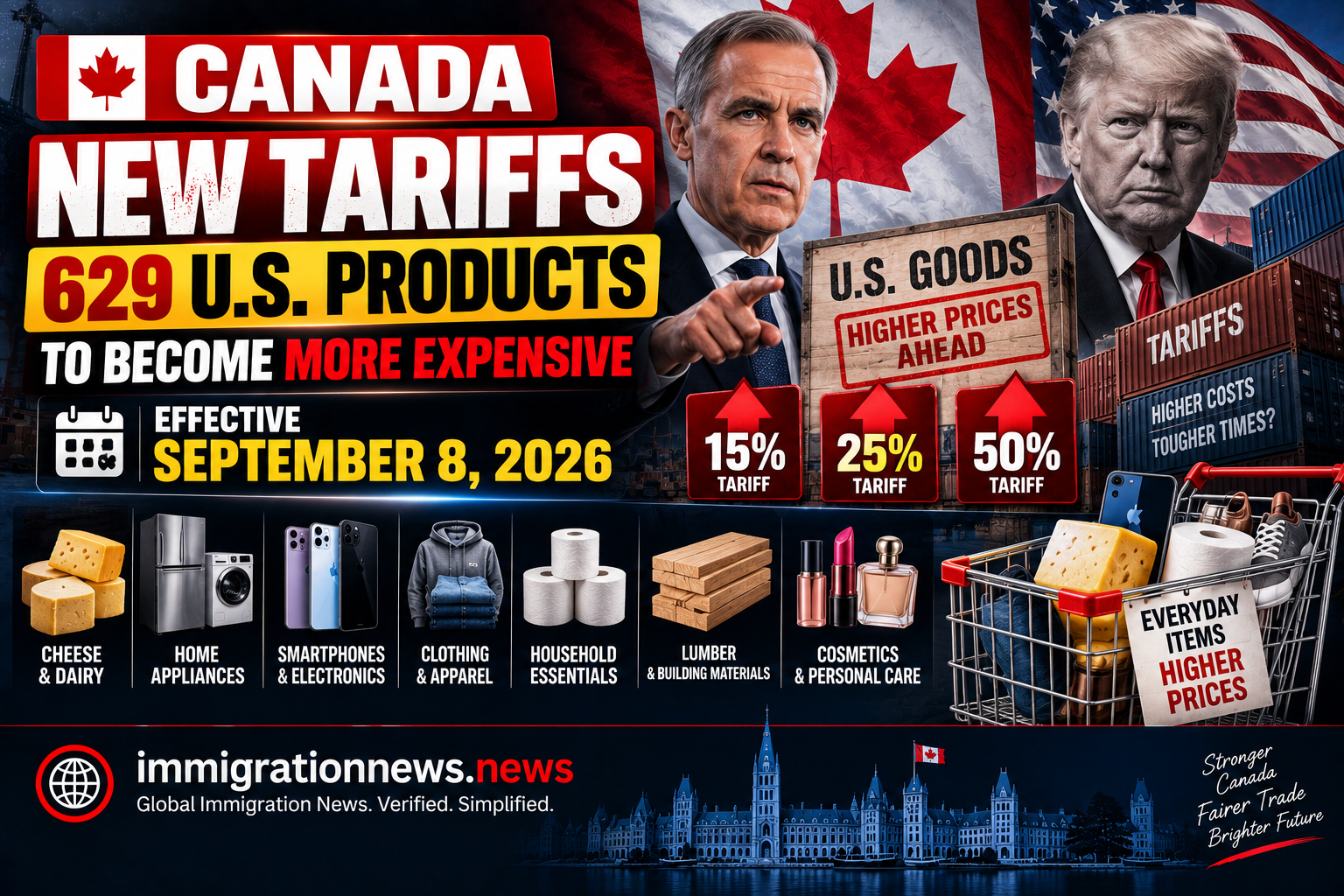
Canada has imposed new counter-tariffs on 629 U.S.-origin tariff items worth approximately $27.6 billion in annual imports, with duties of 15%, 25% and 50% taking effect from September 8, 2026.
The Canada tariffs September 8 2026 measures cover a wide range of products, from steel and aluminum to clothing, cosmetics, cheese, refrigerators, smartphones, furniture, plywood, paper products and sporting equipment. The revised tariff schedule was published by the Department of Finance Canada on August 26 after the government removed 254 fish and seafood classifications and added nine other items.
What Are the Canada Tariffs September 8 2026 Changes?
The Canada tariffs September 8 2026 measures took legal effect at 12:01 a.m. on September 8, 2026 and apply to qualifying U.S.-origin goods entering Canada.
The revised list contains 629 tariff items, representing approximately $27.6 billion in annual imports from the United States. The tariff rates are divided into three levels: 15%, 25% and 50%, depending on the product classification.
| Tariff rate | Major affected categories |
|---|---|
| 50% | Steel, aluminum, clothing, cosmetics, smartphones, furniture, plywood, plastics, dairy ingredients, sporting goods |
| 25% | Cheese, refrigerators, washing machines, dryers, softwood lumber, toilet paper, kitchen furniture, certain wiring |
| 15% | Certain machinery, dies and moulds, HVAC equipment, forklifts and agricultural machinery |
The Canadian government has framed these measures as a response to U.S. tariffs imposed on Canadian products. For steel and aluminum, existing Canadian counter-tariffs that had been set at 25% will increase to 50% to correspond with the higher U.S. rate described in the government’s tariff measures.
Why Are Canadian Shoppers Watching These Tariffs?
The Canada tariffs September 8 2026 measures do not automatically mean that every affected product will become 15%, 25% or 50% more expensive at retail.
A tariff is imposed on the applicable customs value of imported goods. The eventual price paid by a Canadian consumer depends on several other factors, including transportation, distribution costs, retailer margins, existing inventory and whether businesses absorb some of the additional cost.
For example, if a U.S.-origin appliance has a customs value of $400 and is subject to a 25% tariff, the tariff itself would add $100 to the import cost. That does not necessarily mean the consumer will see exactly $100 added to the final shelf price.
Retailers could absorb part of the increase, suppliers could renegotiate costs, or consumers could see a larger increase if businesses pass through additional supply-chain expenses.
Clothing And Apparel Face 50% Tariffs
The Canada tariffs September 8 2026 schedule places numerous clothing and apparel classifications in the highest 50% tariff category.
Affected products include certain cotton T-shirts, knitted pullovers and cardigans, synthetic dresses and trousers, men’s wool suits and blazers, overcoats, jackets, synthetic gloves and other garments made from coated or laminated materials.
The impact will depend heavily on where individual products are manufactured. A Canadian retailer selling an international brand may not necessarily face the new duty if the specific merchandise is manufactured outside the United States.
Therefore, the tariff applies according to the product’s origin and tariff classification rather than simply the nationality of the brand selling it.
Cosmetics And Beauty Products Also Face 50%
American-origin beauty products are another major category affected by the Canada tariffs September 8 2026 measures.
The revised schedule includes perfumes and toilet waters, lip makeup, eye makeup preparations, manicure and pedicure products and certain hair preparations at the 50% rate.
Canadian consumers who purchase U.S.-origin versions of these products could eventually see higher prices if importers, distributors and retailers pass the additional costs through the supply chain.
However, products manufactured in Canada or in other countries would not automatically be affected simply because they compete with U.S. brands.
Cheese And Dairy Products Are On The List
Food is another category receiving significant attention under the Canada tariffs September 8 2026 schedule.
Various types of cheese, including cheddar, mozzarella, brie, gouda, provolone, Swiss, parmesan, havarti, romano, blue-veined and processed cheese, are included at a 25% tariff rate.
Certain concentrated milk and cream products, whey protein concentrates, powdered whey, milk albumin and casein products face a 50% tariff.
Natural honey and molasses are also included at the 50% level, while certain baking mixes and prepared doughs containing butterfat are subject to the highest tariff rate.
Refrigerators, Washing Machines And Other Appliances
The Canada tariffs September 8 2026 list also includes several major household appliances.
Refrigerators and freezers are subject to a 25% tariff, while household washing machines and clothes dryers are also included at 25%.
Electric stoves, ranges, ovens, cookers, rice cookers, bread makers, grills and cooking plates are among the other kitchen-related products affected.
Certain dishwasher components, including specific water-containment chambers and door assemblies, are also included at 25%, although the revised list does not place the finished household dishwasher itself in the same category.
Toilet Paper And Household Paper Products
Some everyday paper products are included in the Canada tariffs September 8 2026 measures.
Toilet paper, facial tissues and certain towels face tariffs of 25%, while paper tablecloths, serviettes and certain other paper household products can face rates as high as 50%.
The schedule also includes envelopes, notebooks, binders, folders, corrugated cartons, paper bags and other packaging and stationery products.
Businesses that rely heavily on U.S.-origin paper packaging could therefore experience higher input costs even when the final consumer product itself is manufactured in Canada.
Plastics And Packaging Could Become More Expensive
Plastic products are another category exposed to the 50% tariff.
The Canada tariffs September 8 2026 list includes certain vinyl floor and wall coverings, self-adhesive plastic film and tape, polyethylene bags and packaging, plastic plates, cups, trays, tableware and kitchenware.
The effects could extend beyond retail products because businesses often use plastic packaging as an input.
For example, a Canadian food-service company importing qualifying U.S.-origin packaging could face a higher landed cost, potentially creating pressure for the company to raise prices, change suppliers or absorb the additional expense.
Lumber, Plywood And Drywall
Home renovation is another area Canadians could watch following the Canada tariffs September 8 2026 changes.
Softwood lumber, including pine, fir, spruce and hemlock varieties, is subject to a 25% counter-tariff.
Plywood and veneered panels face a 50% rate, while gypsum drywall boards faced with paper are also included at 50%.
Copper wire added to the revised schedule on August 26 also faces a 50% tariff.
For homeowners planning renovations, the eventual impact will depend on whether contractors and retailers use U.S.-origin materials, whether existing inventory was imported before the measures took effect and whether alternative suppliers are available.
The tariff therefore does not mean that every renovation project in Canada will immediately become 50% more expensive.
Furniture And Lighting Products
The Canada tariffs September 8 2026 measures also cover furniture and lighting.
Wooden household furniture is generally subject to a 50% tariff under the listed classifications, while certain kitchen furniture and cabinets are included at 25%.
Seating products can fall into different tariff categories depending on their specific classification and materials.
Chandeliers, pendant lights and certain other light fixtures are also subject to a 50% tariff, potentially affecting consumers shopping for U.S.-origin home furnishings and lighting.
Steel And Aluminum Face The Highest Rate
Steel and aluminum represent some of the largest groups within the revised tariff schedule.
Under the Canada tariffs September 8 2026 measures, numerous steel and aluminum products face a 50% tariff.
These include steel ingots, semi-finished products, flat-rolled steel, bars, rods, wire, structural sections, pipes, tubes and fittings.
Aluminum bars, rods, wire, plates, sheets, foil, tubes, pipes and structural profiles are also included.
Prefabricated steel structures such as bridges, towers, scaffolding and certain doors and window frames are covered as well.
Because metals are important inputs for construction and manufacturing, the impact could extend beyond the initial importer.
A Canadian company purchasing U.S.-origin steel for a construction project could face a higher input cost, while manufacturers using U.S.-origin aluminum could similarly experience increased production expenses.
Smartphones And Video Game Consoles
Some of the most visible consumer electronics are also included.
The Canada tariffs September 8 2026 schedule places smartphones in the 50% tariff category.
Certain video game consoles, including major gaming platforms, are also subject to a 50% duty when the applicable units qualify as U.S.-origin goods under the tariff rules.
This does not mean that every smartphone or gaming console sold in Canada will receive a 50% price increase.
Many electronics are manufactured or assembled across multiple countries, so determining whether a specific product is subject to the tariff requires looking at its origin and applicable customs classification.
Sporting And Recreational Products
Golf clubs and equipment, fishing rods and exercise equipment are among the recreational products listed at 50%.
Wood charcoal added to the revised schedule on August 26 also faces a 50% tariff.
For consumers, this could mean higher prices on some U.S.-origin recreational products if retailers pass through the additional import costs.
Again, the impact will depend on sourcing. Canadian retailers may respond by shifting toward products manufactured in other countries where commercially practical.
Agricultural Equipment And Tools
The Canada tariffs September 8 2026 schedule does not place every machinery product at the same rate.
Certain forklifts, works trucks and agricultural equipment are subject to tariffs in the 15% to 25% range.
Certain powered hand tools, saws and chainsaws can face 25% duties, while some hand-tool classifications reach 50%.
Specialized dies, moulds and machinery-related tools are among the products that can fall within the 15% category.
Full Overview Of The 629 Tariff Items
The revised schedule covers products across numerous chapters of Canada’s customs tariff system.
| Product group | Main rate(s) |
|---|---|
| Dairy ingredients | 50% |
| Cheese | 25% |
| Honey and molasses | 50% |
| Cosmetics | 50% |
| Plastics | 50% |
| Softwood lumber | 25% |
| Plywood | 50% |
| Paper products | 25%–50% |
| Clothing | 50% |
| Carpets and floor coverings | 25%–50% |
| Drywall | 50% |
| Steel | 50% |
| Aluminum | 50% |
| Machinery and appliances | 15%–25% |
| Electrical equipment | 25%–50% |
| Furniture | 25%–50% |
| Sporting goods | 50% |
The government’s detailed tariff schedule remains the definitive reference for determining whether a particular product is covered.
Will The New Tariffs Raise Prices Across Canada?
The Canada tariffs September 8 2026 measures could contribute to higher prices, but the timing and size of those increases will differ significantly between products.
Retailers may already have inventory imported before September 8, meaning consumers could continue purchasing some affected products at previous prices for weeks or months.
Businesses can also absorb some of the additional costs or negotiate lower prices with suppliers.
In other cases, retailers may switch to suppliers from Canada, Mexico, Europe or Asia-Pacific markets if alternative products are available at competitive prices.
Do The Tariffs Apply To Canadian-Made Products?
No. The Canada tariffs September 8 2026 measures target qualifying U.S.-origin goods.
A product sold by an American company is not automatically subject to the tariff simply because the brand is American. The relevant consideration is whether the imported product qualifies as U.S.-origin under the applicable country-of-origin rules.
Similarly, a product that passes through a U.S. distribution centre is not necessarily treated as a U.S.-origin product.
Canadian businesses should therefore examine the applicable tariff classification and origin rules rather than relying only on the brand name or shipping route.
What About Products Already In Canada?
Products that were already imported and sitting in Canadian warehouses or retail inventory before the tariffs took effect are not retroactively subjected to the new duties simply because they remain on store shelves after September 8.
The Canada tariffs September 8 2026 impact will therefore develop progressively as new shipments enter Canada under the revised tariff schedule.
This is one reason consumers may not see immediate price changes on every affected product.
The timing will depend on inventory turnover, supplier contracts, purchasing schedules and how quickly retailers replenish products subject to the new duties.
Why The 629-Item List Was Revised
The government initially published a larger list containing 874 tariff items.
Following revisions on August 26, 254 fish and seafood classifications were removed and nine other items were added, resulting in the current 629-item schedule.
This change highlights why consumers and businesses should rely on the latest official tariff schedule instead of older lists circulating online.
The tariff classification of a particular product can determine whether it is covered and which duty rate applies.
What Canadians Should Watch After September 8
The Canada tariffs September 8 2026 measures are likely to affect different parts of the economy at different speeds.
The most visible categories for consumers could include clothing, cheese, appliances, smartphones, gaming equipment, furniture and beauty products.
For businesses, the broader concern may be the cost of production inputs such as steel, aluminum, lumber, plywood, paper, plastics and copper wire.
If companies cannot absorb these costs, some of the increases may eventually be reflected in the prices charged to consumers.
The Canadian government has also announced support measures for affected workers and businesses, including financing mechanisms intended to help companies manage the effects of the trade dispute.
The ultimate economic impact will depend on how long the tariff measures remain in place, how businesses adjust their supply chains and whether the United States changes its own tariff policies.
Bottom Line
The Canada tariffs September 8 2026 measures represent a major expansion of Canadian counter-tariffs on U.S.-origin goods, covering 629 tariff items worth approximately $27.6 billion in annual imports.
The highest 50% rate applies to major groups including steel, aluminum, clothing, cosmetics, plastics, smartphones, furniture, plywood and several recreational products.
A 25% rate applies to products including cheese, refrigerators, washing machines, dryers, softwood lumber and toilet paper, while certain machinery and equipment face 15% duties.
Consumers should not assume that the tariff percentage will translate directly into the same percentage increase at the checkout. The eventual impact will depend on inventory, sourcing, retailer margins and supply-chain adjustments.
For anyone buying U.S.-origin goods in Canada, the most important distinction is whether the specific product is covered by the revised tariff schedule and qualifies as U.S.-origin.
The Department of Finance Canada’s revised product list remains the most reliable reference for checking individual tariff classifications.
FAQs : Canada Tariffs September 8 2026
What are the Canada tariffs September 8 2026?
Canada introduced counter-tariffs of 15%, 25% and 50% on 629 U.S.-origin tariff items representing approximately $27.6 billion in annual imports.
Which products face a 50% tariff?
Steel, aluminum, many clothing products, cosmetics, smartphones, plastics, plywood, furniture, certain dairy ingredients and sporting goods are among the categories subject to 50% duties.
Will Canadian consumers pay 50% more for affected products?
Not necessarily. The tariff is applied to the applicable customs value of imported goods. Retail prices also depend on shipping, distribution, retailer margins, inventory and sourcing decisions.
Are all U.S. products affected?
No. Only products included in the revised tariff schedule are covered. Other U.S. products may continue entering Canada without these specific counter-tariffs.
Do the tariffs apply to Canadian-made goods?
No. The measures target qualifying U.S.-origin goods. However, Canadian manufacturers using affected U.S.-origin materials could experience higher input costs.
Can retailers avoid the tariffs?
Retailers cannot simply avoid a tariff when importing a qualifying U.S.-origin product. However, businesses may change suppliers, source products from other countries or use Canadian-made alternatives where available.
Are products already in Canada affected?
Goods that were already imported before the effective date are not retroactively subjected to the new duties simply because they remain in Canadian inventory.
Where can businesses check the complete list?
The revised Department of Finance Canada tariff schedule is the definitive source for checking individual tariff items and applicable rates.
Source : Immigration News Canada
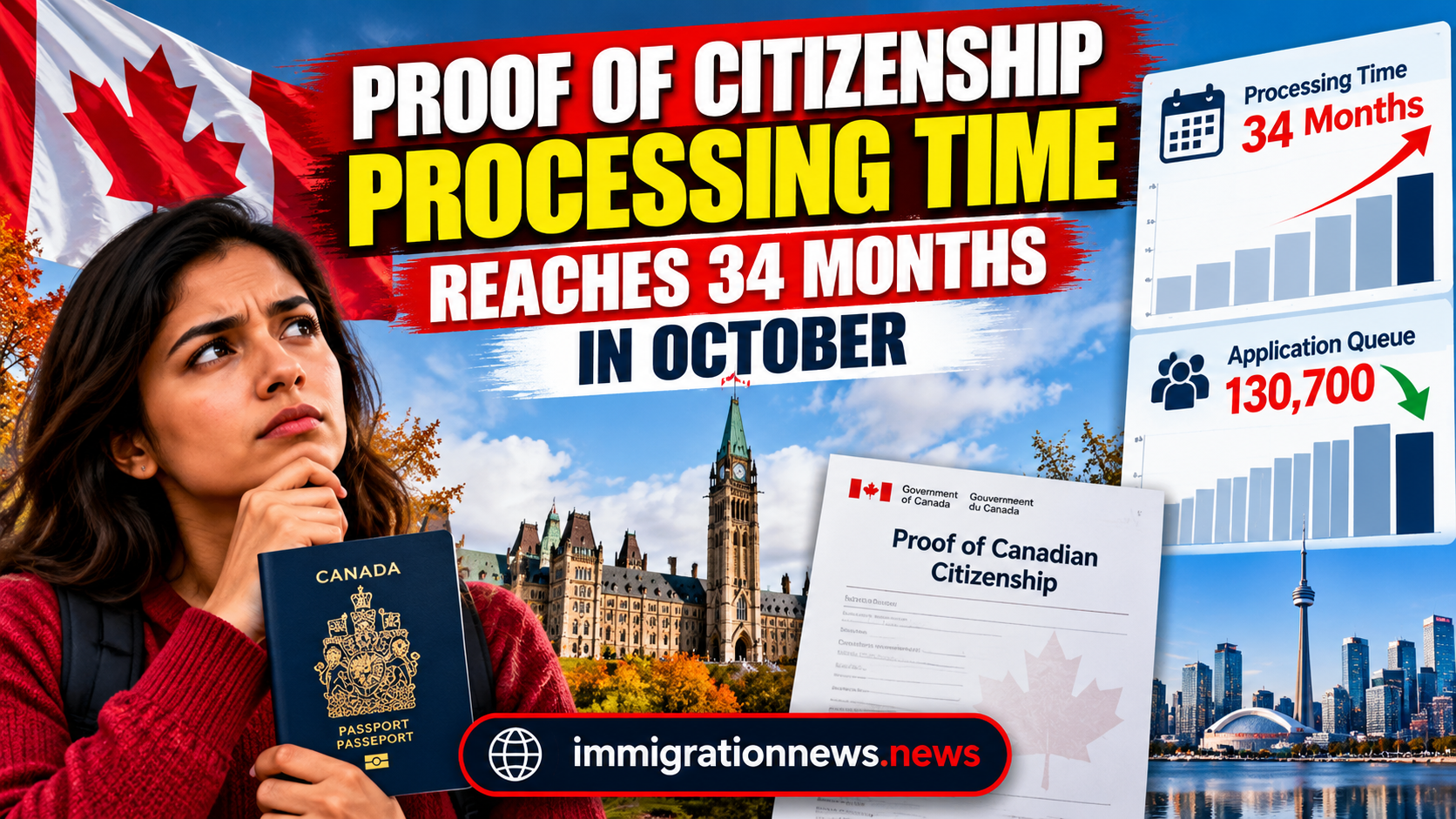
Read About : Canada Proof of Citizenship Processing Time Jumps to 33 Months in September 2026
One thought on “Canada Tariffs September 8 2026: Full List of 629 U.S. Products Facing New Duties”