
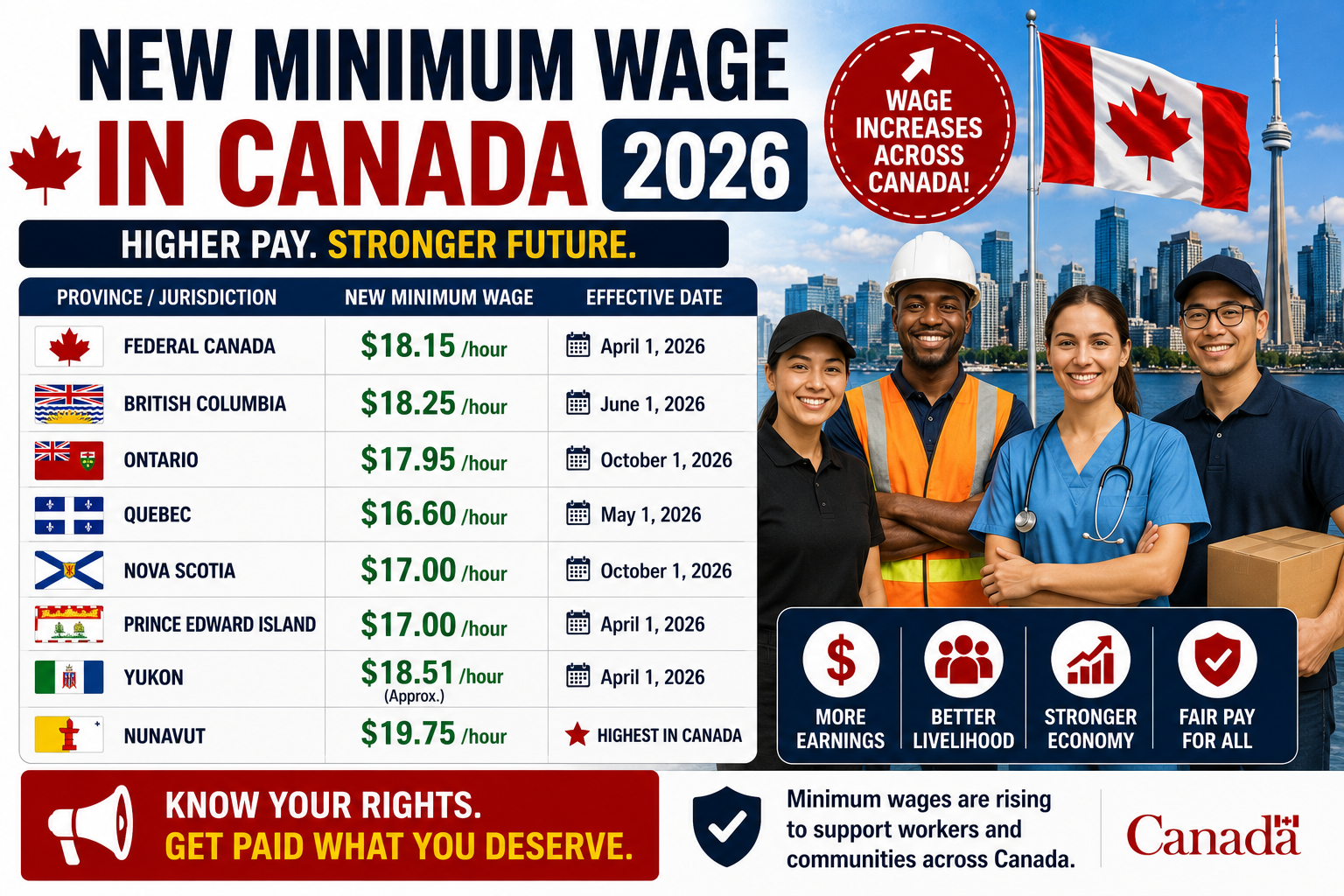
Canada Minimum Wage in Multiple Provinces and Federally Regulated Industries in 2026. Canada is introducing multiple minimum wage increases across provinces and federally regulated industries in 2026. The federal minimum wage officially increased to $18.15 per hour on April 1, 2026, while provinces including British Columbia, Ontario, Quebec, Nova Scotia, and Prince Edward Island are also implementing higher wage rates throughout the year.
Among provinces, British Columbia will have the highest provincial minimum wage at $18.25 per hour starting June 1, 2026, while Nunavut continues to hold the highest overall rate nationally at $19.75 per hour.
Quick Summary : Canada Minimum Wage in Multiple Provinces
| Province / Jurisdiction | New Minimum Wage | Effective Date |
|---|---|---|
| Federal Canada | $18.15 | April 1, 2026 |
| British Columbia | $18.25 | June 1, 2026 |
| Ontario | $17.95 | October 1, 2026 |
| Quebec | $16.60 | May 1, 2026 |
| Nova Scotia | $17.00 | October 1, 2026 |
| Prince Edward Island | $17.00 | April 1, 2026 |
| Yukon | Approx. $18.51 | April 1, 2026 |
| Nunavut | $19.75 | Highest in Canada |
Federal Minimum Wage Officially Increased to $18.15
The Government of Canada officially confirmed a new federal minimum wage of:
💰 $18.15 per hour
effective:
📅 April 1, 2026
The increase represents:
- A $0.40 hourly raise
- A 2.3% annual increase
- A 21% cumulative increase since 2021
Who Gets the Federal Minimum Wage?
The federal minimum wage applies to workers in federally regulated industries, including:
- Banking
- Airlines
- Telecommunications
- Postal services
- Interprovincial transportation
- Federal Crown corporations
Approximately:
👥 1.1 million workers
fall under federally regulated sectors in Canada.
British Columbia Will Have Highest Provincial Wage
British Columbia is set to lead Canadian provinces with the highest provincial minimum wage in 2026.
New BC Minimum Wage:
💰 $18.25 per hour
📅 Effective June 1, 2026
This increase is tied to inflation indexing.
Important Rule:
Because BC’s provincial wage exceeds the federal minimum wage after June 1:
👉 Federally regulated workers in BC must receive the higher provincial rate.
Ontario Minimum Wage Confirmed for 2026
Ontario officially confirmed its new minimum wage increase.
Ontario New Wage:
💰 $17.95 per hour
📅 Effective October 1, 2026
The increase reflects Ontario’s inflation-based formula under the Employment Standards Act.
Quebec Minimum Wage Rising in May 2026
Quebec will increase its general minimum wage to:
💰 $16.60 per hour
📅 Effective May 1, 2026
Increase Details:
- Previous wage: $16.10
- Increase amount: $0.50
- Approximate annual gain: $687 for full-time workers
Nova Scotia Introducing Two Wage Increases
Nova Scotia is implementing a two-step wage increase system in 2026.
| Date | New Wage |
|---|---|
| April 1, 2026 | $16.75 |
| October 1, 2026 | $17.00 |
The province continues using its inflation-plus-one-percent formula.
Prince Edward Island Minimum Wage
Prince Edward Island confirmed a new minimum wage of:
💰 $17.00 per hour
📅 Effective April 1, 2026
Yukon Among Highest Wage Jurisdictions
Yukon is expected to reach approximately:
💰 $18.51 per hour
📅 Effective April 1, 2026
Yukon adjusts wages based on the Whitehorse Consumer Price Index.
Nunavut Still Has Canada’s Highest Minimum Wage
Nunavut continues to hold Canada’s highest minimum wage.
Current Rate:
💰 $19.75 per hour
The higher wage reflects the territory’s extremely high living costs.

6
Why Minimum Wages Are Increasing Across Canada
Canada’s wage increases are largely tied to:
- Inflation adjustments
- Rising living costs
- Housing affordability pressures
- Labour shortages
Most provinces now use automatic CPI-based formulas instead of political negotiations.
Provinces With Largest Wage Gaps
Some provinces remain far below the federal minimum wage even after Canada Minimum Wage in Multiple Provinces.
Alberta Example:
Alberta still maintains:
💰 $15.00 per hour
unchanged since 2019.
This creates one of the largest wage gaps in Canada between provincial and federal workers.
What This Means for Workers
Full-Time Earnings at Federal Minimum Wage
A full-time federally regulated worker earning $18.15/hour could make approximately:
💰 $37,752 annually before taxes
Which Workers Benefit Most?
Biggest Beneficiaries:
- Retail workers
- Restaurant staff
- Hospitality workers
- Transportation employees
- Banking sector workers
- Telecom workers
Expert Analysis: Canada Moving Toward Higher Wage Floors
The 2026 increases reflect a broader trend:
👉 Canada is gradually normalizing minimum wages near or above the $18/hour level in many jurisdictions.
However:
- Housing costs remain high
- Living wage estimates still exceed minimum wages in major cities
Several advocacy groups argue current wages still do not fully match real living costs.
Important Rule Workers Should Know
Under the Canada Labour Code:
👉 If a province’s minimum wage exceeds the federal rate, federally regulated employers must pay the higher provincial amount.
This is especially important in:
- British Columbia
- Yukon
- Nunavut
FAQs : Canada Minimum Wage in Multiple Provinces
1. What is Canada Minimum Wage in Multiple Provinces?
Canada’s federal minimum wage increased to $18.15/hour on April 1, 2026 after the Canada Minimum Wage in Multiple Provinces.
2. Which province has the highest minimum wage in Canada Minimum Wage in Multiple Provinces?
British Columbia will have the highest provincial wage at $18.25/hour starting June 1, 2026. Nunavut remains highest overall at $19.75/hour after Canada Minimum Wage in Multiple Provinces.
3. What is Ontario’s minimum wage in Canada Minimum Wage in Multiple Provinces?
Ontario’s minimum wage will rise to $17.95/hour on October 1, 2026.
4. Why are wages increasing across Canada?
Most increases are linked to inflation and cost-of-living adjustments.
5. Do federal workers get provincial minimum wage?
Yes, if the provincial minimum wage is higher than the federal rate.
Final Take On Canada Minimum Wage in Multiple Provinces
Canada’s 2026 minimum wage increases represent one of the country’s broadest wage adjustment periods in recent years.
The trend is clear:
✔ Higher wage floors
✔ Inflation-linked increases
✔ Stronger worker protections
But despite rising wages, affordability and housing pressures continue to remain major national concerns.
Read About : Canada Immigration Fraud Compensation Fund for Victims Announced in 2026
2 thoughts on “Canada Minimum Wage in Multiple Provinces and Federally Regulated Industries in 2026: Full Canada Wage Increase Breakdown”