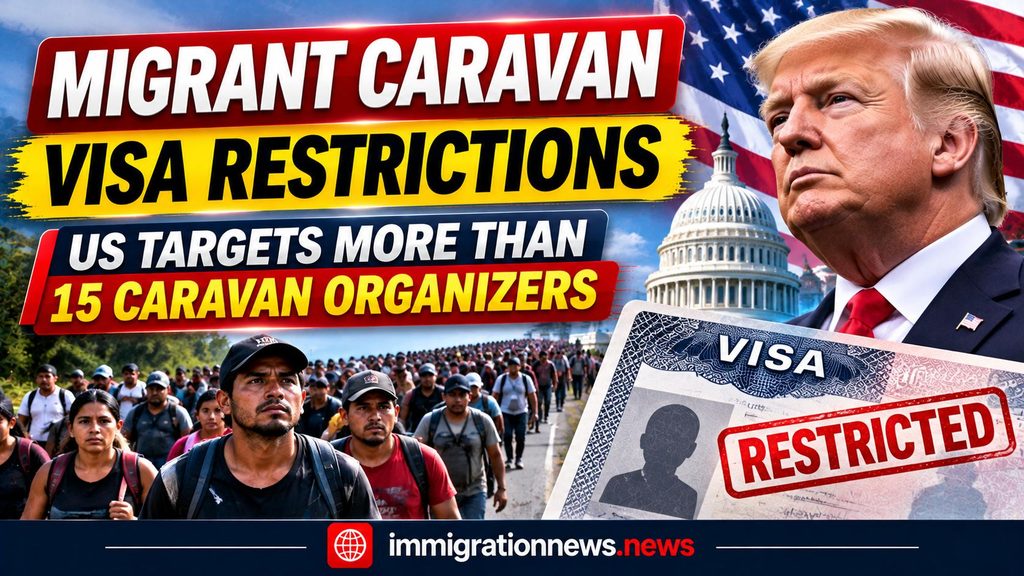
The US State Department says it has imposed visa restrictions on more than 15 people accused of organizing, facilitating, or promoting migrant caravans heading for the US southern border. The announcement on October 29, 2026, from spokesman Thomas “Tommy” Pigott, is the latest use of visa policy as an immigration enforcement tool.
The migrant caravan visa restrictions can mean refusing new visa applications or revoking existing visas. The department also warned that anyone who takes part in a caravan and later applies for a US visa, or tries to travel to the country, will face additional scrutiny.
Quick Highlights : Migrant Caravan Visa Restrictions
- The State Department says it took steps in the past week to restrict visas for more than 15 people tied to recent migrant caravans
- The migrant caravan visa restrictions target people who knowingly organize, promote, support, or finance caravans
- Measures can include refusing or revoking visas
- Caravan participants who apply for a US visa or try to travel will face additional scrutiny
- The announcement did not name the individuals, give their nationalities, or say how many visas were revoked
- The policy builds on an earlier restriction aimed at officials and others who knowingly facilitate illegal immigration
- Crossing the southern border without authorization can lead to arrest, detention, deportation, and a future entry ban
What the State Department Announced
In a press statement titled “Taking Action Against Caravan Organizers Facilitating Illegal Immigration to the United States,” the department said the administration “will not tolerate actions that undermine the national security or immigration laws of the United States.” It said it stands ready to use its existing visa restriction policy against people who knowingly organize, promote, support, or finance caravans that facilitate illegal immigration.
The department said investigations had indicated that individuals recruited, coordinated, and directed large groups of migrants travelling through Central America and Mexico toward the US southern border. In the past week, it said, it took steps to impose visa restrictions on more than 15 individuals involved in organizing, facilitating, or promoting recent caravans.
Who Is Targeted
The migrant caravan visa restrictions are aimed at foreign government officials and other people believed to be knowingly facilitating illegal immigration. That covers organizers, promoters, supporters, and financiers of caravans.
The department also said those involved in facilitating or participating in such activity will be considered for visa restrictions. That wording extends beyond leaders to participants, although the most concrete action reported so far concerns organizers and promoters.
What the Restrictions Can Mean
The State Department says that people identified under the policy can face refusal of new visa applications or revocation of existing visas. Anyone linked to a caravan who applies for a visa or tries to travel to the US will face additional scrutiny and appropriate action.
For a person who already holds a visa, such as a business traveller or an official, revocation can end their ability to enter the country. For someone who does not hold a visa, the restriction can mean being refused in future. The department has not published details of how it will decide who falls under the policy.
What the Announcement Leaves Out
The October 29 statement does not identify the individuals involved, disclose their nationalities, or say how many existing visas were revoked or applications refused. It also does not say which caravans it is referring to, beyond “recent migrant caravans.”
Several practical questions are therefore unanswered. It is not clear how officials will distinguish organizers from participants, what evidence is required, or whether affected people can challenge a decision. These gaps are typical of visa restriction announcements, which often give few case details.
The Legal Warning on Border Crossing
The department repeated that crossing the US southern border without authorization violates American law and can result in arrest, detention, and deportation. It added that people who enter without permission could also face a ban on travelling to the US in the future.
That warning is aimed at caravan participants as well as organizers. It signals that the administration wants to discourage people from joining caravans in the first place, not only to target the people who arrange them.
How This Builds on Earlier Policy
The latest step builds on a policy the State Department previously announced to restrict visas for foreign government officials and others believed to be responsible for knowingly facilitating illegal immigration. The department says it will use these measures to protect border security, disrupt smuggling networks, and hold those involved accountable.
It also follows other recent visa restrictions. On September 23, 2026, the department announced a visa restriction policy for people who engage in or facilitate birth tourism. Together, the policies show the use of visa authority to address behaviour outside the US that officials say undermines immigration law.
Why Visa Restrictions Are Used
Visa restrictions are a tool that works from abroad. A government can limit who is allowed to enter, even when it cannot arrest or prosecute people outside its territory. For organizers who live in Central America or Mexico, loss of a US visa may carry real consequences for travel, business, and family.
Supporters of the approach say it targets those who profit from migration journeys and puts pressure on networks. Critics of visa-based enforcement in other contexts argue that restrictions can be broad, that decisions are hard to appeal, and that they may affect people who had no intent to break the law. The department has not responded to such concerns in this statement.
What It Means for People in Central America and Mexico
Most people who join caravans do not hold US visas, so for them the practical effect is the warning that future visa applications will face extra scrutiny. People who do hold visas, including those who help organize or fund travel, face the risk of revocation.
Anyone who has taken part in a caravan, or who has any link to one, should expect that a past connection could come up in a visa interview. Applicants should answer questions truthfully, because misrepresentation can have lasting consequences, and consider speaking to a qualified immigration lawyer.
What Applicants and Travellers Should Know
- Visa applications can be refused or revoked on the basis of alleged links to caravan organizing
- Additional scrutiny may include more questions, extra documentation, and longer processing
- Always answer visa questions truthfully and completely
- Do not rely on anyone who promises to “fix” a visa restriction for a fee, since that is a common scam
- Keep records of travel and any dealings that could be misunderstood
- If a visa is revoked, get legal advice before attempting to travel
Travel plans that depend on a US visa should allow for the possibility of refusal or delay.
What to Watch Next
Further announcements may name more individuals or say how many visas have been revoked. The department may publish more detail on the criteria used, or other governments in the region may respond. Courts could be asked to review individual cases, though visa decisions abroad are often difficult to challenge.
The wider direction is also clear. The administration has used visa authority for a growing list of purposes, including revocations that the State Department says exceed 300,000 in its second term, and caravan organizers are now part of that list.
Key Takeaways On Migrant Caravan Visa Restrictions
The migrant caravan visa restrictions announced on October 29, 2026 cover more than 15 people accused of organizing, facilitating, or promoting recent caravans, with refusal or revocation of visas as possible outcomes. Participants who later apply for a US visa face additional scrutiny, while the department has not named those targeted or said how many visas were revoked. Anyone with a connection to a caravan should be careful, truthful, and prepared for questions in any future application.
FAQs : Migrant Caravan Visa Restrictions
What are the migrant caravan visa restrictions?
A State Department policy that restricts visas for people who knowingly organize, promote, support, or finance caravans that facilitate illegal immigration.
How many people have been affected by Migrant Caravan Visa Restrictions?
The department says it took steps against more than 15 individuals in the past week, but has not named them or given their nationalities.
Can existing visas be revoked in Migrant Caravan Visa Restrictions?
Yes. The department says the action can include refusing new visa applications or revoking existing visas.
Does this Migrant Caravan Visa Restrictions affect caravan participants?
Participants who apply for a US visa or try to travel will face additional scrutiny, and those involved in facilitating or participating in the activity will be considered for restrictions.
What happens to people who cross the border without permission?
They can face arrest, detention, deportation, and a future ban on entering the US, according to the State Department.
Source : Hindustan Times
Read About : Google, Meta Push Back Against ICE Subpoenas for User Data Amid US Immigration Crackdown