The United States has introduced a significant reform to its work visa system. Under the new policy, US changes process for H-1B Visa Form I-129 will reshape how foreign professionals are selected for employment-based visas. Instead of relying solely on the traditional lottery system, the revised framework prioritizes candidates based on salary levels.
This shift could have a major impact on global talent migration—especially for Indian professionals. Indians currently receive nearly 70% of all H-1B visas issued annually, making them the largest group affected by the policy change.
The updated process will take effect on April 1, 2026, when employers will be required to submit enhanced petitions using a revised Form I-129 system.
Understanding the New H-1B Visa Selection Process
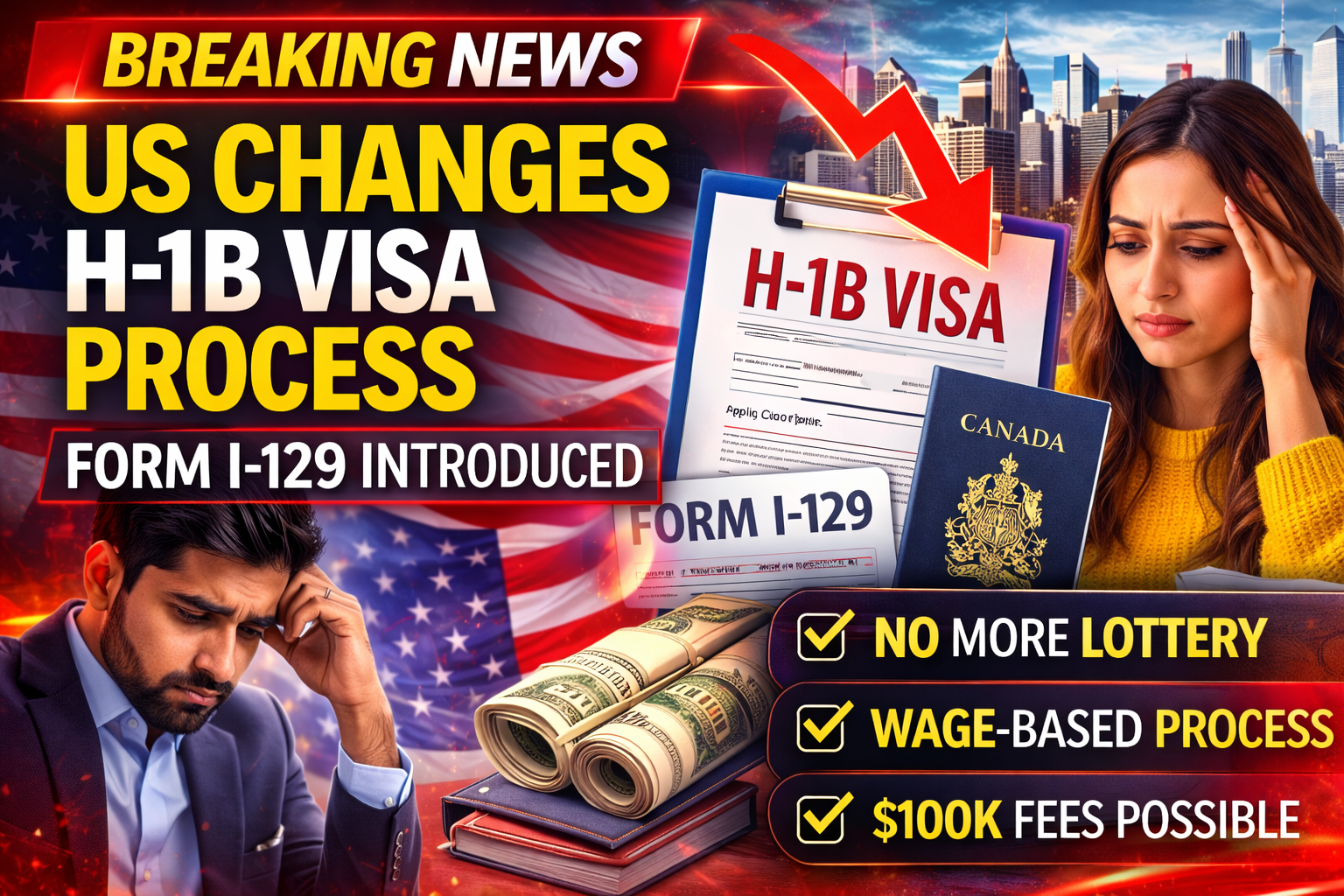
The biggest highlight of the policy is that US changes process for H-1B Visa Form I-129 now prioritize applicants based on wage levels instead of random lottery selection.
Previously, thousands of applicants competed for a limited number of H-1B visas through a random lottery system. The new approach introduces a salary-based selection framework, giving higher priority to applicants with more competitive compensation levels.
Key features of the new system include:
- Wage-based visa allocation
- More chances for high-salary applicants
- Detailed job information requirements
- Updated Form I-129 filing procedures
This shift is intended to ensure that the US immigration system prioritizes highly skilled workers and specialized professionals.
What Is Form I-129 and Why It Matters
Form I-129, officially known as the Petition for a Nonimmigrant Worker, is used by employers to bring temporary foreign workers to the United States.
Under the revised rules, US changes process for H-1B Visa Form I-129 require companies to provide more comprehensive details when submitting petitions.
Employers must now include:
- Job title and responsibilities
- Salary and wage level classification
- Work location and employer details
- Proof that the role requires specialized skills
The US Department of Labor determines wage levels for different occupations based on experience, industry standards, and geographic location.
These wage levels range from Level 1 to Level 4, with Level 4 representing the highest salary tier.
How the Wage-Level System Will Work
One of the most notable aspects of the reform is the introduction of a tiered wage-level system.
Applicants will be categorized into four wage levels:
| Wage Level | Opportunities in Selection |
|---|---|
| Level 4 | Four chances |
| Level 3 | Three chances |
| Level 2 | Two chances |
| Level 1 | One chance |
This means that candidates in higher wage brackets will have significantly better chances of being selected.
The goal behind this change is to prioritize high-skilled, high-paying jobs, which policymakers believe will benefit the US economy.
Why Indian Professionals Will Be Most Affected
Indian workers dominate the H-1B visa program. Technology companies, consulting firms, and multinational corporations regularly hire Indian engineers, developers, and IT specialists.
Because of this, US changes process for H-1B Visa Form I-129 could significantly affect Indian professionals seeking opportunities in the United States.
Key statistics:
- Indians receive roughly 70% of H-1B visas annually
- Most work in technology, software development, and engineering sectors
- The majority of applicants come through major outsourcing or consulting firms
Under the new rules, professionals with higher salaries and advanced experience may benefit the most, while entry-level candidates could face greater competition.
Rising H-1B Visa Costs Add Another Challenge
Another development affecting applicants is the significant increase in visa-related costs.
Previously, the total cost for an H-1B visa application was approximately $9,000 when combining government fees and legal expenses.
However, new policy changes have pushed the potential cost to as high as $100,000 in certain cases.
This increase could discourage smaller companies from sponsoring foreign workers and may impact entry-level applicants who depend on employer sponsorship.
Combined with the new selection system, the US changes process for H-1B Visa Form I-129 may reshape how global companies hire international talent.
Duration of the H-1B Visa and Green Card Pathway
The H-1B visa allows foreign professionals to work in the United States for up to six years.
Visa timeline:
- Initial approval: 3 years
- Extension: Additional 3 years
During this period, many workers apply for permanent residency (Green Card) through employment-based immigration pathways.
For many international professionals, the H-1B visa remains one of the most important routes for building a long-term career in the United States.
Policy Debate Around H-1B Visas
US immigration policy regarding H-1B visas has often been debated in political and economic discussions.
In previous years, leaders have expressed mixed views about the program.
Some policymakers argue that H-1B visas support innovation and economic growth by attracting global talent. Others believe the program should prioritize American workers.
Despite these debates, the US changes process for H-1B Visa Form I-129 indicate a shift toward a system that favors higher-paid specialized professionals rather than purely random selection.
What the Changes Mean for Future Applicants
The new system may benefit experienced professionals, particularly those with advanced skills or higher-paying job offers.
However, early-career applicants and entry-level graduates may face more challenges under the revised rules.
Experts believe companies may now focus on recruiting candidates with:
- Advanced technical expertise
- Specialized industry experience
- Higher salary offers
- Leadership or senior roles
As the policy rolls out in 2026, immigration experts and employers will closely monitor its impact on the global talent market.
Conclusion
The reform of the H-1B visa system marks a major shift in US immigration policy. By prioritizing wage levels instead of random selection, US changes process for H-1B Visa Form I-129 aim to attract highly skilled professionals while reshaping how employers recruit foreign talent.
For Indian professionals—who make up the largest share of H-1B applicants—the new rules could bring both opportunities and challenges. Those with specialized expertise and higher salaries may benefit the most, while entry-level candidates may face tougher competition.
As global demand for skilled workers continues to rise, the H-1B visa program will remain a critical pathway for international professionals seeking careers in the United States.
Frequently Asked Questions (FAQs) for US changes process for H-1B Visa Form I-129
What is Form I-129 used for?
Form I-129 is used by US employers to petition for temporary foreign workers, including those applying for the H-1B visa.
When will the new H-1B visa process begin?
The updated process requiring the revised Form I-129 will take effect on April 1, 2026.
How does the new wage-based selection system work?
Applicants are placed into four wage levels. Higher wage levels receive more opportunities during the selection process.
Why are Indian professionals most affected?
Indian nationals receive about 70% of all H-1B visas, making them the largest group impacted by any changes to the program.
How long can someone stay in the US on an H-1B visa?
The H-1B visa is typically valid for six years, issued in two three-year increments.
Any Queries : Contact Us