
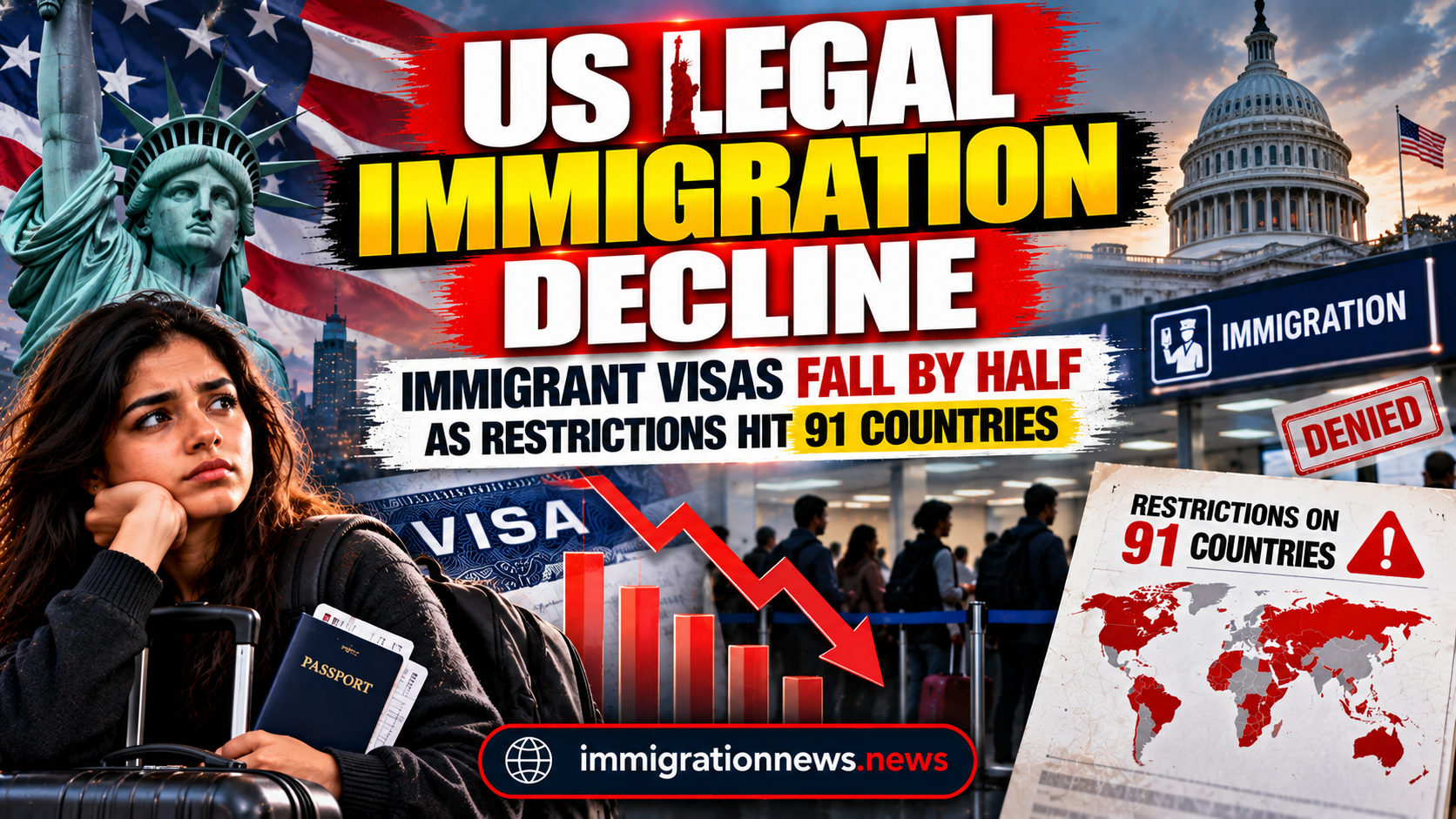

Legal immigration to the United States has dropped sharply under President Donald Trump’s second administration. A New York Times analysis published on October 18, 2026 found that the State Department issued just 26,000 immigrant visas in February 2026, compared with a monthly average of 52,000 in the years before Trump took office. The US legal immigration decline is steepest for applicants from countries covered by travel bans and visa freezes.
The administration says its measures strengthen security screening and assess whether applicants might rely on public benefits. Critics, and the data itself, show a much wider effect than the headline policies suggest.
Quick Highlights : US Legal Immigration Decline
- The State Department issued 26,000 immigrant visas in February 2026, half the pre-Trump monthly average of 52,000
- Restrictions made immigration extremely difficult for applicants from 91 countries and cut visas for another 61
- Issuances fell 99% in Central Asia, 89% in Africa, 84% in Eastern Europe, and 81% in the Middle East
- Canada (+142%) and Mexico (+17%) were exceptions, together making up about 30% of February’s immigrant visas
- Student and worker visas fell 30% year on year, and tourist and business visas about 25%
- India and China were not under the bans, yet still saw sharp falls in student and H-1B visas
- The figures cover visas issued at consulates abroad, not adjustments of status inside the US
What the New York Times Analysis Found
The core finding is simple. Immigrant visas, which let people enter the US as lawful permanent residents, fell to 26,000 in February 2026 from an average of 52,000 a month before Trump returned to office. The NYT used the most recent available government data.
The US legal immigration decline did not happen all at once. The Times reported that issuances fell only slightly, by about 10%, during the first year of the administration. The deep drop came after policies introduced in late 2025 and early 2026 began to bite.
How the Decline Varies by Region
The fall differs sharply by where applicants come from, compared with monthly averages in 2023 and 2024.
| Region | Change in Immigrant Visa Issuances |
|---|---|
| Central Asia | −99% |
| Africa | −89% |
| Eastern Europe | −84% |
| Middle East | −81% |
| Australia and Oceania | −73% |
| South Asia | −63% |
| South America | −60% |
| Caribbean | −53% |
| East Asia | −33% |
| Central America | −30% |
| Western Europe | −16% |
Country-level figures reported alongside the analysis show a drop of 31% for China, 25% for Japan, 19% for South Korea, and 16% for India. These are smaller than the regional collapses, but they show that even countries outside the bans are affected.
Why Canada and Mexico Went Up
Canada and Mexico were the exceptions. Immigrant visa issuances rose 142% for Canada and 17% for Mexico, and together the two countries accounted for about 30% of all immigrant visas issued in February.
Both countries were exempt from the visa restrictions. As other applicants were blocked or delayed, their share of a smaller total grew, and in Canada’s case the absolute number rose as well. This shift in who receives visas is part of the US legal immigration decline, which changes the mix of newcomers as well as the total.
Travel Ban and Visa Freeze Drive the Cuts
In January 2026, an expanded travel ban blocked people from 39 countries from receiving visas or entering the US. A separate suspension of immigrant visa issuance affected applicants from another 52 countries, the report said. The administration had suspended the diversity immigrant visa program a month earlier.
Earlier reporting in this series noted that a federal judge struck down a separate policy suspending immigrant visas for applicants from 75 countries, ruling that it exceeded the secretary of state’s statutory authority. The various measures overlap, so their country counts should be read as described by the sources rather than simply added.
Courts Ordered Visas to Resume, But Many Still Wait
The restrictions were challenged in federal court. At the end of August, courts in two separate lawsuits ordered the government to resume issuing visas, according to the Times. But many affected applicants were still waiting despite the rulings.
That gap between a court order and a visa in hand is important. Consular processing involves interviews, security checks, and documentation, so lifting a freeze does not immediately restore the previous pace. The effect on the US legal immigration decline in later months will depend on how quickly consulates work through the backlog.
Student, Work, and Visitor Visas Also Fell
The slowdown was not limited to permanent immigration. Visas for students and workers fell 30% compared with a year earlier, and tourist and business visitor visas declined about 25% in February.
India and China were not covered by the travel bans, but the analysis found sharp declines in student and H-1B work visas for both countries. Additional rules and fees contributed to the wider slowdown. A Cato Institute analysis cited in related coverage puts the fall in international student visas at nearly half.
Visas for seasonal agricultural and exchange workers remained broadly stable, while issuances for other seasonal workers, including those in hospitality and tourism, declined.
What the Figures Do and Don’t Include
The numbers cover immigrant visas issued through US consulates abroad. They do not include every green card granted, because many people become permanent residents through adjustment of status inside the country, for example after marriage to a US citizen or through an employment petition.
That means the US legal immigration decline measured here is a consular figure, not a complete count of all new permanent residents. It is still a strong indicator, since consular processing is the main route for people living outside the US.
What the Administration Says
The administration said the measures aim to strengthen security screening and assess applicants’ potential future reliance on public benefits. The White House’s rapid-response social media account promoted the Times report, treating the drop as an achievement.
Critics argue the policies block families and workers who have waited years, and that the scale of the fall goes beyond targeted security concerns. The debate follows a pattern in US immigration politics, where both sides can point to the same numbers to support opposite conclusions.
Effects on Families and Applicants
For individuals, the US legal immigration decline shows up as delays, refusals, and families living apart. Spouses and children of US citizens and permanent residents are among those waiting, along with employment-based applicants and people in countries now under freezes.
Applicants from affected countries should keep records of their case numbers, interview notices, and correspondence, check the State Department’s current guidance, and talk to a qualified immigration attorney about options that may exist, including different visa categories or waivers. They should avoid anyone who promises to bypass the restrictions for a fee, since USCIS and the State Department have warned that guaranteed shortcuts are a common scam.
What to Watch Next
Several developments will shape the next few months: how quickly consulates resume issuing visas after the court orders, whether new restrictions are added or struck down, and how the numbers look in later months once more data is published. The Times analysis uses February figures, the latest in the government dataset available at the time, so subsequent months may show a partial recovery or a deeper fall.
Changes to student and work visa rules, including new fees, also affect the wider picture of legal entry to the US.
Key Takeaways On US Legal Immigration Decline
The US legal immigration decline is stark: immigrant visa issuances fell to 26,000 in February 2026, half the pre-Trump average, with restrictions affecting 91 countries and cutting visas for 61 more. The drop ranges from 99% for Central Asia to 16% for Western Europe, while Canada and Mexico rose. Student, work, and visitor visas also fell, and although courts have ordered issuance to resume, many applicants are still waiting.
FAQs : US Legal Immigration Decline
How much did US immigrant visa issuances fall?
They fell to 26,000 in February 2026, compared with a monthly average of 52,000 before Trump returned to office, according to a New York Times analysis.
Which regions were hit hardest in US Legal Immigration Decline?
Central Asia fell 99%, Africa 89%, Eastern Europe 84%, the Middle East 81%, and Australia and Oceania 73%.
Why did Canada and Mexico see increases?
Both were exempt from the visa restrictions. Canada’s issuances rose 142% and Mexico’s 17%, and together they accounted for about 30% of February’s immigrant visas.
Did India face a decline?
India was not under the travel bans, but immigrant visas for Indians reportedly fell 16%, and student and H-1B visas also declined sharply.
Have courts stopped the restrictions?
At the end of August, courts in two lawsuits ordered visa issuance to resume, but many affected applicants were still waiting.
Source : Hindustan Times
Read About : USCIS Scam Warning: No One Can Guarantee A Faster Visa, Green Card, Or Work Permit




One thought on “US Legal Immigration Decline: Immigrant Visas Fall By Half As Restrictions Reach 91 Countries”