
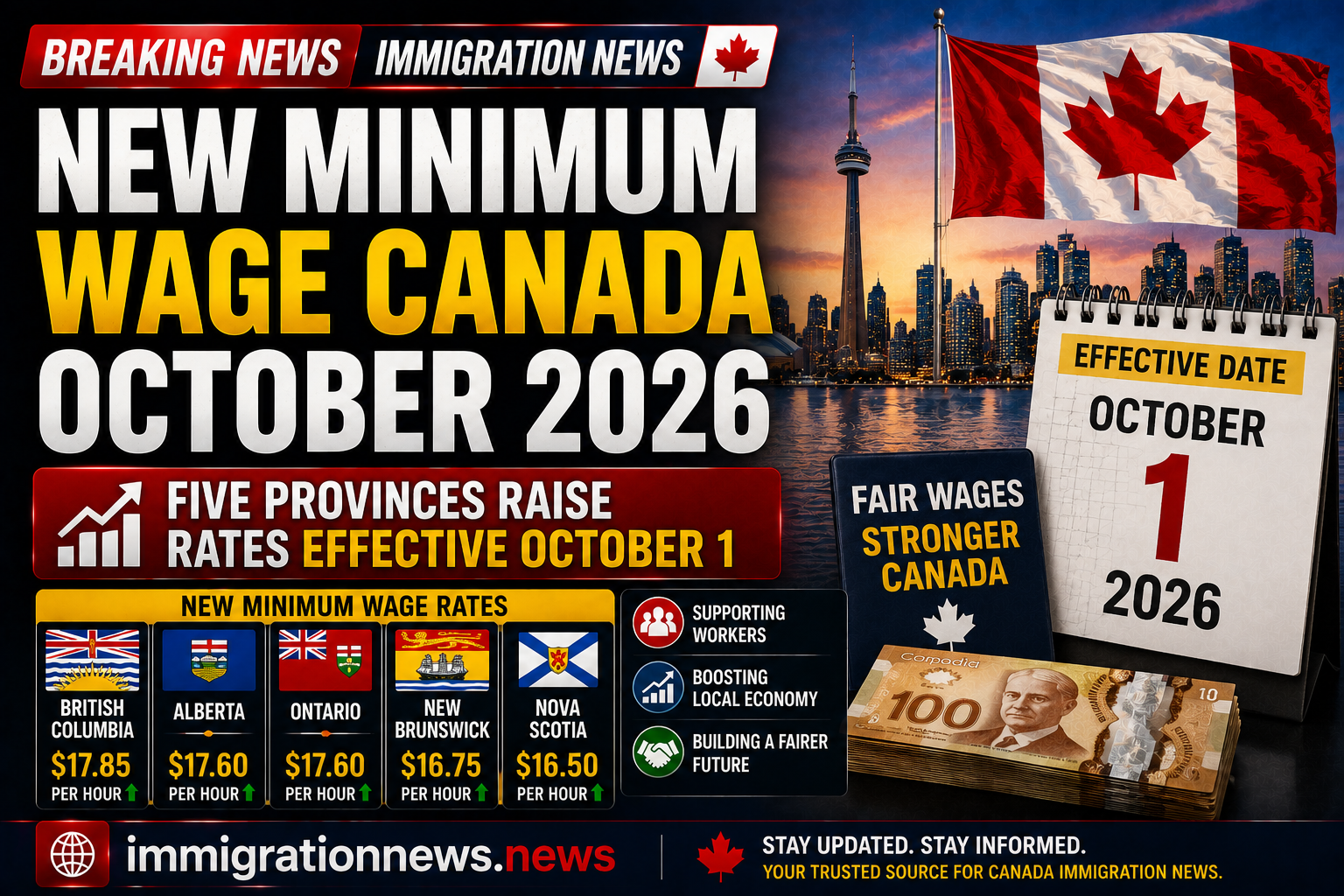
Five Canadian provinces are set to raise their minimum wage rates simultaneously, reshaping what hundreds of thousands of workers across the country will earn for every hour on the job. The new minimum wage Canada October 2026 changes affect Ontario, Manitoba, Saskatchewan, Nova Scotia, and Prince Edward Island, all taking effect October 1, 2026.
Ontario leads the group with a 2.0% bump to its general minimum wage, while Manitoba delivers the steepest percentage jump at 2.5%. Saskatchewan follows with a 2.3% increase, and Prince Edward Island adds 1.8% to its already highest-in-Atlantic-Canada rate. Nova Scotia rounds out the group with a 1.5% October increase—its second raise of the year after an earlier April 1 adjustment.
Quick Highlights : New Minimum Wage Canada October 2026
- The new minimum wage Canada October 2026 changes take effect October 1 across five provinces
- Ontario rises from $17.60 to $17.95/hour; Manitoba from $16.00 to $16.40/hour
- Saskatchewan increases from $15.35 to $15.70/hour; Nova Scotia from $16.75 to $17.00/hour
- Prince Edward Island rises from $17.00 to $17.30/hour, keeping its Atlantic Canada lead
- Manitoba’s $832 annual boost for full-time workers is the largest in dollar terms
- All five October rates remain below the $18.15 federal minimum wage that applies to federally regulated industries
- Nova Scotia is the only province implementing two increases within the same calendar year
Ontario: Highest Rate Among the Five
Ontario’s general minimum wage increases from $17.60 to $17.95 per hour under the new minimum wage Canada October 2026 changes, confirmed by the Ontario Ministry of Labour, Immigration, Training and Skills Development. This $0.35 increase reflects Ontario’s 1.9% CPI adjustment, rounded to the nearest five cents, and was announced back on April 1, 2026, following the province’s standard annual disclosure schedule.
For a full-time worker logging 40 hours weekly, the new rate translates to $37,336 in annual gross earnings—$728 more than the current rate. Ontario also adjusts four separate special wage categories simultaneously: the student rate rises to $16.90, the homeworker rate to $19.70 (still the province’s highest hourly category), and hunting/fishing/wilderness guide rates increase to $89.75 and $179.50 per day depending on hours worked. Ontario’s overtime threshold remains 44 hours weekly, with overtime pay at the new rate reaching $26.93 per hour.
Manitoba: The Steepest Percentage Increase
Manitoba’s minimum wage rises from $16.00 to $16.40 per hour, representing the largest percentage jump among all provinces covered under the new minimum wage Canada October 2026 changes at 2.5%. This reflects Manitoba’s 2025 inflation rate rounded to the nearest five cents under the Employment Standards Code.
A full-time Manitoba worker will earn $34,112 annually at the new rate—$832 more per year than the current rate, making this the largest raw dollar increase of all five provinces. Manitoba’s standard hours remain 40 per week, with overtime paid at 1.5 times the regular rate ($24.60/hour at the new minimum). Notably, Manitoba maintains no separate student or server minimum wage categories.
Saskatchewan: Continuing a Decade of Growth
Saskatchewan’s minimum wage increases from $15.35 to $15.70 per hour, a 2.3% adjustment calculated using the province’s indexation formula, which weighs Consumer Price Index changes equally against average hourly wage growth. Labour Relations and Workplace Safety Minister Ken Cheveldayoff stated the increase balances workers’ needs with business growth and economic stability.
A full-time worker will gross $32,656 annually under this new minimum wage Canada October 2026 change—$728 more per year, matching Ontario’s exact dollar increase despite Saskatchewan’s lower base rate. Since 2008, Saskatchewan’s minimum wage has climbed more than 90%, from $8.25 to $15.70. The province maintains no separate categories for students, servers, or homeworkers, and overtime is calculated at 1.5 times the regular rate.
Nova Scotia: A Second Increase This Year
Nova Scotia stands apart within the new minimum wage Canada October 2026 changes as the only province implementing its second increase of the calendar year. The rate rises from $16.75 to $17.00 per hour, completing a two-step increase first announced December 2, 2025, after the province already raised rates from $16.50 to $16.75 on April 1, 2026.
The combined 2026 effect delivers a $0.50 lift from January’s rate, adding $1,040 annually for full-time workers. Nova Scotia’s formula adds 1% on top of national CPI, making it one of the few provinces where minimum wage growth intentionally outpaces inflation. A full-time worker will gross $35,360 annually at the new rate. The province’s call-in pay rule guarantees a minimum three-hour payment ($51.00 at the new rate) for workers called in outside regular hours, and overtime applies after 48 hours weekly.
Prince Edward Island: Atlantic Canada’s Leader
Prince Edward Island’s minimum wage rises from $17.00 to $17.30 per hour, maintaining its position as the highest minimum wage jurisdiction in Atlantic Canada under the new minimum wage Canada October 2026 changes. This 1.8% increase continues a structured pattern that brought the province from $16.00 in October 2025 to $17.00 by April 2026.
A full-time PEI worker will gross $35,984 annually—$624 more than the current rate. PEI has already confirmed a further increase to $17.60 per hour effective April 1, 2027, giving employers and workers clear visibility into the next scheduled change. The province’s standard work week was reduced from 48 to 44 hours under new Employment Standards Act rules effective June 30, 2026, meaning overtime now applies after 44 hours at 1.5 times the regular rate.
Full Comparison of New Minimum Wage Canada October 2026 Rates
| Province | Previous Rate | New Rate (Oct 1) | Increase | Annual Gross (Full-Time) |
|---|---|---|---|---|
| Ontario | $17.60 | $17.95 | +2.0% | $37,336 |
| Prince Edward Island | $17.00 | $17.30 | +1.8% | $35,984 |
| Nova Scotia | $16.75 | $17.00 | +1.5% | $35,360 |
| Manitoba | $16.00 | $16.40 | +2.5% | $34,112 |
| Saskatchewan | $15.35 | $15.70 | +2.3% | $32,656 |
Once all five increases under the new minimum wage Canada October 2026 changes take effect, the provincial ranking from highest to lowest becomes Ontario, PEI, Nova Scotia, Manitoba, and Saskatchewan. Notably, Ontario’s $17.95 rate—the highest of the five—still falls below the $18.15 federal minimum wage that took effect April 1, 2026 for federally regulated industries like banking, telecommunications, airlines, and interprovincial transportation. Since all five provincial rates remain below $18.15, the federal rate governs for federally regulated workers in each of these provinces.
What Workers Should Do Now
Given the scope of the new minimum wage Canada October 2026 changes, employees across all five provinces should verify their applicable rate, overtime threshold, and any special wage category relevant to their specific job—whether that’s Ontario’s student or homeworker rates, or Nova Scotia’s construction and forestry-specific wage orders. Workers should review their first paycheque after October 1 carefully to confirm the updated rate has actually been applied correctly by their employer.
Employers, meanwhile, must ensure payroll systems are updated before October 1, since failing to apply the correct rate can result in back-pay liability, as provincial labour standards bodies retain authority to investigate and order payment of any wage shortfall.
Key Takeaways Of New Minimum Wage Canada October 2026
The new minimum wage Canada October 2026 changes will put more money into the pockets of workers across five provinces simultaneously, with increases ranging from Nova Scotia’s modest 1.5% to Manitoba’s steeper 2.5% jump. While Ontario retains the highest general rate among these five provinces at $17.95, all remain below the $18.15 federal minimum that governs federally regulated industries. With no additional 2026 increases currently scheduled for any of these provinces, workers and employers alike should treat October 1 as the final confirmed rate change for the calendar year.
FAQs : New Minimum Wage Canada October 2026
When exactly do the new minimum wage Canada October 2026 rates take effect?
All five provinces implement new rates on October 1, 2026, except Nova Scotia, which already raised its rate once on April 1 and raises it again on this date.
Does the provincial minimum wage apply to federally regulated workers like bank employees?
No. Federally regulated employees must receive at least the $18.15 federal minimum wage, which applies since all five provincial October rates remain below that threshold.
Which province has the largest dollar increase?
Manitoba’s increase delivers the largest raw dollar boost, adding $832 annually for full-time workers, despite having a lower overall percentage increase than some other provinces in terms of base rate.
Will any of these provinces raise wages again before the end of 2026?
No. No additional 2026 increases have been announced. The next scheduled changes occur in 2027, including PEI’s confirmed rise to $17.60 on April 1, 2027.
What happens if my employer doesn’t update payroll by October 1?
The employer remains liable for any wage shortfall and owes back pay at the correct new rate for hours worked from October 1 onward. Provincial labour standards bodies can investigate and order payment.
Source : Immigration News Canada
Read About : BC PNP High Economic Impact Draw Invites Record 602 Candidates

One thought on “New Minimum Wage Canada October 2026: 5 Provinces Raise Rates”