Ottawa Proposes Major Overhaul of Canada’s Asylum System Under Bill C-12
Canada is preparing for one of the biggest reforms to its asylum system in more than a decade via New Canada Asylum Rules And Changes. The federal government has published proposed regulations that would significantly change how refugee claims are submitted, processed, and decided across the country.
The proposed changes implement the asylum reform framework introduced through Bill C-12 (Strengthening Canada’s Immigration System and Borders Act), which became law on March 26, 2026. Immigration Minister Lena Metlege Diab announced the proposed regulations on June 19, 2026, launching a 30-day public consultation period before the rules become final.
According to government data, asylum claims have already fallen significantly, with applications dropping 42% between January and April 2026 compared to the same period in 2025.
Overview : New Canada Asylum Rules And Changes
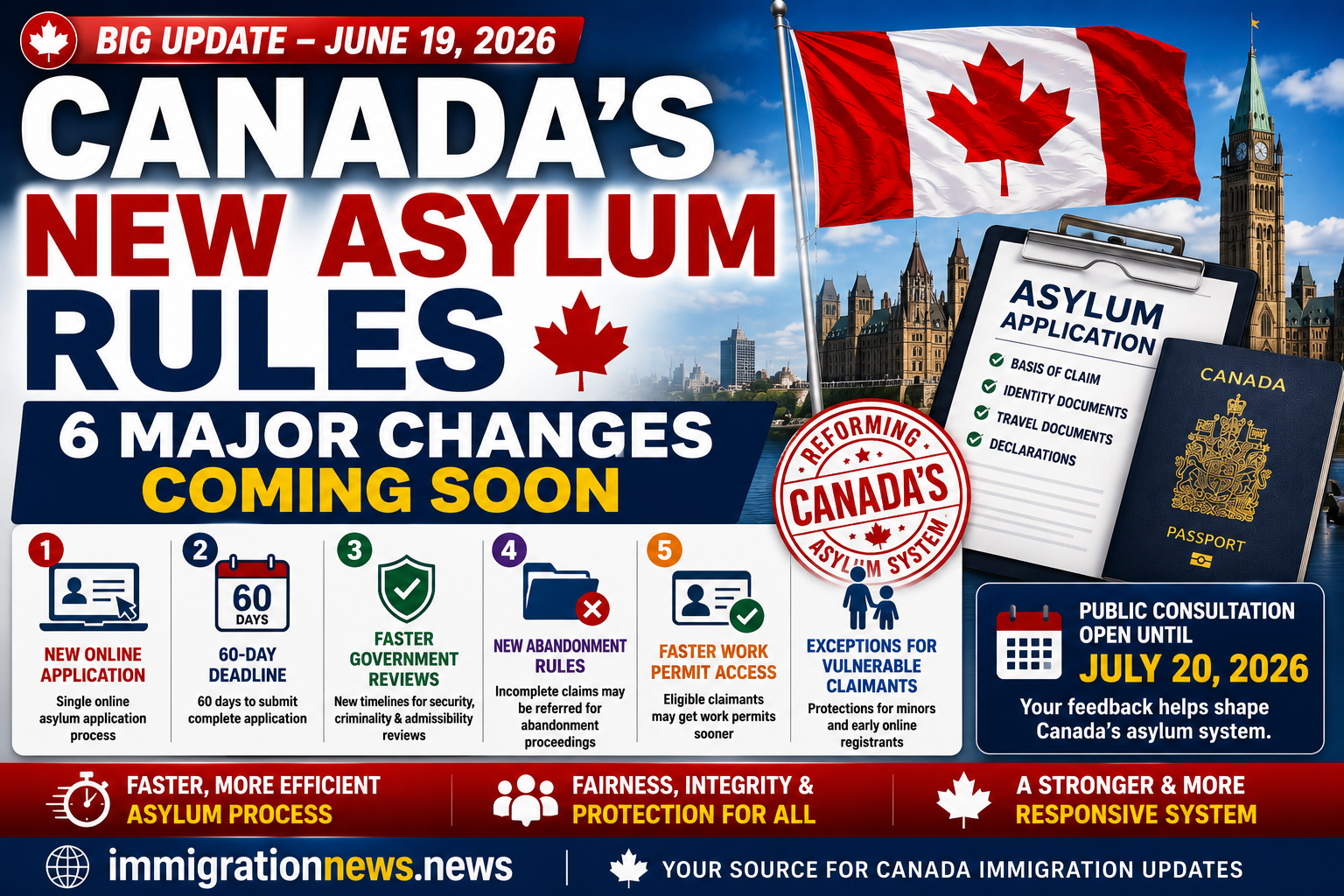
- Canada proposes six major asylum system reforms under New Canada Asylum Rules And Changes.
- New single online asylum application system planned.
- Claimants will have 60 days to submit complete applications.
- One-time 30-day extension available.
- Eligible asylum seekers could receive work permits faster.
- New abandonment rules introduced for incomplete claims.
- Special protections maintained for vulnerable claimants and minors.
- Public consultation open until July 20, 2026.
1. New Single Online Asylum Application System
One of the biggest changes proposed is the replacement of Canada’s current multi-step refugee claim process with a single online application system.
Currently, asylum seekers often submit information through multiple forms and agencies. Under the proposed framework, claimants would complete one online application containing:
- Basis of Claim information;
- Identity documents;
- Travel documents;
- Required declarations;
- Supporting information.
The application would first be reviewed by the Minister before being referred to the Refugee Protection Division (RPD).
2. New 60-Day Application Deadline
The proposed regulations introduce clear timelines for asylum applicants.
Under the new system:
Applicants will have 60 days to submit a complete asylum application.
A one-time extension of 30 days may be granted upon request, allowing a maximum submission window of 90 days.
The government says these deadlines are intended to create a more efficient and organized process while reducing delays.
3. Government Must Complete Reviews Faster
The reforms would also establish timelines for government reviews before claims are referred to the Immigration and Refugee Board (IRB).
Before referral, officials must complete:
- Security screening;
- Criminality checks;
- Admissibility reviews;
- Program integrity assessments.
The goal is to ensure only hearing-ready files reach the Refugee Protection Division, reducing postponements and administrative delays.
4. New Abandonment Rules for Incomplete Claims
Canada is also proposing stricter rules for asylum claims that remain incomplete.
If claimants:
- Fail to submit required documents;
- Miss requested examinations;
- Do not respond to information requests;
their case could be sent to the Refugee Protection Division for abandonment proceedings.
However, applicants will still be given an opportunity to explain their situation and provide missing information before a final abandonment decision is made.
The government believes this measure will help reduce the asylum backlog and prevent inactive files from consuming valuable hearing resources.
5. Faster Work Permit Access for Asylum Claimants
One of the most significant changes for asylum seekers is the proposal to provide work permits sooner.
Eligible claimants could gain access to Canadian employment faster after submitting a complete asylum claim.
The change is particularly important because:
- Average asylum processing times currently exceed 25 months;
- Canada has approximately 298,200 asylum cases awaiting decisions.
Allowing asylum seekers to work earlier could reduce pressure on social support programs while helping claimants become financially independent.
6. Exceptions for Minors and Certain Claimants
The proposed regulations also introduce targeted exceptions to some of the new asylum eligibility restrictions.
Unaccompanied Minors
Children arriving in Canada without a parent or guardian would remain exempt from certain ineligibility provisions.
Early Online Registration Exception
Individuals who register their intention to seek asylum through the online portal may remain eligible even if their formal application is submitted later.
The government says this measure prevents claimants from being unfairly penalized because of administrative or system-related delays.
New Rules for Refugee Protection Division (RPD)
Alongside the proposed asylum regulations, the Immigration and Refugee Board has also proposed significant changes to Refugee Protection Division procedures.
Earlier Evidence Submission
Under the new framework:
- Personal documents must be submitted within 30 days after referral to the RPD.
- Country-condition evidence remains due 10 days before the hearing.
Fax Communications Eliminated
The RPD also plans to discontinue fax communication and transition applicants toward digital submissions through the My Case Portal.
Canada’s Current Asylum Backlog
The latest figures reveal the scale of the challenge facing Canada’s asylum system:
| Metric | Figure |
|---|---|
| Pending asylum cases | 298,200 |
| Average hearing wait time | 25 months |
| New claims received (12 months ending March 2026) | 99,500 |
| Cases finalized in 2025-26 | 82,644 |
| Decline in claims (Jan-Apr 2026 vs 2025) | 42% |
| Decline in claims (Jan-Apr 2026 vs 2024) | 63% |
Despite processing a record number of claims, Canada continues to face a substantial inventory of pending refugee applications.
Public Consultation Open Until July 20
The proposed regulations and Immigration and Refugee Board rule changes are currently open for public consultation.
Stakeholders, immigration lawyers, refugee organizations, and members of the public have until:
July 20, 2026
to provide feedback before the government finalizes the new rules.
Implementation is expected later in 2026.
What New Canada Asylum Rules And Changes Mean for Asylum Seekers
If approved, the New Canada Asylum Rules And Changes will fundamentally change how asylum claims are managed in Canada.
Future claimants should be prepared to:
- Gather documents earlier;
- Meet strict submission deadlines;
- Complete more information during the initial application stage;
- Participate in faster screening processes;
- Submit supporting evidence much sooner than before.
The government believes these measures will reduce delays and improve efficiency, while critics and refugee advocacy groups are expected to closely examine how the new rules impact access to protection and procedural fairness.
FAQs : New Canada Asylum Rules And Changes
1. What are New Canada Asylum Rules And Changes in 2026?
Canada has proposed six major asylum reforms, including a new online application system, a 60-day deadline to submit claims, faster work permit access, stricter abandonment rules, quicker government reviews, and special protections for vulnerable claimants and minors.
2. When will the new asylum rules take effect?
The proposed regulations are currently under public consultation until July 20, 2026. The final implementation date has not yet been announced.
3. What is the new 60-day asylum application deadline?
Under the proposed rules, asylum seekers will have 60 days to submit a complete refugee claim application. A one-time extension of up to 30 days may be available in certain situations.
4. Will asylum seekers be able to get work permits faster?
Yes. The proposed reforms aim to allow eligible asylum claimants to receive work permits sooner after submitting a complete asylum application.
5. What happens if an asylum application is incomplete?
Applications that remain incomplete, fail to provide required documents, or do not respond to requests from immigration authorities could face abandonment proceedings and may be closed.
6. Will these changes affect international students and work permit holders?
No. These reforms specifically target refugee and asylum claims. International students, work permit holders, visitors, and permanent residence applicants are not directly affected.
7. Are children and vulnerable applicants protected under the new rules?
Yes. The proposed regulations include exemptions and additional protections for unaccompanied minors and certain vulnerable claimants.
8. Why is Canada changing its asylum system?
The government says the reforms are intended to reduce processing delays, improve efficiency, strengthen border integrity, and help manage Canada’s growing asylum backlog, which currently exceeds 290,000 pending cases.
9. Will asylum hearings become faster?
The government hopes the new system will speed up processing by ensuring claims are complete before referral to the Refugee Protection Division and by introducing stricter timelines.
10. Can people still claim asylum in Canada under the new rules?
Yes. Canada will continue accepting eligible asylum claims. The proposed changes focus on how claims are processed rather than eliminating access to refugee protection.
Source : Immigration News Canada
Read About : New Canada Crime Laws 2026 Take Effect On July 15, 2026