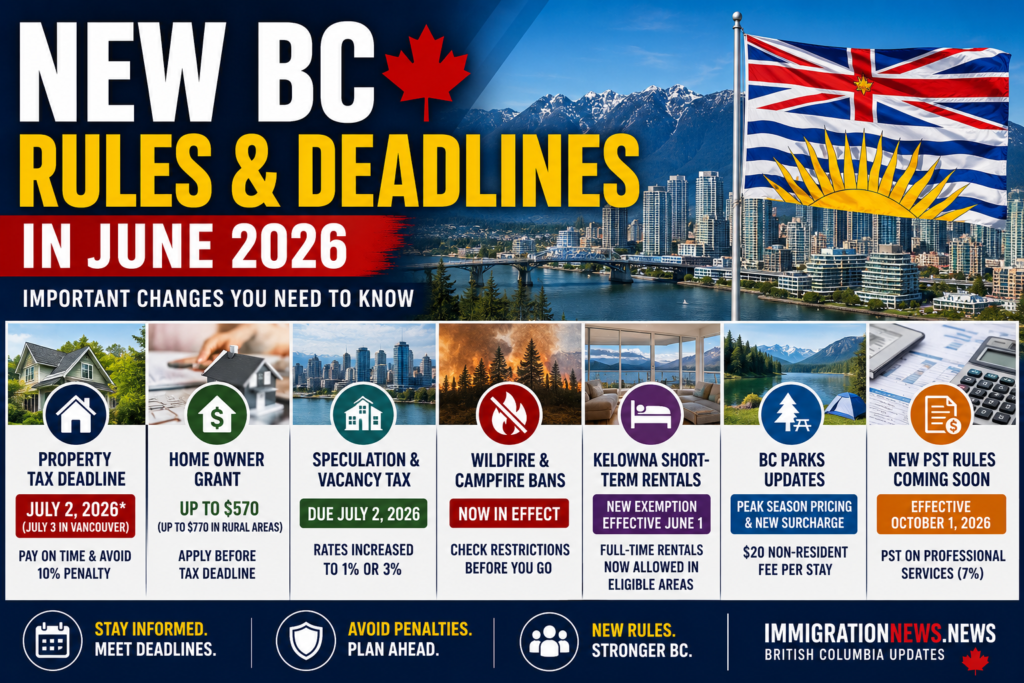
British Columbia Residents Face Important Deadlines and Rule Changes This Summer
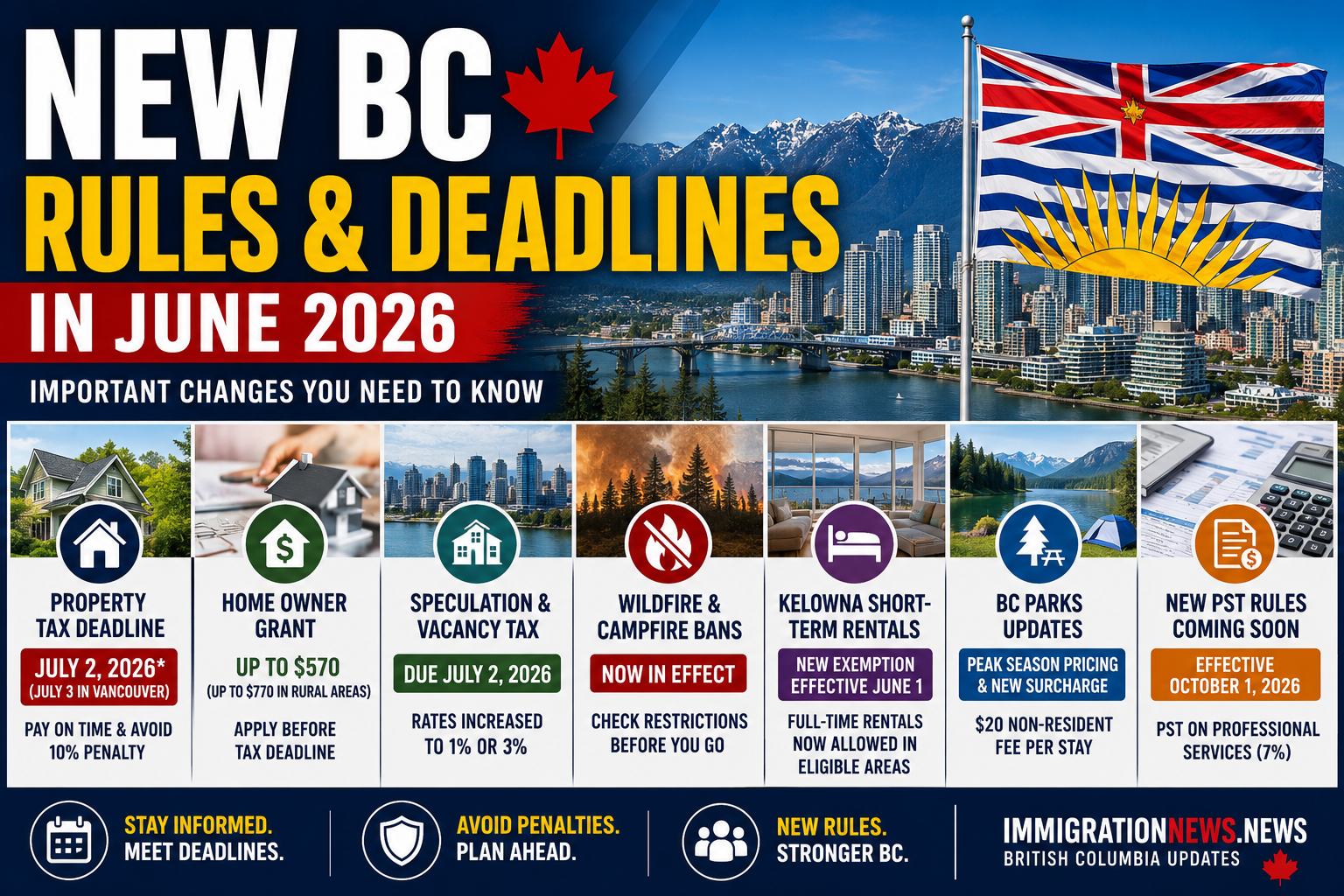
New British Columbia Laws and Rules June 2026 is bringing a wide range of new rules, deadlines, and regulatory changes across British Columbia that could affect homeowners, renters, business owners, campers, short-term rental operators, and property investors.
While many residents are focused on rising living costs and housing issues, several important provincial and municipal changes are now in effect or approaching critical deadlines. From property tax payments and speculation tax obligations to wildfire restrictions and short-term rental reforms, British Columbians are being urged to review how these changes may impact them.
Quick Summary : New British Columbia Laws and Rules
- Property tax payment deadlines arrive in early July.
- Home Owner Grant applications must be submitted before tax deadlines.
- Speculation and Vacancy Tax payments are due July 2.
- Kelowna has received a major short-term rental exemption.
- Wildfire restrictions and campfire bans remain active.
- BC Parks peak-season pricing has begun.
- New PST rules for professional services are being prepared.
- Vancouver’s city-wide Official Development Plan is now active.
Property Tax Deadlines Approaching Across British Columbia
One of the most important deadlines for homeowners is the annual property tax payment.
Most municipalities across British Columbia require payment by:
July 2, 2026
For Vancouver property owners, the deadline is:
July 3, 2026
Failure to pay by the deadline can result in an automatic 10% penalty being applied to unpaid balances.
Municipalities generally do not provide grace periods once the deadline passes.
Home Owner Grant Applications Required
Eligible homeowners must also remember to apply for the provincial Home Owner Grant before the tax deadline.
Basic Grant Amounts
- Up to $570 in Metro Vancouver, Fraser Valley, and Capital Regional District.
- Up to $770 in northern and rural areas.
Additional Grants Available
Seniors, veterans, and persons with disabilities may qualify for enhanced benefits:
- Up to $845 in urban areas.
- Up to $1,045 in rural regions.
For 2026, the full grant generally applies to properties assessed at $2.075 million or less.
Unlike previous years, applications are now handled entirely through the provincial government rather than municipal offices.
Speculation and Vacancy Tax Deadline Nears
Property owners in designated speculation tax regions must also pay close attention to upcoming deadlines.
The tax applies to owners in:
- Metro Vancouver
- Fraser Valley
- Capital Regional District
- Kelowna
- West Kelowna
- Nanaimo
- Lantzville
- Other designated communities
Payment Deadline
July 2, 2026
Higher Tax Rates in 2026
British Columbia increased rates this year:
Canadian Citizens and Permanent Residents
- 1% of assessed value
- Previously 0.5%
Foreign Owners and Satellite Families
- 3% of assessed value
- Previously 2%
Property owners who missed the March declaration deadline are encouraged to submit declarations before payment deadlines to preserve exemption eligibility.
Wildfire Restrictions Already Affecting Summer Travel
British Columbia entered wildfire season earlier than normal in 2026.
The Coastal Fire Centre implemented campfire restrictions in early May, making it one of the earliest wildfire-related restrictions on record.
Current Restrictions
Prohibited in many affected areas:
- Category 1 campfires
- Category 2 open fires
- Category 3 open fires
What’s Still Allowed?
Campers may continue using:
- CSA-certified outdoor stoves
- ULC-certified cooking devices
- Propane and approved cooking equipment
Potential Penalties
Violating wildfire restrictions may result in:
- $1,150 tickets
- Administrative penalties up to $10,000
- Fines up to $100,000
- Possible jail time
Residents and visitors are advised to check wildfire conditions before travelling.
Vancouver’s New Development Plan Now Active
Vancouver’s first city-wide Official Development Plan (ODP) is now officially in force.
The plan establishes a long-term framework for:
- Housing growth
- Land use planning
- Building heights
- Rezoning decisions
- Development intensity
One of the most significant changes is the reduction of individual public hearings for rezoning applications that align with the city’s approved planning framework.
Property owners and developers are encouraged to review their property’s designated land-use category to understand future development potential.
Kelowna Receives Major Short-Term Rental Exemption
Kelowna has become the first municipality in British Columbia to receive an exemption from the province’s principal-residence requirement for short-term rentals.
The exemption took effect on:
June 1, 2026
The city qualified because its rental vacancy rate rose well above provincial thresholds.
What This Means
Certain eligible properties can now operate as:
- Full-time vacation rentals
- Dedicated short-term rental properties
without requiring owners to live in the unit as their principal residence.
The exemption applies only to approved areas and specific zoning categories.
Property owners must still:
- Obtain business licences.
- Meet local regulations.
- Secure strata approval where required.
BC Parks Introduces Peak Season Pricing
Campers planning summer trips should prepare for higher fees at popular provincial parks.
New Changes Include
- Peak-season pricing at high-demand campgrounds.
- New non-resident surcharge.
- Shorter booking windows.
Non-Resident Fee
Visitors from outside British Columbia now pay:
$20 Per Stay
for many reservable campsites.
Officials say the changes are intended to improve access for British Columbia residents while helping manage demand.
New PST Rules Coming for Professional Services
British Columbia is preparing one of its most significant tax expansions in years in New British Columbia Laws and Rules.
Beginning: October 1, 2026
Provincial Sales Tax (PST) will apply to several professional service categories.
Services Affected
- Accounting services
- Bookkeeping services
- Property management
- Strata management
- Security services
- Certain real estate services
The standard PST rate will generally be:
7%
Businesses are being encouraged to begin preparations now, as registration and compliance requirements will arrive later this year.
Property Assessments Could Increase for Some Homeowners
Housing density reforms across British Columbia may also affect future property assessments.
When municipalities approve zoning changes that allow:
- Triplexes
- Fourplexes
- Townhouses
- Higher-density housing
land values may increase because of the additional development potential.
This could affect 2027 property assessments for some homeowners.
Owners who have lived in their homes for extended periods may qualify for special assessment relief programs designed to limit the impact of redevelopment-related assessment increases.
Why New British Columbia Laws and Rules Matter
The New British Columbia Laws and Rules June 2026 changes reflect several major priorities in British Columbia:
Housing
New development rules and short-term rental reforms aim to improve housing availability.
Taxation
Property taxes, vacancy taxes, and future PST expansions are designed to generate revenue while influencing behaviour.
Wildfire Preparedness
Earlier restrictions reflect increasing concern about wildfire risks across the province.
Tourism and Recreation
Camping and short-term rental changes are intended to balance tourism demand with local housing needs.
For many residents, understanding these changes now could help avoid penalties, unexpected costs, and compliance issues later this summer.
Key Takeaways Of New British Columbia Laws and Rules
- Property tax payments are due in early July.
- Home Owner Grant applications must be submitted before deadlines.
- Speculation and Vacancy Tax rates increased in 2026.
- Wildfire restrictions remain active in many regions.
- Kelowna received a unique short-term rental exemption.
- Vancouver’s new city-wide development framework is now active.
- BC Parks has introduced higher peak-season fees.
- New PST rules for professional services are coming later this year.
FAQ : New British Columbia Laws and Rules
When are property taxes due in British Columbia?
Most municipalities require payment by July 2, 2026, while Vancouver’s deadline is July 3, 2026.
Has the Speculation and Vacancy Tax increased?
Yes. Rates increased to 1% for many Canadian owners and 3% for certain foreign owners and satellite families.
Can Kelowna property owners operate full-time short-term rentals?
Some eligible properties can now do so under the city’s new exemption framework.
Are campfires banned in British Columbia?
Restrictions vary by region, but many wildfire zones currently prohibit open fires and campfires.
When will PST apply to professional services?
The new PST expansion is scheduled to take effect on October 1, 2026.
Source : Immigration News Canada
Read About : Canada’s Average Weekly Earnings Rise in 2026 to $1,333