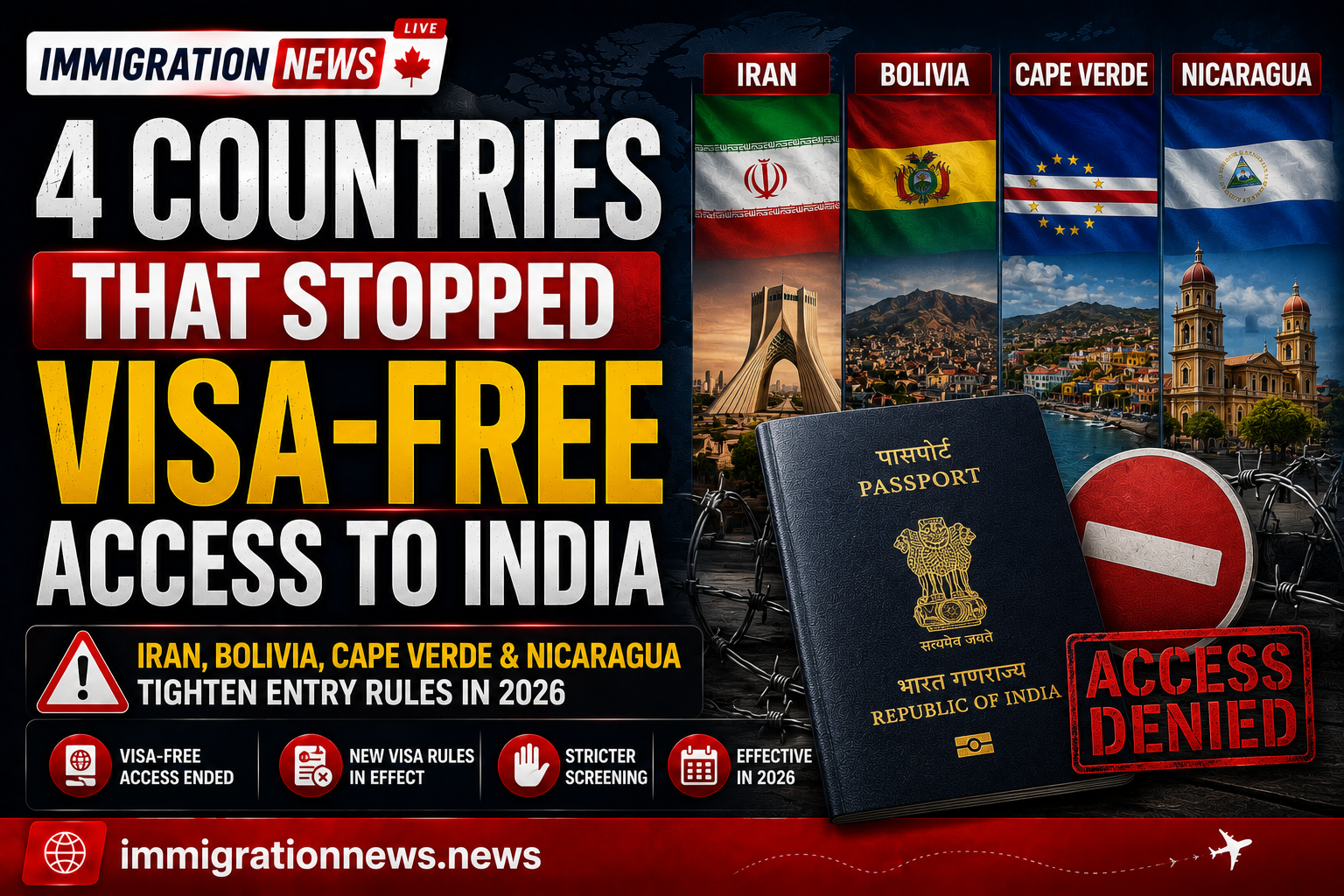
Indian travellers accustomed to packing their bags and flying at the last minute now have a shorter list of options. Countries that stopped visa-free access to India in 2026 include Iran, Bolivia, the Cape Verde Islands, and Nicaragua—each tightening entry requirements for Indian passport holders in ways that now demand advance planning rather than spontaneous travel.
According to the latest Henley Passport Index, India now ranks 81st globally, down from 75th in the February 2026 edition. Indian passport holders currently have visa-free or visa-on-arrival access to 55 destinations worldwide, down from 57 last year—a decline directly tied to the countries that stopped visa-free access to India this year.
Quick Highlights : Countries That Stopped Visa-Free Access To India
- Four countries—Iran, Bolivia, Cape Verde, and Nicaragua—tightened entry rules for Indian passport holders in 2026
- India’s Henley Passport Index ranking dropped from 75th to 81st in 2026
- Indians now have visa-free or visa-on-arrival access to just 55 destinations, down from 57 last year
- Iran suspended its visa-waiver programme for ordinary Indian passport holders in November 2025
- Cape Verde ended visa-on-arrival for citizens of 96 countries, including India, from January 1, 2026
- Nicaragua moved Indian travellers to its “Consulted Visa” category from February 16, 2026
- Bolivia replaced visa-on-arrival with a mandatory pre-travel e-visa system
Why This List Matters for Indian Travellers
Many Indian travellers have grown accustomed to destinations offering visa-free entry or visa-on-arrival facilities—arrangements that save time, reduce paperwork, and make last-minute trips genuinely feasible. In 2026, that convenience has eroded for a specific set of countries. Understanding exactly which countries that stopped visa-free access to India this year, and what replaced the old system in each case, is essential for anyone planning international travel without checking current rules first.
Iran: Visa-Waiver Programme Suspended
Iran was once one of the easiest countries in West Asia for Indian travellers to visit. Whether exploring the colourful Nasir al-Mulk Mosque in Shiraz or shopping in Tehran’s famous Grand Bazaar, Indians could previously enter the country without applying for a visa beforehand.
That has now changed entirely. Iran suspended its visa-waiver programme for ordinary Indian passport holders in November 2025, making it one of the earliest and most significant entries among the countries that stopped visa-free access to India heading into this year. Travellers now need to secure a visa through the standard application process before departure, removing the spontaneity that previously defined trips to Iran for Indian visitors.
Bolivia: From Visa-On-Arrival To Mandatory E-Visa
Bolivia previously allowed Indian travellers to simply land and obtain a visa on arrival—no advance paperwork, no waiting period before departure. That system has now been replaced entirely with a mandatory e-visa process.
Under the new rules, Indian travellers must apply online before travelling, upload all required documents, and wait for approval before boarding their flight. While the process remains digital and arguably convenient in its own way, it fundamentally changes the nature of entry: travellers now need explicit permission before leaving India, rather than being able to secure that permission upon arrival. This distinction is precisely why Bolivia counts among the countries that stopped visa-free access to India, even though a form of digital access technically remains available.
Cape Verde Islands: Visa-On-Arrival Ended For 96 Countries
Cape Verde has become an increasingly popular destination for travellers seeking a quieter island holiday experience. But Indian visitors now face an additional step before enjoying those beaches. From January 1, 2026, Cape Verde officially ended its visa-on-arrival facility for citizens of 96 countries, India included.
Previously, Indians could register online through the country’s EASE platform, pay the required fees, and receive their tourist visa upon landing. That option has now been completely removed. Arriving in Cape Verde without a valid visa secured in advance could now result in outright refusal of entry—making this one of the most consequential changes among the countries that stopped visa-free access to India this year, given how straightforward the previous system had been.
Nicaragua: Moved to the “Consulted Visa” Category
Nicaragua has introduced arguably the most significant immigration change of 2026 among all the countries that stopped visa-free access to India. From February 16, 2026, the country rolled out sweeping new immigration rules affecting how many foreign nationals enter the country, with Indian passport holders specifically among those impacted.
Previously, Indians could obtain a visa on arrival in Nicaragua without difficulty. Under the new framework, Indian travellers have been moved to Category C, formally known as the Consulted Visa category. This means travellers must now receive prior authorisation directly from Nicaragua’s immigration authorities before even boarding their flight—a considerably more involved process than the visa-on-arrival system it replaced.
Summary Table: Countries That Stopped Visa-Free Access To India
| Country | Previous System | New Requirement | Effective Date |
|---|---|---|---|
| Iran | Visa-waiver programme | Standard visa application required | November 2025 |
| Bolivia | Visa on arrival | Mandatory pre-travel e-visa | 2026 |
| Cape Verde | Visa on arrival (EASE platform) | Advance visa required | January 1, 2026 |
| Nicaragua | Visa on arrival | Consulted Visa (Category C) | February 16, 2026 |
India’s Falling Position in the Henley Passport Index
The cumulative effect of these countries that stopped visa-free access to India is reflected directly in India’s global passport ranking. According to the latest Henley Passport Index, India has slipped to 81st position, down from 75th in the February 2026 edition of the same index.
This translates to a concrete reduction in practical travel freedom: Indian passport holders currently have visa-free or visa-on-arrival access to 55 destinations worldwide, compared to 57 destinations just last year. While this two-destination decline may seem modest in isolation, it reflects a broader pattern of individual countries reassessing and tightening their entry requirements for Indian travellers throughout 2026.
What This Means For Indian Travellers Going Forward
The clearest lesson from this year’s list of countries that stopped visa-free access to India is that immigration rules can change considerably faster than many travellers realise. Relying on previous travel experiences or outdated information when planning a new trip carries real risk—a destination that offered visa-free entry last year may now require advance application, and arriving unprepared could mean outright refusal of entry.
Before finalising any international holiday, Indian travellers should verify current immigration requirements directly through official government sources or embassy websites rather than assuming past experiences still apply. This is particularly important for destinations like the four covered here, where the transition happened relatively recently and may not yet be widely known among the travelling public.
The encouraging counterpoint is that India’s passport continues strengthening globally overall, even as these specific countries that stopped visa-free access to India have tightened their individual rules. As with any evolving policy landscape, staying informed remains the most reliable way for travellers to avoid disruption to their travel plans.
Key Takeaways On Countries That Stopped Visa-Free Access To India
Four countries—Iran, Bolivia, Cape Verde, and Nicaragua—have each ended or significantly restricted visa-free and visa-on-arrival access for Indian passport holders in 2026, contributing to India’s drop from 75th to 81st in the Henley Passport Index and a reduction in visa-free destinations from 57 to 55. Each country has adopted a slightly different replacement system, ranging from standard visa applications to e-visas and consulted visa categories, but all now require some form of advance authorisation before Indian travellers depart. Anyone planning travel to these destinations should verify current requirements well ahead of their trip rather than relying on previous visa-free experiences.
FAQs : Countries That Stopped Visa-Free Access To India
Which Countries That Stopped Visa-Free Access To India in 2026?
Iran, Bolivia, Cape Verde, and Nicaragua have all tightened entry requirements for Indian passport holders in 2026, either ending visa-waiver programmes or removing visa-on-arrival facilities.
When did Iran suspend its visa-free programme for Indians?
Iran suspended its visa-waiver programme for ordinary Indian passport holders in November 2025.
Can Indians still get a visa on arrival in Cape Verde?
No. Cape Verde ended visa-on-arrival for citizens of 96 countries, including India, effective January 1, 2026. Advance visa approval is now required.
What is Nicaragua’s new visa category for Indian travellers?
Indian passport holders have been moved to Category C, known as the Consulted Visa category, requiring prior authorisation from Nicaragua’s immigration authorities before departure.
How many countries offer visa-free access to Indian passport holders now?
According to the latest Henley Passport Index, Indian passport holders have visa-free or visa-on-arrival access to 55 destinations, down from 57 the previous year.
Source : NDTV Travel
Read About : South Africa ETA For Indians: 48-Hour Online Visa Processing Now Live