Australia has introduced new restrictions preventing certain temporary visa holders from applying for a Student visa or Student Guardian visa while they are inside the country.
The Australian Government registered the Migration (Visas that Preclude a Person from Lodging a Student Visa Application in Australia) Instrument 2026 (LIN 26/068) on September 24, 2026. The instrument commenced on September 25, 2026, replacing the previous instrument, IMMI 2016/016, which was due to expire on October 1, 2026.
Under the new rules, holders of nine specified visa subclasses generally cannot validly lodge an onshore application for a Subclass 500 Student visa or Subclass 590 Student Guardian visa.
The Australia onshore student visa restrictions mean that affected temporary visa holders must generally leave Australia and submit their Student or Student Guardian visa applications from outside the country.
The new instrument largely continues the previous arrangements while updating the list of affected visa subclasses.
Australia Onshore Student Visa Restrictions: What Has Changed?
The Australian Government has introduced LIN 26/068 to prescribe the visa subclasses that prevent certain temporary visa holders from making valid onshore applications for Student and Student Guardian visas.
The instrument was registered on September 24, 2026, and came into effect the following day.
It replaces IMMI 2016/016, which was scheduled to sunset on October 1, 2026.
Under Schedule 1 to the Migration Regulations 1994, certain temporary visa holders cannot validly apply for the following visas while in Australia:
- Subclass 500 – Student visa
- Subclass 590 – Student Guardian visa
The Australia onshore student visa restrictions apply to holders of nine prescribed visa subclasses.
Applicants holding an affected visa must generally leave Australia and lodge their Student or Student Guardian visa application from overseas.
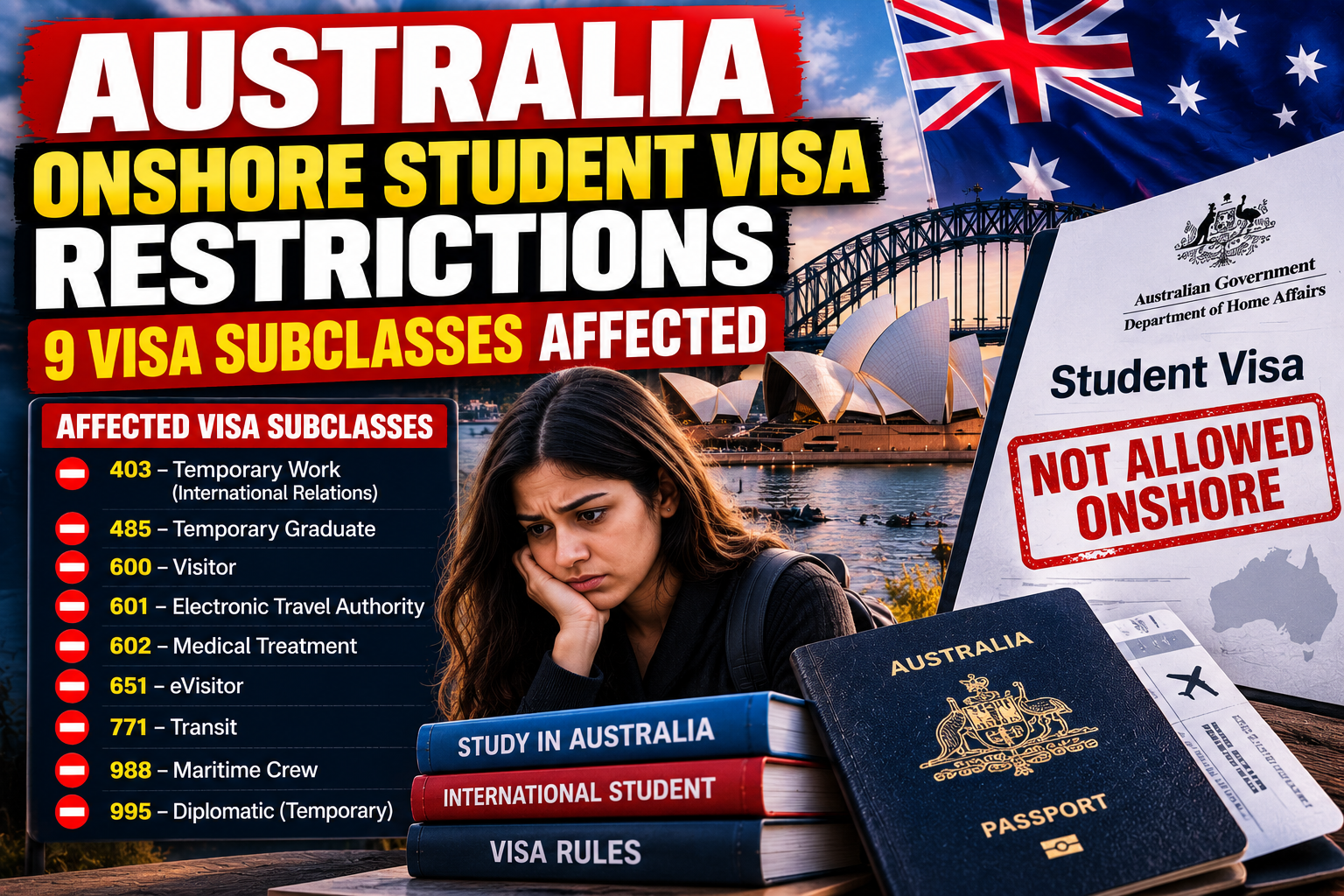
9 Visa Subclasses Affected by Australia’s New Student Visa Rules
The 2026 instrument identifies nine visa subclasses that prevent eligible holders from lodging valid onshore applications for Subclass 500 or Subclass 590 visas.
| Visa Subclass | Visa Name |
|---|---|
| Subclass 403 | Temporary Work (International Relations) |
| Subclass 485 | Temporary Graduate |
| Subclass 600 | Visitor |
| Subclass 601 | Electronic Travel Authority |
| Subclass 602 | Medical Treatment |
| Subclass 651 | eVisitor |
| Subclass 771 | Transit |
| Subclass 988 | Maritime Crew |
| Subclass 995 | Diplomatic (Temporary) |
Holders of these prescribed visas are generally required to leave Australia before applying for a Student or Student Guardian visa.
The Australia onshore student visa restrictions do not mean that every holder of these visas is automatically prohibited from studying in Australia. Rather, they restrict the ability to lodge the specified visa applications while physically in the country.
Why Australia Introduced the New Instrument
The stated purpose of the instrument is to prevent temporary migrants who entered Australia for reasons other than study from using an onshore Student visa application to extend their stay.
The government has continued the arrangements established under the previous instrument, IMMI 2016/016.
The 2026 instrument also removes the former Subclass 426 Domestic Worker (Temporary) – Diplomatic or Consular visa from the list.
This visa subclass was removed because the program closed to new applications in November 2012.
The Australia onshore student visa restrictions therefore largely continue the previous framework while reflecting the removal of a visa category that is no longer open to new applicants.
What Happens If an Applicant Lodges an Invalid Student Visa Application?
Under the new instrument, an application that does not satisfy the relevant Schedule 1 requirements is not considered a valid visa application.
Subsection 47(3) of the Migration Act 1958 provides that the Minister cannot consider an invalid visa application.
This means that affected applicants cannot rely on an invalid onshore application to have their Student or Student Guardian visa eligibility assessed.
The Australia onshore student visa restrictions may therefore have significant consequences for applicants who attempt to lodge an application without first checking whether their current visa permits an onshore application.
An invalid application may also leave an applicant without the bridging visa arrangements they expected.
Applicants should carefully assess their circumstances before submitting an application.
What Applicants Should Check Before Applying for a Student Visa
Temporary visa holders planning to apply for a Subclass 500 Student visa or Subclass 590 Student Guardian visa from within Australia should review their immigration circumstances before lodging an application.
The following factors are particularly important.
1. Current Visa Subclass
Applicants should identify the substantive visa they currently hold and check whether it is included in the list of prescribed subclasses under LIN 26/068.
Holders of the nine specified subclasses generally cannot validly lodge the relevant Student or Student Guardian visa application while in Australia.
2. Visa Stream and Individual Circumstances
Applicants should confirm whether their particular visa stream and circumstances fall within the scope of the instrument.
The applicable requirements should be assessed before making an onshore application.
3. Where the Application Must Be Lodged
Individuals holding a prescribed visa must generally leave Australia and lodge their Student or Student Guardian visa application from outside the country.
Applicants should establish the correct application location before making travel arrangements or submitting their application.
4. Remaining Period of Lawful Stay
Applicants should carefully consider how much time remains on their current visa and whether they need to make departure arrangements.
The Australia onshore student visa restrictions make it particularly important to assess the timing of any planned visa application and departure.
5. Bridging Visa Implications
Applicants should understand that an invalid application may not provide the bridging visa arrangements they expected.
Careful assessment of the applicable rules is therefore essential before submitting an application.
What the New Rules Mean for International Students and Temporary Visa Holders
The new instrument is particularly relevant to temporary visa holders who intend to transition to a Student or Student Guardian visa while remaining in Australia.
Individuals holding a prescribed visa should not assume that they can change their immigration status by lodging an onshore Student visa application.
The Australia onshore student visa restrictions generally require affected applicants to leave the country and apply from overseas.
This may affect the timing of study plans, travel arrangements, and immigration applications.
Applicants and migration advisers should review the applicable visa subclass, the relevant provisions of the instrument, and the individual’s lawful stay arrangements before proceeding.
FAQs : Australia Onshore Student Visa Restrictions
1. When did Australia’s new student visa restrictions take effect?
The Migration Instrument 2026 (LIN 26/068) commenced on September 25, 2026, after being registered on September 24, 2026.
2. Which student visas are affected?
The restrictions apply to onshore applications for the Subclass 500 Student visa and Subclass 590 Student Guardian visa by holders of the prescribed visa subclasses.
3. Which visa subclasses are affected?
The nine subclasses are 403, 485, 600, 601, 602, 651, 771, 988, and 995.
4. Can holders of these visas apply for a Student visa from overseas?
The instrument generally requires holders of prescribed visas to leave Australia and lodge their Student or Student Guardian visa application from outside the country.
5. What happens if someone submits an invalid application?
An application that does not meet the relevant Schedule 1 requirements is not valid. Under subsection 47(3) of the Migration Act 1958, the Minister cannot consider an invalid application.
6. Does the new instrument introduce entirely new restrictions?
The instrument substantially continues the arrangements established under IMMI 2016/016, while removing the former Subclass 426 visa category because that program closed to new applications in November 2012.
7. Why should applicants check their visa subclass before applying?
Applicants should confirm whether their current visa is covered by the instrument because an invalid application may not be considered and may leave them without the expected bridging visa arrangements.
Final Takeaway On Australia Onshore Student Visa Restrictions
Australia’s new Migration Instrument 2026 (LIN 26/068) took effect on September 25, 2026, and identifies nine visa subclasses that generally prevent holders from lodging valid onshore applications for Student or Student Guardian visas.
The Australia onshore student visa restrictions mean that affected temporary visa holders must generally leave the country and apply from overseas.
Before lodging an application, individuals should check their current visa subclass, applicable requirements, remaining lawful stay, and departure arrangements to avoid submitting an invalid application.
Sources :
- Migration Instrument 2026 (LIN 26/068)
- Explanatory Statement for the 2026 Instrument
- Migration Alliance