The debate around Skilled immigration of the European Union has intensified in recent years as Europe faces demographic decline, labour shortages, and growing global competition for talent. Policymakers across Brussels and member states are now reassessing migration frameworks to ensure that Europe remains economically competitive while safeguarding social cohesion.
With ageing populations and shrinking workforces in several EU countries, skilled migration is no longer just a social issue — it has become a strategic economic priority. The future of Europe’s innovation capacity, industrial strength, and digital transformation increasingly depends on how effectively it manages and attracts skilled foreign workers.
Why Skilled Immigration of the European Union Matters in 2026
The Skilled immigration of the European Union plays a crucial role in filling critical gaps across industries such as healthcare, engineering, information technology, green energy, and advanced manufacturing. Many EU countries are experiencing structural labour shortages, particularly in high-skill sectors where domestic supply cannot meet demand.
According to policy analysts, Europe risks losing its competitive edge to countries like the United States, Canada, and Australia if it fails to modernize its skilled immigration pathways. These nations have streamlined points-based systems and faster processing times that actively attract global professionals.
In contrast, Europe’s immigration systems often remain fragmented, with different rules across member states, varying recognition standards for foreign qualifications, and inconsistent processing timelines.
Demographic Pressures Driving Reform
One of the strongest arguments in favor of expanding the Skilled immigration of the European Union is demographic reality. Europe’s working-age population is shrinking while the proportion of retirees is rising sharply.
Without migration, some EU economies may struggle to sustain pension systems, healthcare services, and public infrastructure. Skilled immigrants can contribute to:
- Higher tax revenues
- Increased productivity
- Innovation and entrepreneurship
- Support for aging populations
The challenge lies in balancing openness with political sensitivities around migration.
EU Blue Card and Policy Options
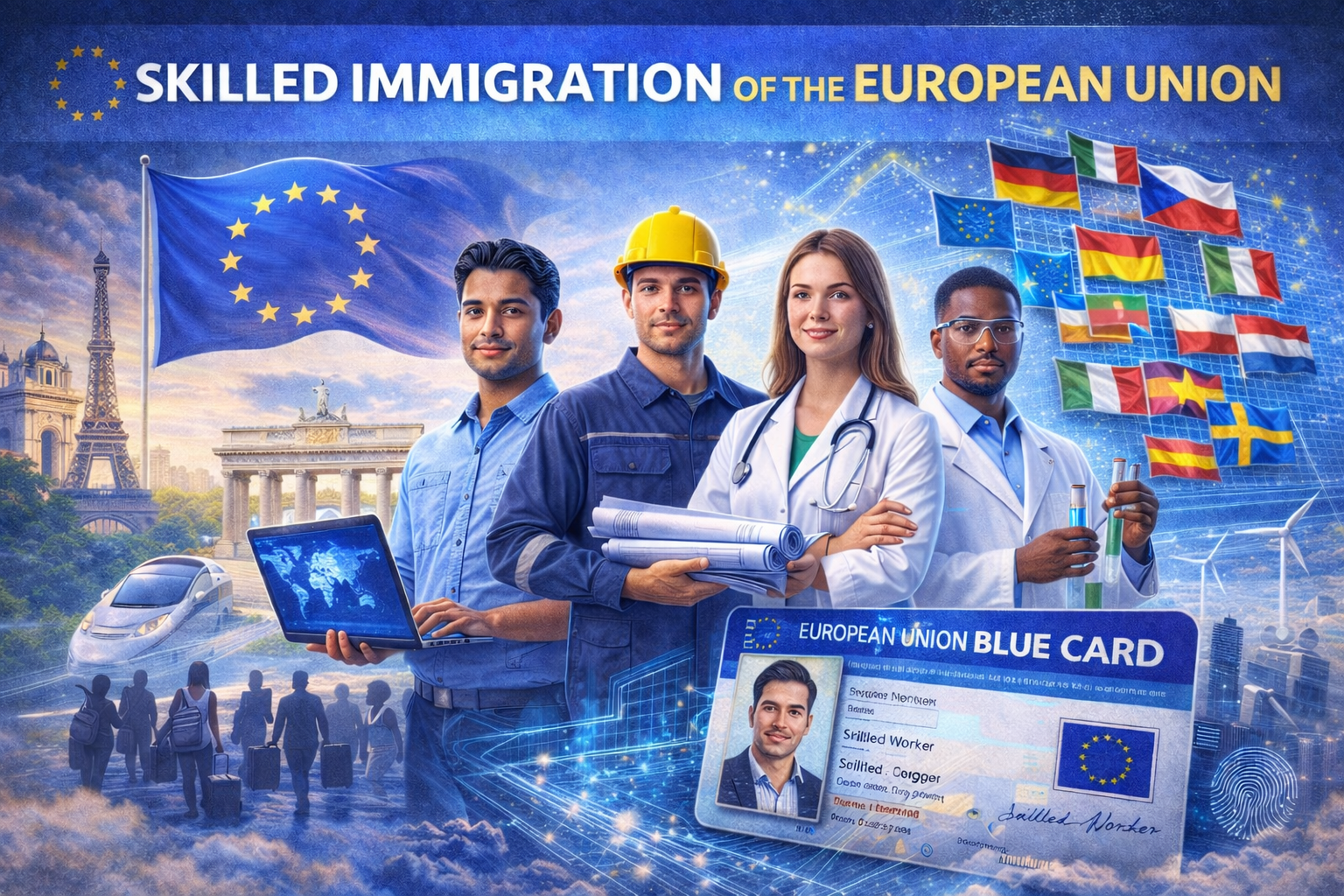
The EU Blue Card program was designed to attract highly qualified professionals from outside the bloc. While reforms have been introduced to simplify eligibility criteria, uptake remains uneven across countries.
To strengthen the Skilled immigration of the European Union, experts suggest several improvements:
- Faster recognition of foreign qualifications
- Simplified mobility between member states
- Clearer pathways to permanent residence
- Stronger integration programs
- Enhanced cooperation between EU countries
Making the system more predictable and transparent would increase Europe’s global appeal.
Global Competition for Talent
The Skilled immigration of the European Union must compete with aggressive talent recruitment strategies worldwide. Countries like Canada and Australia market themselves as migration-friendly destinations with clear PR pathways. The U.S., despite visa backlogs, remains highly attractive due to its innovation ecosystem.
Europe, however, offers its own advantages:
- High quality of life
- Strong social protections
- World-class education systems
- Access to a single market of over 400 million consumers
To fully capitalize on these strengths, EU policymakers need a coordinated approach rather than isolated national strategies.
Economic Competitiveness and Innovation
Innovation hubs in Germany, France, the Netherlands, and the Nordic countries already rely heavily on foreign engineers, researchers, and IT specialists. Expanding the Skilled immigration of the European Union could help:
- Strengthen digital transformation
- Accelerate green energy transition
- Support AI and advanced technology sectors
- Boost start-up ecosystems
Research shows that migrant-founded companies contribute significantly to job creation and technological advancement.
Integration and Social Cohesion
While economic benefits are clear, effective integration remains critical. The long-term success of the Skilled immigration of the European Union depends not just on attracting talent but on retaining it.
Integration policies must focus on:
- Language training
- Recognition of qualifications
- Equal labor rights
- Anti-discrimination safeguards
- Social inclusion measures
Countries that invest in integration see better employment outcomes and stronger community acceptance.
Policy Reform Outlook for 2026 and Beyond
The future of the Skilled immigration of the European Union will likely involve deeper harmonization across member states. Discussions at the EU level suggest possible improvements in digital visa processing, standardized criteria for high-demand occupations, and expanded mobility rights within the bloc.
If reforms move forward, Europe could become a stronger competitor in the global race for talent. If not, the region risks losing skilled professionals to more agile immigration systems elsewhere.
FAQ: Skilled Immigration of the European Union
What is Skilled immigration of the European Union?
It refers to policies and programs designed to attract qualified professionals from outside the EU to fill labor shortages and strengthen economic competitiveness.
Why is Europe focusing on skilled immigration?
Due to aging populations, shrinking workforces, and high demand in sectors like healthcare and technology.
What is the EU Blue Card?
The EU Blue Card is a work and residence permit aimed at highly skilled non-EU nationals, offering certain mobility rights within the bloc.
Is Europe competing with other countries for skilled migrants?
Yes. Countries such as Canada, Australia, and the United States actively recruit global talent through streamlined immigration systems.
What challenges does Europe face?
Fragmented policies, slow recognition of qualifications, and inconsistent processing timelines reduce competitiveness.
Can skilled immigrants get permanent residency in the EU?
Yes, but requirements vary by country. Many EU nations offer long-term residence after several years of employment.
Any Queries : Contact Us