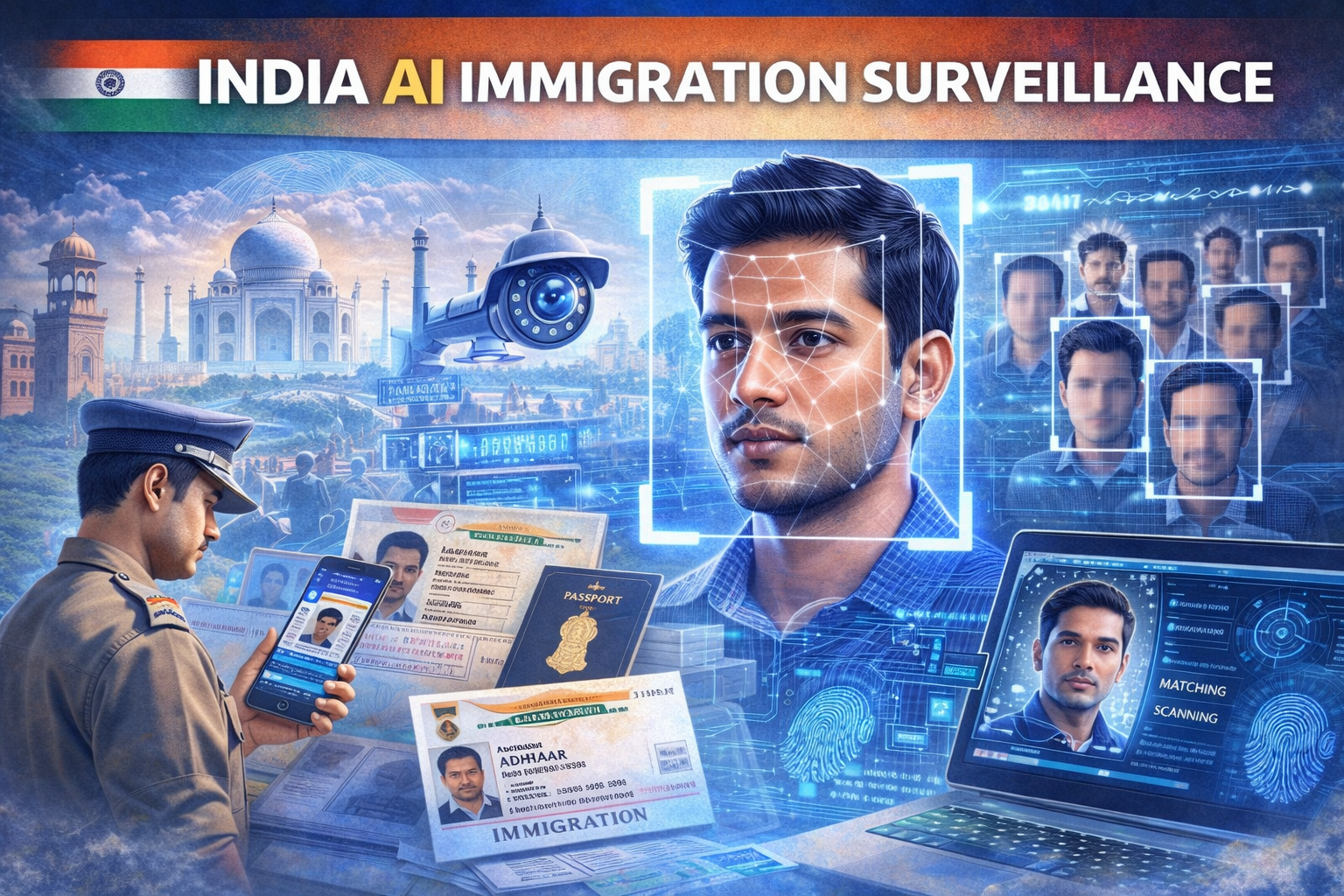
India is rapidly strengthening its digital enforcement systems under what experts are calling a new phase of India AI immigration surveillance, aimed at identifying illegal immigrants and monitoring visa compliance through advanced technology.
Authorities are increasingly deploying artificial intelligence, biometric verification tools, and large-scale data integration systems to detect visa overstays, forged documents, and unauthorized residency. Supporters argue that India AI immigration surveillance will enhance national security and streamline immigration control, while critics warn of potential privacy risks and civil liberty concerns.
As digital governance expands across sectors, immigration enforcement is becoming one of the most technologically integrated areas in India.
What Is India AI Immigration Surveillance?
The term India AI immigration surveillance refers to the government’s use of artificial intelligence and big data tools to monitor immigration compliance and detect irregular migrants.
These systems reportedly involve:
- AI-based facial recognition
- Biometric cross-verification
- Real-time database matching
- Automated identity authentication
- Integrated border monitoring systems
By analyzing large volumes of data, AI tools can flag discrepancies between visa records, identity documents, and residency databases within seconds.
Officials argue that such systems reduce human error and improve coordination between immigration departments, state police, and border security agencies.
Why India Is Expanding AI in Immigration Enforcement
Illegal immigration remains a politically sensitive issue, especially in border states. Authorities believe that India AI immigration surveillance can:
- Detect visa overstays more efficiently
- Identify forged documents
- Strengthen border security
- Disrupt human trafficking networks
- Improve enforcement transparency
Manual verification processes often take weeks, but AI systems can process millions of data entries instantly.
Government sources suggest that digitization reduces bureaucratic delays and enhances inter-agency cooperation.
Role of Big Data and National Identity Integration
A significant component of India AI immigration surveillance is the integration of immigration databases with existing national identity systems.
Potential data sources include:
- Passport records
- Visa approval databases
- Aadhaar identity verification
- Immigration clearance systems
- Law enforcement records
AI algorithms can identify patterns such as overstays, mismatched identity information, or unusual travel routes.
However, this scale of data integration has raised questions about data protection safeguards.
Privacy and Civil Liberty Concerns
While authorities emphasize security benefits, civil rights groups argue that India AI immigration surveillance could expand into broader population monitoring if not carefully regulated.
Key concerns include:
1. Risk of False Identification
Facial recognition technology can sometimes produce inaccurate matches, particularly in large datasets. Incorrect identification could result in detention or investigation of innocent individuals.
2. Data Security Vulnerabilities
Centralized biometric databases could become targets for cyberattacks. A breach could expose sensitive identity information.
3. Lack of Transparency
Experts question how surveillance data is stored, who can access it, and how long it is retained.
4. Potential Overreach
Critics warn that without clear legal frameworks, surveillance tools could extend beyond immigration enforcement.
International Context
India is not alone in adopting AI for immigration control. Countries such as the United States, United Kingdom, and Australia have implemented AI-assisted border management systems.
However, global debates continue regarding ethical AI use, bias in facial recognition, and oversight mechanisms.
As India AI immigration surveillance expands, policymakers may need to balance security priorities with constitutional safeguards.
Government Safeguards and Regulatory Framework
India has introduced data protection legislation and digital governance policies aimed at regulating large-scale data usage. Officials maintain that AI tools are deployed within legal parameters and subject to review.
However, experts recommend:
- Independent audits of AI systems
- Clear redress mechanisms for wrongful identification
- Transparent reporting on enforcement outcomes
- Strong cybersecurity infrastructure
Without these safeguards, public trust could erode.
What This Means for Residents and Migrants
For visa holders and foreign nationals residing in India, India AI immigration surveillance signals stricter compliance monitoring. Overstays or documentation discrepancies may now be detected more quickly.
Authorities advise migrants to:
- Maintain valid visa status
- Keep documentation updated
- Use official immigration portals
- Avoid unauthorized intermediaries
While enforcement is tightening, legal migration pathways remain available for eligible applicants.
The Road Ahead
The expansion of India AI immigration surveillance reflects a broader shift toward technology-driven governance. The long-term success of such systems will depend on:
- Responsible implementation
- Data privacy safeguards
- Transparent oversight
- Public accountability
As AI reshapes immigration enforcement, India faces the challenge of balancing security with civil liberties.
Frequently Asked Questions (FAQ)
1. What is India AI immigration surveillance?
It refers to the use of artificial intelligence and digital monitoring systems to detect illegal immigrants and enforce visa compliance.
2. What technologies are involved?
Facial recognition, biometric verification, data analytics, and integrated immigration databases.
3. Is AI surveillance legally regulated in India?
India has data protection laws, but experts call for stronger oversight and transparency.
4. Can AI systems make mistakes?
Yes. AI systems can produce false matches, which is why human review remains essential.
5. Does this affect legal visa holders?
Legal residents may face stricter compliance monitoring, but legitimate status holders should not be impacted.
6. Why is the government expanding AI use?
To improve border security, detect overstays, and streamline immigration enforcement.
7. Is this trend global?
Yes. Many countries are integrating AI into immigration and border control systems.
Any Queries : Contact Us