
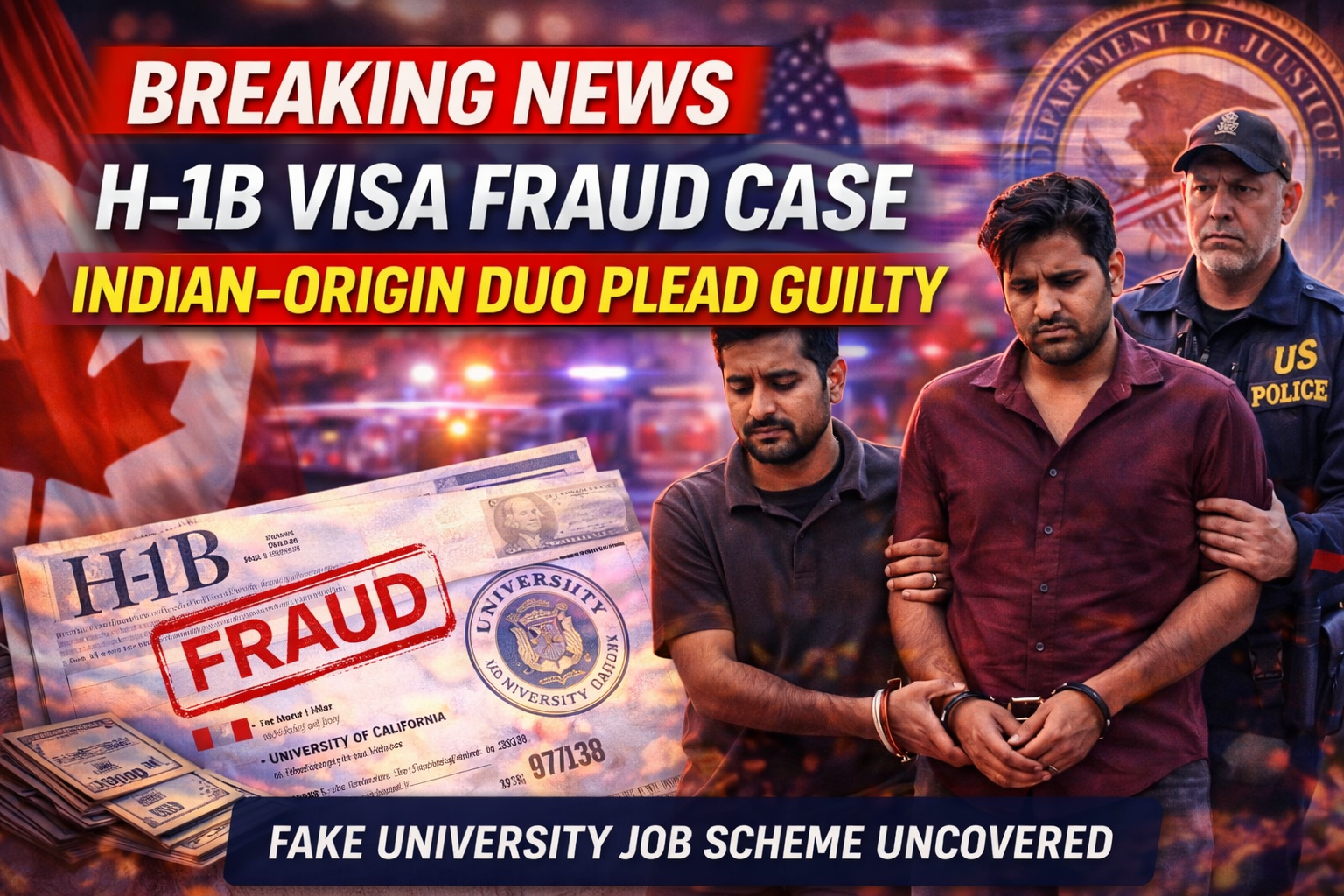
A significant H-1B visa fraud case has come to light in the United States, involving two Indian-origin individuals accused of manipulating the visa system through fraudulent job petitions. The case highlights serious concerns about misuse of employment-based visas, particularly the H-1B Program, which is widely used by skilled professionals seeking opportunities in the US.
Authorities allege that the accused exploited institutional connections to gain an unfair advantage in securing limited visa slots, raising broader questions about transparency and compliance in immigration systems.
H-1B Visa Fraud Case: Key Developments
According to the US Department of Justice, the accused—Sampath Rajidi and Sreedhar Mada—have pleaded guilty to conspiracy related to H-1B visa fraud.
What Happened
- The accused operated visa consulting firms
- Filed H-1B petitions for roles that did not exist
- Claimed employment at a US university
- Later placed workers with private companies
This scheme reportedly ran between 2020 and 2023.
How the Fraud Scheme Worked
Fake University Job Offers
The accused allegedly:
- Filed visa petitions citing employment at the University of California
- Used false claims to meet H-1B eligibility criteria
Use of Insider Position
One आरोपी held a senior role within a university-affiliated organization, which:
- Provided credibility to applications
- Helped support false documentation
Placement with Third-Party Employers
After securing H-1B approvals:
- Workers were placed with private clients
- Original job roles did not exist
Manipulating the Visa System
By filing fraudulent petitions:
- The accused reportedly secured limited H-1B slots
- Reduced opportunities for legitimate applicants
Legal Action and Penalties
The H-1B visa fraud case is being prosecuted by US federal authorities.
Possible Consequences
- Up to 5 years in prison
- Fines up to $250,000
Sentencing is scheduled for July 30, 2026.
Why This Case Matters
1. Integrity of H-1B Program
The case highlights vulnerabilities in the H-1B system, which is designed for skilled foreign workers.
2. Increased Scrutiny
Authorities may:
- Tighten verification processes
- Increase audits of visa petitions
3. Impact on Visa Availability
Fraudulent applications can:
- Reduce available slots
- Affect genuine candidates
Impact on Indian Applicants
The H-1B visa fraud case has important implications for Indian professionals:
Higher Scrutiny of Applications
Applicants may face:
- More detailed background checks
- Increased documentation requirements
Stricter Employer Verification
US authorities are likely to:
- Verify job roles more rigorously
- Monitor employer compliance
Potential Delays
Processing times may increase due to:
- Additional checks
- Fraud prevention measures
Real-World Context: A Broader Trend
This case is part of a wider trend of immigration enforcement in the US:
- Increased focus on visa fraud detection
- Crackdown on misuse of employment visas
- Collaboration between multiple federal agencies
Authorities have also warned that violations could lead to:
- Deportation
- Blacklisting
What Applicants Should Do Now (Actionable Insights)
1. Verify Employer Authenticity
Ensure job offers are:
- Genuine
- Supported by official documentation
2. Avoid Third-Party Placement Schemes
Be cautious of:
- Unclear job roles
- Indirect employment arrangements
3. Maintain Accurate Documentation
Provide:
- Genuine credentials
- Verifiable employment details
4. Stay Updated on Policy Changes
Monitor updates from:
- US immigration authorities
- Official government sources
5. Seek Professional Guidance
Consult licensed immigration experts for complex cases.
Expert Analysis: What This Means Long-Term
The H-1B visa fraud case reflects a tightening regulatory environment in US immigration policy.
From a policy perspective:
- Fraud prevention will remain a priority
- Visa processes may become more stringent
- Compliance requirements will increase
For applicants:
👉 Transparency is critical
👉 Any discrepancies can lead to rejection or legal consequences
In the long term, stricter enforcement may improve system integrity but could also make the process more competitive.
Conclusion
The H-1B visa fraud case involving two Indian-origin individuals underscores the importance of maintaining integrity in immigration processes. While the H-1B program continues to offer valuable opportunities, misuse of the system can have serious consequences for both individuals and the broader applicant pool.
Applicants must prioritize authenticity, compliance, and due diligence to navigate the system successfully.
FAQs
1. What is the H-1B visa fraud case about?
It involves two individuals who filed fake job petitions to secure H-1B visas.
2. How did the H-1B visa fraud case work?
They used non-existent university job roles to obtain visa approvals.
3. What penalties do they face?
Up to 5 years in prison and fines of up to $250,000.
4. Does this affect Indian applicants?
Yes, it may lead to stricter scrutiny and verification processes.
5. How can applicants avoid such issues?
Ensure job offers are genuine and follow legal immigration procedures.
Read About : Indian H-1B Fraud Case: $800K Elderly Scam Shocks US Authorities
Author Bio
Written by Immigration News Team, specializing in global visa policies, immigration trends, and international student mobility.
Last Updated
April 2026


One thought on “H-1B Visa Fraud Case: Indian-Origin Duo Plead Guilty”