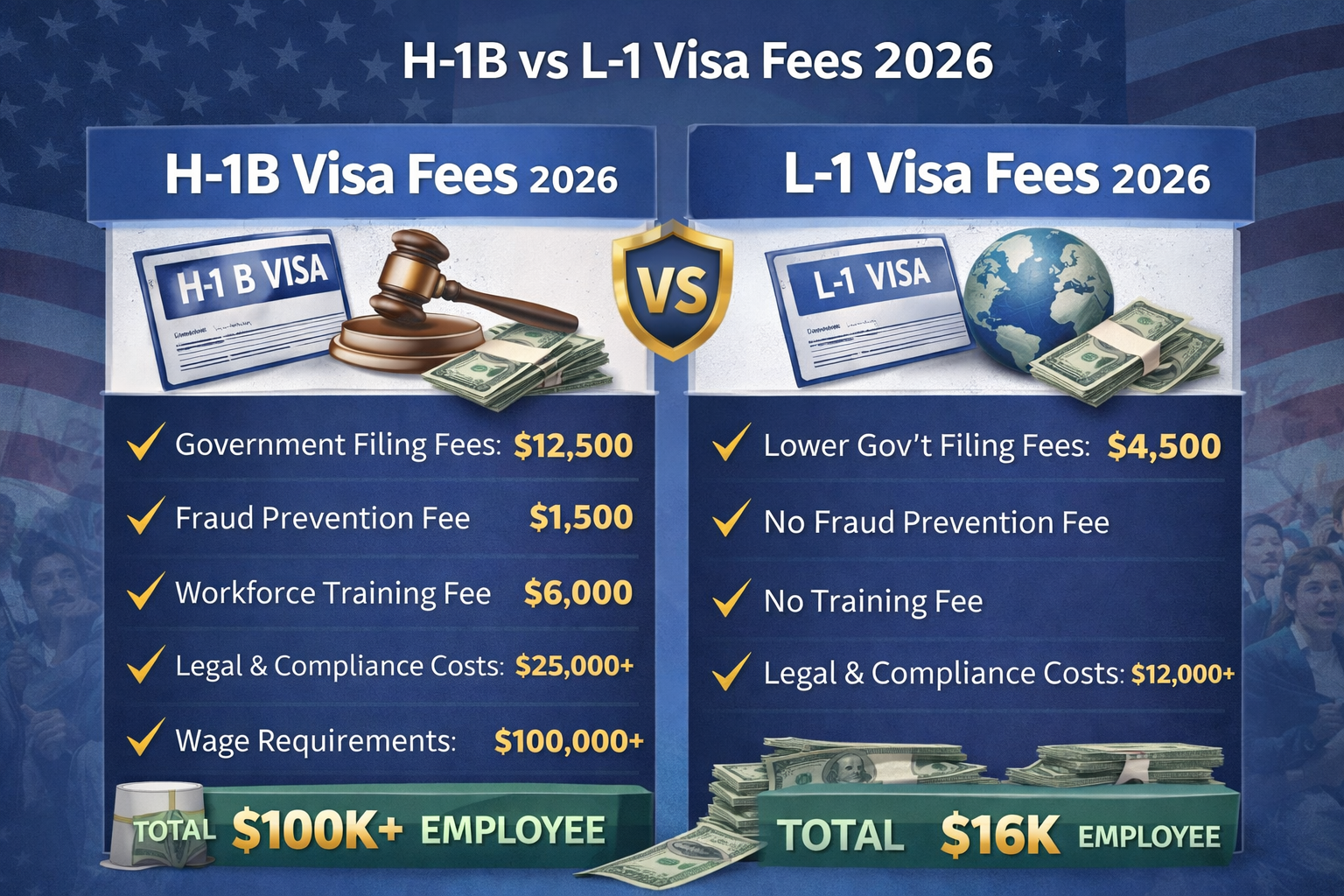
The debate around H-1B visa fees 2026 has intensified as U.S. employers, foreign professionals, and immigration attorneys come to terms with a cost structure that many believe is no longer temporary. With cumulative expenses for some H-1B workers exceeding six figures over multiple years, experts say the rising financial burden is fundamentally changing how companies approach global hiring.
Immigration attorneys widely agree that the current fee structure is unlikely to be rolled back, signaling a long-term shift in the way employment-based immigration functions in the United States.
Why H-1B Visa Costs Have Increased So Sharply
The H-1B program, administered by U.S. Citizenship and Immigration Services, has gradually become more expensive due to a combination of policy changes, enforcement measures, and compliance requirements.
When discussing H-1B visa fees 2026, immigration experts point to multiple contributing factors:
- Mandatory government filing fees
- Fraud prevention and workforce training fees
- Employer-paid legal and compliance costs
- Prevailing wage obligations
- Costs associated with extensions, amendments, and site visits
While the base government fees may appear manageable on paper, the total cost over a standard six-year H-1B employment period can be substantial, particularly for employers sponsoring multiple workers.
Immigration Attorneys: “These Fees Are Here to Stay”
Many U.S. immigration attorneys say there is little political or regulatory momentum to reduce H-1B-related costs. In fact, recent policy signals suggest continued scrutiny rather than relief.
According to legal experts, H-1B visa fees 2026 reflect a broader policy goal of discouraging over-dependence on the program while encouraging companies to explore alternative workforce strategies. However, critics argue that higher costs disproportionately affect startups, research institutions, and mid-sized employers that rely heavily on specialized foreign talent.
Employers Turn to L-1 Visas as a Cost-Control Strategy
As concerns over H-1B visa fees 2026 grow, many employers are increasingly considering the L-1 intracompany transfer visa as an alternative.
The L-1 visa allows multinational companies to transfer employees from overseas offices to U.S. operations. Immigration attorneys note several advantages:
- No annual lottery cap
- Lower cumulative government fees
- No prevailing wage requirement
- Faster processing in some cases
For companies with global operations, the L-1 route can significantly reduce long-term costs compared to repeated H-1B filings.
Limitations and Risks of the L-1 Alternative
Despite its advantages, the L-1 visa is not a universal solution. Attorneys caution that eligibility is tightly defined and heavily scrutinized.
To qualify, employers must demonstrate:
- A legitimate qualifying relationship between foreign and U.S. entities
- Prior employment of the worker abroad
- Managerial, executive, or specialized knowledge roles
Misuse of the L-1 category can trigger audits, denials, and long-term compliance consequences. As a result, legal experts stress that L-1 planning must be done carefully and well in advance.
Impact on Foreign Professionals
For skilled foreign workers, H-1B visa fees 2026 are influencing career decisions in significant ways. Many professionals are now:
- Starting careers with multinational firms outside the U.S.
- Accepting longer timelines for U.S. relocation
- Considering remote or offshore roles instead of immediate transfers
Some workers also face reduced job mobility, as high sponsorship costs make employers more cautious about filing new H-1B petitions or extensions.
Broader Effects on the U.S. Job Market
Policy analysts warn that persistently high H-1B costs could have unintended consequences for the U.S. economy. Employers may choose to:
- Expand research and development abroad
- Hire talent remotely instead of relocating workers
- Shift innovation efforts outside the United States
Supporters of the current system argue that stricter controls protect domestic workers, while critics contend that excessive costs could weaken U.S. competitiveness in global talent markets.
What Employers and Applicants Should Do in 2026
Immigration experts recommend proactive planning in response to H-1B visa fees 2026. Key steps include:
- Evaluating all available visa options early
- Seeking professional legal advice before choosing a pathway
- Avoiding assumptions that H-1B is always the best or cheapest option
- Factoring long-term compliance and extension costs into hiring decisions
As one immigration attorney noted, employment-based immigration has become “as much a financial strategy as a legal one.”
Conclusion
The reality of H-1B visa fees 2026 marks a turning point in U.S. work visa policy. With costs unlikely to decrease, employers and foreign professionals are being forced to adapt through alternative visa planning, longer timelines, and more strategic workforce decisions.
While options like the L-1 visa provide some relief, they are not accessible to everyone. As the U.S. continues to balance border control, labor needs, and economic competitiveness, the evolving cost structure of the H-1B program will remain a defining issue in global talent mobility.
Frequently Asked Questions (FAQs) on H-1B Visa Fees 2026
What are H-1B visa fees 2026?
H-1B visa fees in 2026 include government filing fees, fraud prevention fees, workforce training fees, legal costs, and compliance expenses. When combined over multiple years, total costs can exceed tens of thousands of dollars per employee.
Are H-1B visa fees expected to be reduced in 2026?
Immigration experts say there are no indications that H-1B visa fees will be reduced in 2026. Most attorneys believe the current cost structure is permanent and may increase further.
Why are H-1B visa fees so high?
Fees are high due to stricter compliance rules, increased enforcement, legal requirements, wage obligations, and multiple filing stages over the visa’s validity period.
Do employees pay H-1B visa fees 2026?
No. U.S. law requires most H-1B visa fees to be paid by the employer. Passing mandatory fees to employees is prohibited and can lead to penalties.
Is the L-1 visa cheaper than the H-1B visa?
In many cases, yes. The L-1 visa can be more cost-effective over time, especially for multinational companies, as it avoids the H-1B lottery and some long-term fee burdens.
Will high H-1B fees affect foreign workers?
Yes. Rising H-1B visa fees may limit job opportunities, slow sponsorship decisions, and encourage employers to explore alternative visa routes or offshore hiring.
Any Queries : Contact Us