European Union Launches Major Migration Reform Affecting Asylum Seekers, Irregular Arrivals and Border Management Across 27 Countries
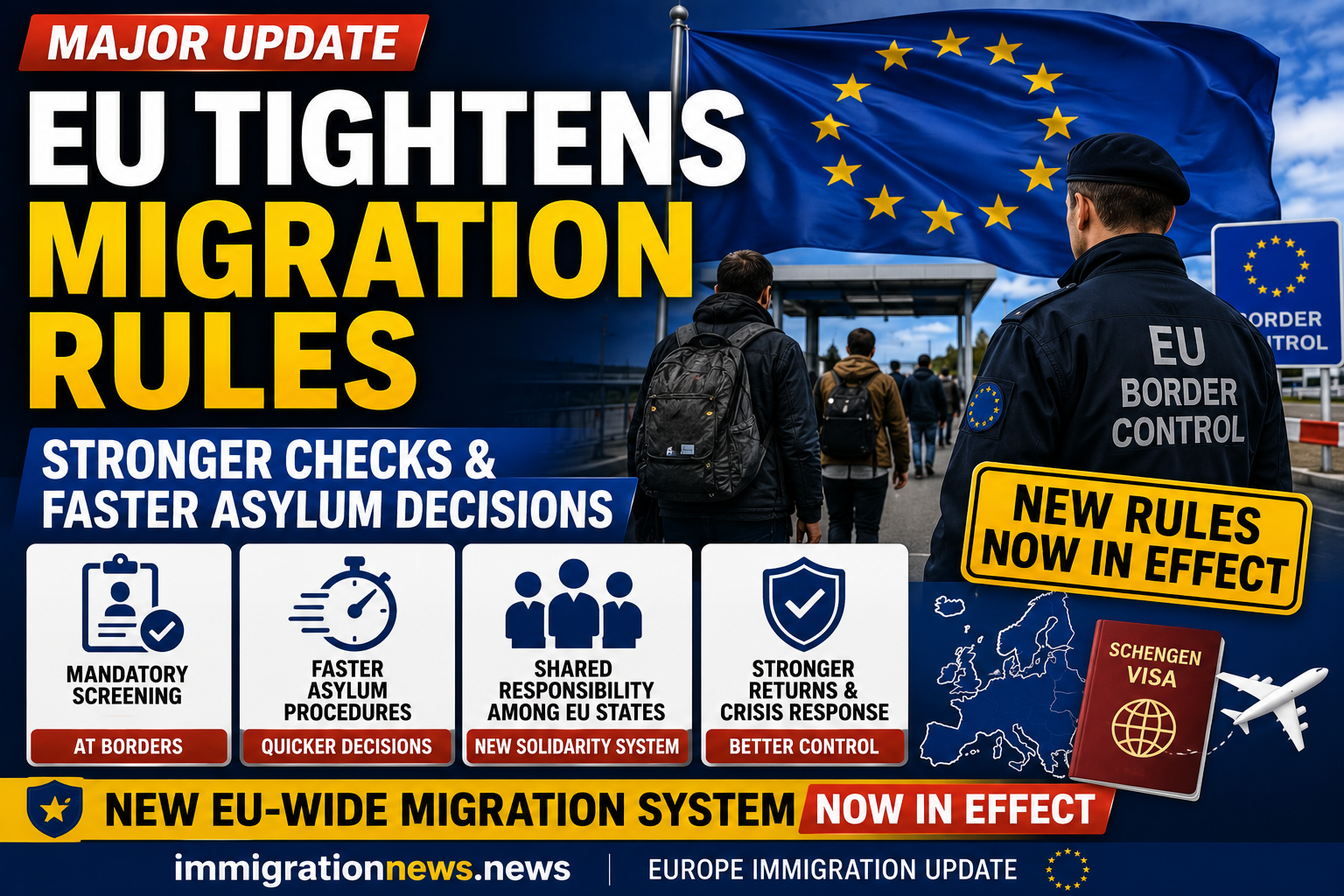
EU’s New Migration Rules Now in Effect : The European Union has officially begun implementing its biggest migration and asylum reform in years, introducing stricter border controls, faster asylum procedures, and a new mechanism requiring member states to share responsibility for managing migration.
The EU Pact on Migration and Asylum entered into force on June 12, 2026, following a two-year preparation period aimed at overhauling how the bloc handles asylum claims and irregular migration.
The reforms affect all 27 EU member states and are designed to create a more unified immigration system while strengthening external border management.
For most Indian tourists, international students, and skilled workers holding valid visas or residence permits, the new rules will not change existing travel procedures. However, those entering the EU irregularly, overstaying visas, or applying for asylum may face stricter screening and faster decisions.
Quick Highlights : EU’s New Migration Rules Now in Effect
- EU migration reforms officially took effect on June 12, 2026.
- Mandatory screening introduced for irregular arrivals.
- Faster asylum processing procedures launched.
- New responsibility-sharing system applies to all EU countries.
- Eurodac database expanded to strengthen migration tracking.
- Stricter return procedures introduced for rejected asylum claims.
- Valid Schengen visa holders, students, and workers are largely unaffected.
Why are the EU’s New Migration Rules Now in Effect
The European Union has faced years of political debate over migration management, asylum processing, and border security.
Different member states often applied varying procedures, creating inconsistencies in how asylum claims were handled across Europe.
The new Pact aims to:
Strengthen Border Security
Speed Up Asylum Decisions
Reduce Irregular Migration
Improve Cooperation Between EU Countries
Create Common Rules Across the Bloc
European officials say the reforms are intended to balance humanitarian protection with stronger migration control.
Mandatory Screening for Irregular Arrivals
One of the biggest changes under the new framework is the introduction of:
Mandatory Border Screening
for individuals entering the EU without authorization.
Before entering the asylum or immigration system, individuals must undergo:
- Identity verification.
- Security checks.
- Health screenings.
- Vulnerability assessments.
The European Commission says this process will help ensure that all member states follow consistent registration procedures.
Screening Timeline
| Situation | Maximum Processing Time |
|---|---|
| Arrivals at External Borders | Up to 7 Days |
| Individuals Found Inside EU Territory | Up to 3 Days |
The goal is to identify applicants quickly and determine the appropriate immigration process.
Faster Asylum Procedures Introduced
The new rules significantly accelerate asylum processing for certain categories of applicants.
Under the revised system:
Border Asylum Procedures
can now be used for applicants who are considered unlikely to qualify for international protection or who may present security concerns.
In some cases, applicants may remain in designated border facilities while authorities assess their claims.
EU officials argue that faster decisions will reduce long-term backlogs and discourage abuse of the asylum system.
Eurodac Database Expanded
The reforms also strengthen the role of:
Eurodac
the EU’s central database used to manage asylum and migration records.
The updated system will help authorities:
- Track asylum applications.
- Monitor irregular border crossings.
- Prevent multiple asylum claims in different countries.
- Improve cooperation between national immigration agencies.
The expansion is intended to reduce unauthorized movement between EU member states after arrival.
New Solidarity Mechanism for EU Countries
One of the most controversial elements of the reform package is the introduction of a:
Mandatory Solidarity Mechanism
Under previous arrangements, support for countries facing migration pressure was largely voluntary.
Now, member states must contribute through one or more of the following:
Relocation of Asylum Seekers
Financial Contributions
Operational Support
Technical Assistance
The objective is to distribute migration responsibilities more evenly across the European Union.
Clearer Rules on Which Country Handles an Asylum Claim
The new framework also introduces clearer responsibility rules.
Generally, asylum seekers will be required to have their applications processed according to specific responsibility criteria established under the Pact.
The EU hopes this will reduce situations where applicants move between multiple countries seeking to submit asylum claims.
Officials believe the changes will improve efficiency and reduce administrative disputes among member states.
Stricter Return Procedures
The reforms place greater emphasis on returning individuals who do not qualify for protection.
The EU says it intends to:
Accelerate Return Decisions
Improve Cooperation With Non-EU Countries
Increase Enforcement of Removal Orders
Authorities argue that a more effective return system is necessary to maintain confidence in legal migration pathways.
New Crisis Response Mechanism
The Pact introduces a dedicated:
Crisis and Force Majeure Framework
This mechanism allows the EU to respond more quickly during periods of extraordinary migration pressure.
Examples may include:
- Sudden increases in migration flows.
- Humanitarian emergencies.
- Border crises.
- Situations where migration is used as a political tool by foreign governments.
The framework allows access to:
- Emergency funding.
- Additional EU agency support.
- Temporary operational measures.
European officials say the mechanism will help member states respond more effectively during future migration emergencies.
What Indian Nationals Need to Know
For most Indian citizens travelling legally to Europe, the reforms will have little direct impact.
Tourists
Travellers holding valid Schengen visas can continue visiting EU countries under existing visa rules.
International Students
Students with approved admission letters and residence permits are not directly affected.
Skilled Workers
Professionals holding valid work permits or residence authorizations can continue using existing immigration pathways.
Asylum Applicants and Overstayers
Individuals without legal status may face:
- Faster screening procedures.
- Quicker asylum decisions.
- Stronger enforcement measures.
- Accelerated return processes.
For legal travellers, compliance with visa conditions remains the most important requirement.
Human Rights Concerns and Criticism
While EU officials describe the reforms as balanced, several human rights organizations have expressed concerns.
Critics argue that:
- Expanded border procedures may increase detention-like conditions.
- Faster decisions could reduce access to legal protections.
- Stricter return mechanisms may affect vulnerable applicants.
Supporters, however, argue the reforms are necessary to maintain an orderly migration system and improve confidence in asylum processes.
As implementation begins, immigration experts expect ongoing debate regarding the practical impact of the new rules.
Why EU’s New Migration Rules Now in Effect Matters
The EU Pact on Migration and Asylum represents one of the most significant immigration reforms undertaken by the European Union in recent years.
The changes are expected to influence:
- Border management.
- Asylum processing.
- Immigration enforcement.
- Responsibility-sharing among member states.
- Future migration policy across Europe.
Although most legal travellers will see little immediate change, the reforms could significantly reshape how irregular migration and asylum claims are managed throughout the EU.
Key Takeaways Of EU’s New Migration Rules Now in Effect
- The EU Pact on Migration and Asylum took effect on June 12, 2026.
- Mandatory screening now applies to irregular arrivals.
- Faster asylum procedures have been introduced.
- EU countries must contribute through a new solidarity mechanism.
- The Eurodac migration database has been expanded.
- Return procedures for rejected applicants have been strengthened.
- Legal travellers, students, and skilled workers remain largely unaffected.
- Human rights groups continue to debate aspects of the reforms.
FAQ : EU’s New Migration Rules Now in Effect
When did the EU migration reforms take effect?
The new rules officially entered into application on June 12, 2026.
Will tourists with Schengen visas be affected by EU’s New Migration Rules Now in Effect?
No. Valid Schengen visa holders can continue travelling under existing rules.
What is the new border screening process?
Irregular arrivals must undergo identity, security, health, and vulnerability checks before entering the asylum process.
What is the solidarity mechanism?
It requires EU member states to contribute through relocation, financial support, or operational assistance when migration pressures increase.
Are international students affected by EU’s New Migration Rules Now in Effect?
Students with valid study permits and legal status are generally not affected by the reforms.
Source : Business Standard
Read About : Manitoba Closes Career Employment Pathway for International Graduates, Effective Immediately