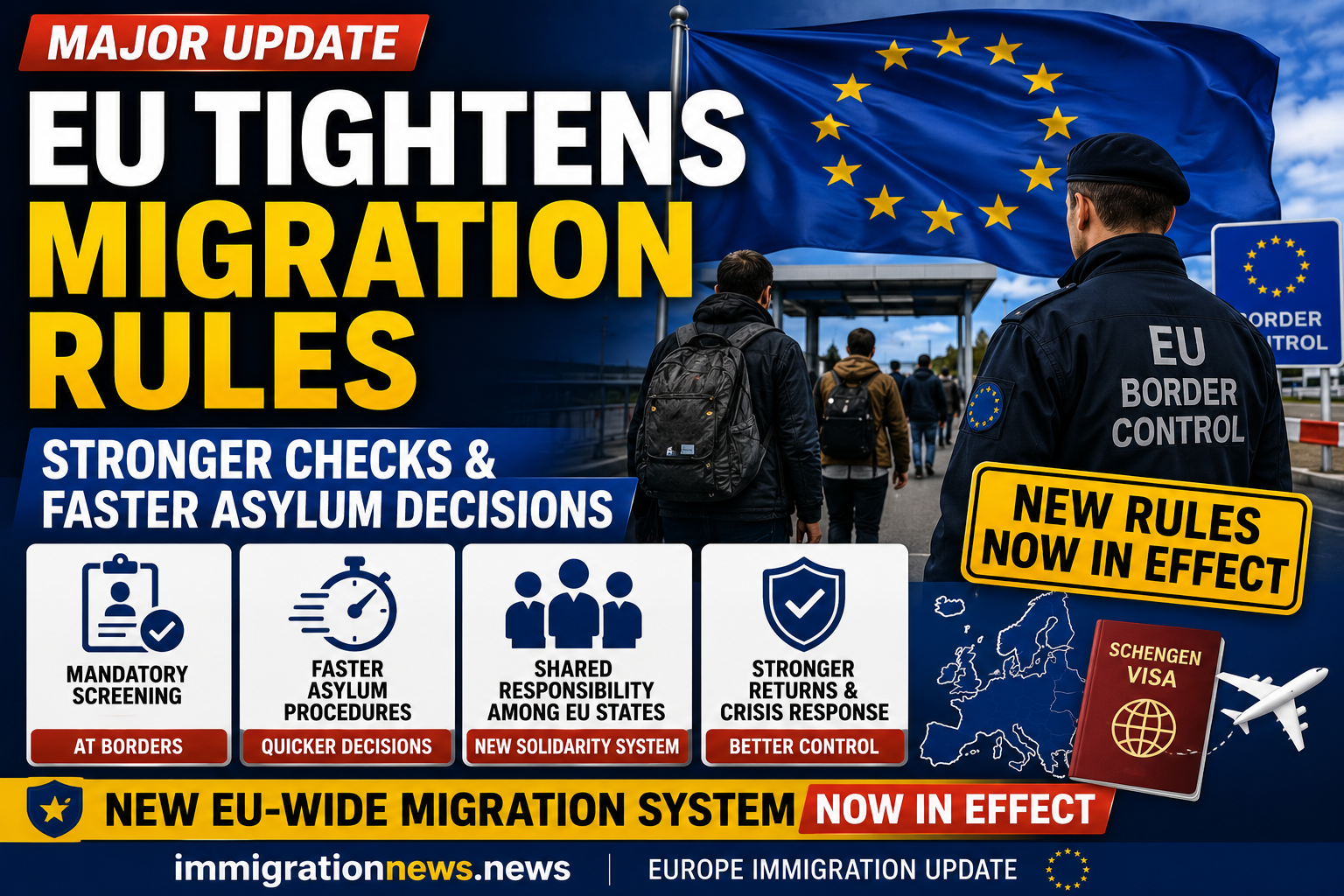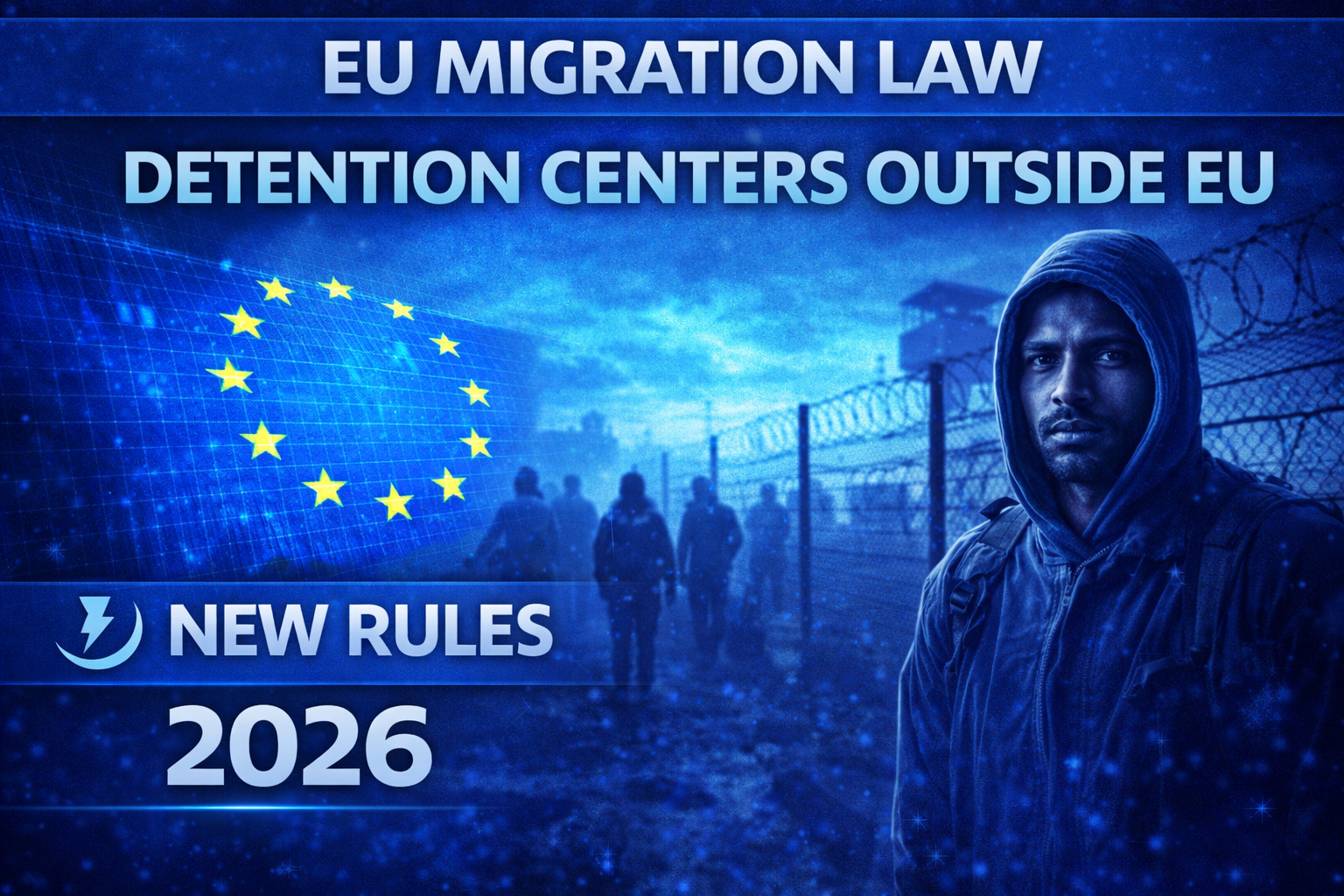
The EU Migrant Detention Centers 2026 policy has taken a major step forward after European lawmakers approved a controversial new migration measure.
Members of the European Parliament voted 389–206 (32 abstentions) to allow easier creation of migrant detention facilities outside the European Union — known as “return hubs.”
This decision marks a significant shift in EU migration policy, with countries now allowed to deport migrants to third-country facilities instead of their home nations.
EU Migrant Detention Centers 2026: Key Highlights
| Detail | Information |
|---|---|
| Vote Result | 389 in favour |
| Against | 206 |
| Abstentions | 32 |
| Policy Name | Return Hubs |
| Objective | Deport migrants outside EU |
👉 The EU Migrant Detention Centers 2026 policy is one of the most debated migration reforms in Europe.
EU Migrant Detention Centers 2026: What Are “Return Hubs”?
“Return hubs” are detention facilities located outside the EU.
How They Work
| Feature | Explanation |
|---|---|
| Location | Outside EU (mainly Africa) |
| Purpose | Hold rejected asylum seekers |
| Deportation | Not necessarily to home country |
| Management | Agreements with host countries |
👉 Migrants denied asylum can now be sent to third countries instead of being returned home.
EU Migrant Detention Centers 2026: Countries Involved
Several EU nations are already exploring this policy.
| Country | Status |
|---|---|
| Greece | In talks |
| Germany | Negotiating |
| Netherlands | Negotiating |
| Austria | Exploring |
| Denmark | Active discussions |
👉 Many negotiations are happening with African countries to host these centers.
EU Migrant Detention Centers 2026: Political Divide
The vote revealed a sharp political split across Europe.
Voting Breakdown
| Political Group | Position |
|---|---|
| Right-wing parties | Supported |
| Far-right groups | Strongly supported |
| Left-wing parties | Opposed |
| Centrist groups | Divided |
👉 A key factor:
- Right-wing + far-right alliance helped pass the law
EU Migrant Detention Centers 2026: Why This Policy Is Being Introduced
EU countries are facing increasing migration pressure.
Key Reasons
| Factor | Impact |
|---|---|
| Rising asylum claims | System overload |
| Border pressure | Increased crossings |
| Political pressure | Stronger controls demanded |
| US influence | Similar policies emerging |
👉 Some European leaders have openly praised strict US deportation models.
EU Migrant Detention Centers 2026: Supporters’ View
Supporters say the policy is necessary.
Key Arguments:
- Stronger border control
- Faster deportations
- Reduced illegal migration
- Deterrence effect
👉 Swedish lawmaker Charlie Weimers called it:
“The beginning of a new era of deportations.”
EU Migrant Detention Centers 2026: Criticism & Concerns
Human rights groups strongly oppose the move.
Major Concerns
| Issue | Explanation |
|---|---|
| Human rights risks | Lack of oversight outside EU |
| Legal protections | Weakened safeguards |
| Abuse allegations | Reports of mistreatment |
| Accountability | Harder to monitor conditions |
👉 International Rescue Committee described it as:
“A historic setback for refugee rights.”
EU Migrant Detention Centers 2026: Key Criticism from Lawmakers
Some lawmakers strongly opposed the bill.
- French lawmaker Mélissa Camara warned:
👉 These centers could be placed in areas where rights cannot be monitored effectively - Critics say this policy could:
- Criminalize migrants
- Shift responsibility outside Europe
- Undermine asylum protections
EU Migrant Detention Centers 2026: What Happens Next?
| Step | Timeline |
|---|---|
| Agreements with host countries | Ongoing |
| Construction of hubs | Pending |
| Policy implementation | Gradual rollout |
| Legal challenges | Possible |
👉 The policy is expected to face legal and political challenges.
EU Migrant Detention Centers 2026: Key Takeaways
- EU approves detention centers outside bloc
- Migrants may be deported to third countries
- Strong support from right-wing parties
- Heavy criticism from human rights groups
- Major shift in EU migration policy
Conclusion
The EU Migrant Detention Centers 2026 policy signals a turning point in Europe’s approach to migration.
While supporters see it as a necessary control measure, critics warn it could weaken human rights protections and reshape asylum systems across the continent.
👉 One thing is clear:
Europe’s immigration system is entering a new and more restrictive phase.
FAQs
What are EU return hubs?
Detention centers outside the EU for migrants denied asylum.
Why is this policy introduced?
To reduce migration pressure and speed up deportations.
Which countries support it?
Germany, Greece, Netherlands, Austria, and Denmark.
What are the concerns?
Human rights risks and lack of oversight.
When will it start?
Implementation will happen gradually after agreements.
Any Queries : Contact Us