

Ottawa Proposes Faster Access to Canada Work Permits For Asylum Seekers Through Regulatory Changes
The Canadian government has taken a major step toward making Canada Work Permits For Asylum Seekers a permanent part of the country’s immigration system.
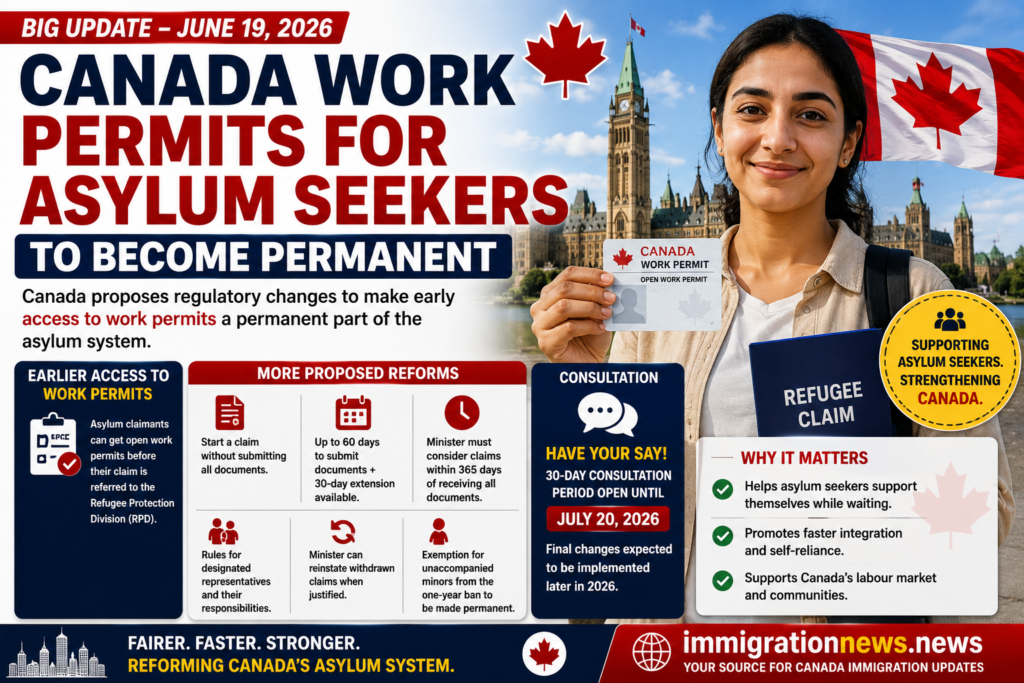
On June 19, 2026, Ottawa published proposed amendments to the Immigration and Refugee Protection Regulations in the Canada Gazette, aiming to formally allow eligible asylum claimants to obtain work permits earlier in the refugee claim process.
The proposal would permanently embed a policy that has operated under a temporary public policy since November 2022, giving asylum seekers the ability to support themselves financially while waiting for their refugee hearings.
If approved, the changes would represent one of the most significant reforms to Canada’s asylum system in recent years.
Overview : Canada Work Permits For Asylum Seekers
- Canada plans to make early work permit access permanent for asylum claimants.
- Eligible claimants could receive work permits before referral to the Refugee Protection Division (RPD).
- The current system operates under a temporary public policy introduced in 2022.
- Proposed reforms include new asylum processing timelines and document submission rules.
- Public consultations will remain open until July 20, 2026.
- The government expects implementation later in 2026.
How Canada Work Permits For Asylum Seekers Currently Work
Under existing immigration regulations, asylum claimants can only qualify for an open work permit after their refugee claim has been formally referred to the Refugee Protection Division (RPD).
This requirement often creates delays, leaving claimants unable to legally work while waiting for their claims to move through the system.
To address this issue, the federal government introduced a temporary public policy in November 2022 allowing certain refugee claimants to receive work permits before referral to the RPD.
The policy has helped thousands of asylum seekers enter the workforce sooner and reduce their dependence on financial assistance programs.
What Will Change Under the New Rules?
The proposed regulatory amendments would permanently allow eligible asylum claimants to receive open work permits once their claim has been found eligible for referral.
This means applicants would no longer need to wait for the formal referral process to be completed before becoming eligible to work.
By making Canada Work Permits For Asylum Seekers available earlier in the process, the government hopes to improve labour market participation and support faster economic integration.
The change would also provide greater certainty because it would become part of Canada’s immigration regulations rather than relying on a temporary policy that could be revoked at any time.
Additional Asylum Reforms Proposed by Ottawa
The work permit proposal is part of a broader package of asylum reforms designed to modernize Canada’s refugee system.
The proposed changes include:
Easier Claim Initiation
Asylum seekers would be able to begin the claim process without immediately submitting every required document.
Extended Document Submission Deadlines
Claimants would have up to:
- 60 days to submit supporting documents.
- An additional 30-day extension upon request.
Faster Government Review Requirements
The Minister would be required to consider asylum claims within:
365 Days
after receiving all necessary documentation.
Reinstatement of Withdrawn Claims
The government would gain authority to reinstate withdrawn asylum claims when justified by the circumstances.
New Rules for Designated Representatives
The regulations would clarify when representatives must be appointed and outline their responsibilities.
Protection for Unaccompanied Minors
The proposed amendments would also make permanent an important protection already in place through temporary public policy.
Unaccompanied Minors
would continue to be exempt from Canada’s one-year asylum claim restriction.
This exemption was first introduced in May 2026 and is now expected to become a permanent safeguard within the asylum system.
Public Consultation Now Underway
The proposed regulations are currently open for public consultation.
Stakeholders, immigration professionals, refugee advocacy groups, and members of the public can provide feedback until:
July 20, 2026
Following the consultation period, the government may revise the proposals before publishing final regulations.
According to government statements, implementation is expected later in 2026.
Connection to Bill C-12
The proposed work permit reforms follow broader asylum changes introduced through:
Bill C-12
which received Royal Assent on March 26, 2026.
Bill C-12 significantly restructured Canada’s refugee system and introduced new restrictions, including:
- A one-year limit for certain asylum claims.
- New restrictions on claims made by irregular border crossers arriving from the United States.
Some provisions apply retroactively to claims made after June 3, 2025.
The latest work permit proposal is widely viewed as an effort to balance those stricter eligibility rules with measures that support genuine refugee claimants during the application process.
Why Earlier Work Permits Matter
Supporters of the proposal argue that earlier access to employment offers significant benefits.
For asylum seekers:
- Faster financial independence.
- Reduced reliance on government assistance.
- Better integration into Canadian communities.
- Improved access to housing and essential services.
For Canada:
- Increased labour force participation.
- Additional support for sectors facing worker shortages.
- Reduced social assistance costs.
As labour shortages continue across several industries, allowing asylum claimants to work sooner could help employers fill vacant positions while claimants await decisions on their refugee cases.
What This Means for Asylum Claimants
If approved, the reforms would permanently secure earlier access to employment opportunities for refugee claimants.
Rather than depending on a temporary public policy, Canada Work Permits For Asylum Seekers would become a formal part of Canada’s immigration framework.
The change would provide greater certainty for future applicants and ensure eligible asylum seekers can continue supporting themselves while their claims move through the refugee determination process.
Key Takeaways Of Canada Work Permits For Asylum Seekers
- Canada plans to permanently allow earlier work permit access for asylum seekers.
- Eligible claimants could receive work permits before referral to the Refugee Protection Division.
- The proposal would replace the current temporary public policy introduced in 2022.
- Additional reforms include extended document deadlines and faster claim reviews.
- Unaccompanied minors would continue to receive protection from the one-year asylum ban.
- Public consultations remain open until July 20, 2026.
- The government expects the reforms to take effect later in 2026.
FAQs : Canada Work Permits For Asylum Seekers
1. What are Canada Work Permits For Asylum Seekers?
Canada Work Permits For Asylum Seekers are open work permits that allow eligible refugee claimants to legally work in Canada while waiting for a decision on their asylum claim.
2. What change is Canada proposing for asylum seeker work permits?
The Canadian government is proposing to make earlier access to work permits a permanent part of the Immigration and Refugee Protection Regulations. Eligible asylum seekers could receive work permits before their claim is formally referred to the Refugee Protection Division (RPD).
3. Why is Canada making this change?
The goal is to help asylum seekers support themselves financially, reduce reliance on social assistance, and allow them to contribute to Canada’s labour market while awaiting a decision on their refugee claim.
4. Is early work permit access already available?
Yes. Early work permit access has been available since November 2022 through a temporary public policy. The proposed regulatory changes would make this benefit permanent.
5. Will asylum seekers receive open work permits?
Yes. Eligible asylum claimants may continue to receive open work permits, allowing them to work for most employers across Canada without requiring a Labour Market Impact Assessment (LMIA).
6. When could the new rules take effect?
The proposed regulations are currently under public consultation until July 20, 2026. The federal government expects the final changes to be implemented later in 2026.
7. What other asylum reforms are being proposed?
Additional proposed changes include:
- Allowing claimants to start an asylum application before submitting all documents.
- Giving applicants up to 60 days to provide supporting documents.
- Offering a possible 30-day extension.
- Requiring government review within 365 days after receiving complete documents.
- Allowing withdrawn asylum claims to be reinstated in certain cases.
8. Will unaccompanied minors be affected?
No. Canada plans to permanently exempt unaccompanied minors from the one-year asylum claim restriction.
9. Does this change affect permanent residence applications?
No. The proposed reforms relate specifically to asylum claims and work permit eligibility. Permanent residence programs remain separate.
10. What is the Refugee Protection Division (RPD)?
The Refugee Protection Division is part of the Immigration and Refugee Board of Canada (IRB). It is responsible for deciding refugee and asylum claims made in Canada.
11. Can asylum seekers work anywhere in Canada with an open work permit?
Generally, yes. Open work permits allow asylum seekers to work for most employers across Canada, subject to any occupation-specific restrictions such as medical examinations for certain jobs.
12. How does this benefit Canadian employers?
Earlier access to work permits allows employers to hire eligible asylum claimants sooner, helping address labour shortages in sectors facing workforce challenges.
13. Is the one-year asylum ban still in effect?
Yes. Bill C-12 introduced a one-year deadline for certain asylum claims. However, unaccompanied minors remain exempt, and additional protections are being incorporated into the regulations.
14. Will all asylum seekers automatically qualify for a work permit?
No. Claimants must still meet eligibility requirements established by Immigration, Refugees and Citizenship Canada (IRCC) before a work permit can be issued.
15. What should asylum seekers do now?
Individuals considering an asylum claim should monitor IRCC updates and seek professional immigration advice to understand how the proposed changes may affect their situation.
Source : CIC News
Read About : Canada Reverses Citizenship Certificate Surrender Requests Days After Ordering Returns in 2026




One thought on “Canada Work Permits For Asylum Seekers Set to Become Permanent Under New Immigration Reforms”