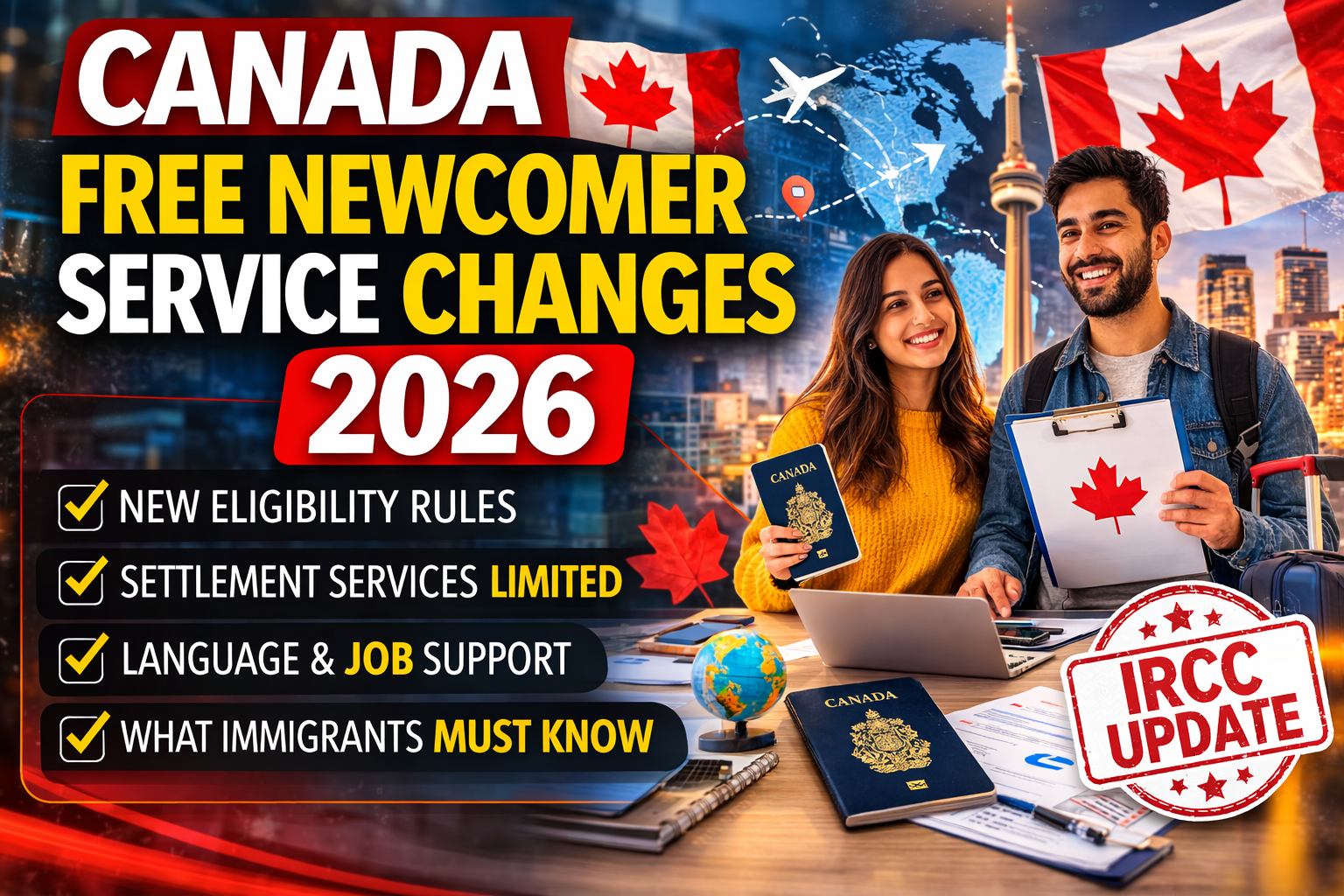
The Canada free newcomer service changes 2026 are set to significantly alter how economic immigrants access settlement support programs. Immigration, Refugees and Citizenship Canada (IRCC) has announced new rules that limit the period during which permanent residents can use federally funded settlement services.
Starting April 1, 2026, economic-class permanent residents will face a fixed time limit for accessing these services. Previously, newcomers could use settlement programs until they became Canadian citizens, which in many cases meant access lasting more than a decade.
Under the Canada free newcomer service changes 2026, this open-ended system will be replaced with a limited eligibility window of six years after becoming a permanent resident, followed by a further reduction to five years starting April 2027.
For many newcomers, these changes mean they must carefully plan how and when to use valuable integration services.
What Are the Canada Free Newcomer Service Changes 2026?
The Canada free newcomer service changes 2026 introduce a new eligibility timeline for economic-class permanent residents accessing federally funded settlement programs.
These services are designed to help immigrants integrate into Canadian society by offering language training, employment assistance, and community orientation.
New Eligibility Timeline
| Effective Date | Eligibility Period |
|---|---|
| April 1, 2026 | Up to 6 years after becoming a permanent resident |
| April 1, 2027 | Up to 5 years after becoming a permanent resident |
This means that access to settlement services will automatically end after the eligibility window, even if the immigrant has not yet applied for Canadian citizenship.
Previously, only gaining citizenship ended eligibility.
Who Is Affected by the New Rules?
The Canada free newcomer service changes 2026 apply specifically to economic-class permanent residents. This includes individuals who immigrated to Canada through employment-based or economic immigration programs.
Programs affected include:
- Express Entry programs
- Provincial Nominee Program (PNP)
- Atlantic Immigration Program
- Start-Up Visa Program
- Rural and Northern Immigration Pilot
- Agri-Food Pilot
- Home Care Worker Immigration Pilots
- Temporary Resident to Permanent Resident pathways
Spouses and dependent children included in these applications will also follow the same eligibility timeline.
Who Is NOT Affected by These Changes?
Certain groups will continue to receive settlement services without strict time limits.
These include:
- Refugees and protected persons
- Family sponsorship immigrants
- Humanitarian programs
- Certain temporary residents in specialized immigration pilots
Because of this distinction, the Canada free newcomer service changes 2026 primarily impact skilled workers and economic immigrants rather than humanitarian or family-based immigrants.
What Settlement Services Are Impacted?
Settlement services funded by IRCC are designed to help newcomers successfully integrate into Canadian society. These programs are available outside Quebec, which operates its own settlement system.
Key Services Available to Eligible Immigrants
| Service | Description |
|---|---|
| Language training | Free English and French classes through LINC |
| Employment assistance | Job search help, resume preparation, interview coaching |
| Credential support | Guidance for recognizing foreign qualifications |
| Community orientation | Programs helping newcomers adapt to life in Canada |
| Networking programs | Connections with employers and mentors |
Under the Canada free newcomer service changes 2026, these services will only be available within the limited eligibility window.
Why Canada Is Changing Newcomer Services
The government has stated that the new rules are intended to improve efficiency and better allocate settlement resources.
There are three main policy goals behind the Canada free newcomer service changes 2026:
1. Encourage Early Integration
IRCC believes newcomers benefit most from settlement services during their first few years in Canada.
2. Free Resources for New Arrivals
With immigration levels remaining high, the government aims to ensure new immigrants have better access to settlement programs.
3. Manage Government Spending
The policy aligns with broader fiscal priorities aimed at maintaining sustainable immigration programs.
However, critics argue that integration challenges do not always occur in a predictable timeline and that some immigrants may need assistance later in their settlement journey.
Why Settlement Services Matter for Newcomers
Settlement services play a crucial role in helping immigrants build stable lives in Canada.
These programs offer practical support in areas such as:
- Finding employment
- Improving language skills
- Understanding Canadian workplace culture
- Building social networks
Many experts estimate that these services can provide thousands of dollars in value per year if used fully.
For this reason, understanding the Canada free newcomer service changes 2026 is important for immigrants planning their long-term integration strategy.
What Economic Immigrants Should Do Now
Permanent residents should take several steps to ensure they benefit from available services before their eligibility expires.
Recommended actions
- Confirm your PR landing date using your Confirmation of Permanent Residence (COPR).
- Contact local settlement agencies to understand available programs.
- Start language or employment programs early.
- Use credential recognition services if needed for your profession.
Being proactive will help newcomers maximize the benefits available under the Canada free newcomer service changes 2026.
Conclusion
The Canada free newcomer service changes 2026 represent a major shift in how settlement support is delivered to economic immigrants. While these programs remain valuable resources, access will now be limited to a defined timeframe after obtaining permanent residence.
For newcomers, understanding these new rules is essential. By planning early and actively using available services, immigrants can ensure they receive the support needed to succeed in Canada.
Frequently Asked Questions (FAQs)
What are the Canada free newcomer service changes 2026?
The changes introduce a time limit on settlement services for economic-class permanent residents. Starting April 1, 2026, access will be limited to six years after becoming a permanent resident.
Do these rules apply to refugees or family-sponsored immigrants?
No. The policy mainly affects economic immigrants such as Express Entry and Provincial Nominee Program applicants.
What services are included in settlement programs?
Settlement services include language training, employment assistance, credential recognition support, and community integration programs.
Can Canadian citizens access newcomer services?
No. Once a person becomes a Canadian citizen, they are no longer eligible for federally funded settlement services.
Does this change affect my permanent resident status or citizenship application?
No. The Canada free newcomer service changes 2026 only affect access to settlement services and do not impact PR status, citizenship eligibility, or immigration sponsorship rights.
Any Queries : Contact Us