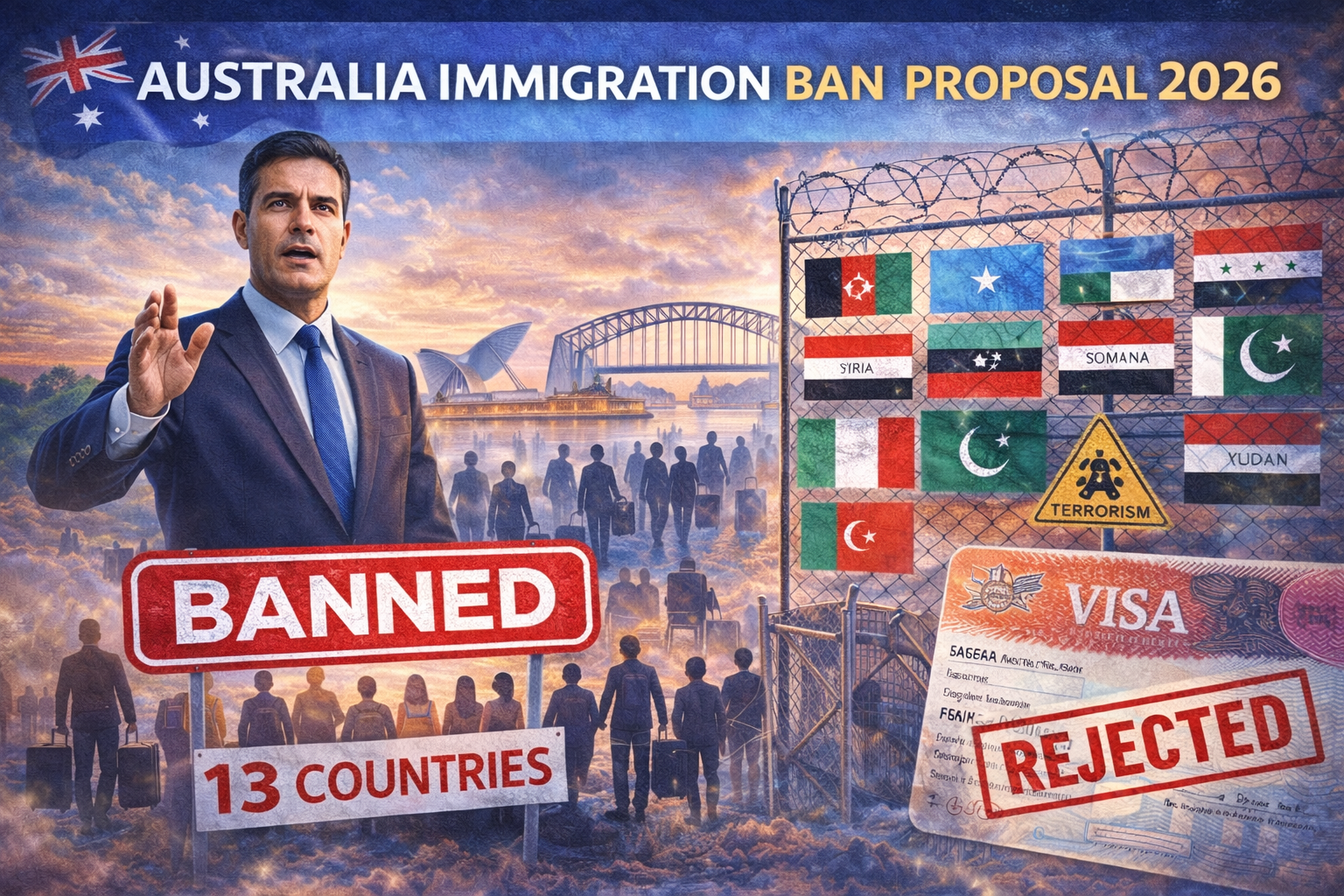
Australia’s immigration debate has intensified after reports that the Liberal Party is considering a proposal to impose travel or visa restrictions on nationals from 13 countries identified as having regions under terrorist influence. The move, if implemented, could significantly reshape Australia’s migration policy landscape in 2026 and beyond.
The proposal has sparked political discussion across party lines, raising questions about national security, humanitarian obligations, and the future of Australia’s skilled migration system.
Australia Immigration Ban Proposal 2026: What Is Being Suggested?
Under the reported plan, the opposition Liberal Party is evaluating stricter immigration controls targeting countries where parts of their territory are believed to be controlled or influenced by terrorist organizations. While details remain under discussion, the focus appears to be on heightened screening, visa restrictions, or potential suspension of certain categories.
Supporters argue that the Australia immigration ban proposal 2026 is designed to strengthen border security and reduce potential security risks. Critics, however, caution that blanket restrictions may unfairly impact innocent migrants, students, and skilled workers seeking legal entry.
As of now, the proposal remains under political consideration and has not been enacted into law.
National Security Concerns Driving the Debate
National security has long been a central pillar of Australia’s immigration policy. Proponents of the Australia immigration ban proposal 2026 argue that stricter controls are necessary to:
- Prevent extremist infiltration
- Strengthen background screening
- Reduce fraud and identity manipulation
- Enhance intelligence coordination
Australia already operates one of the world’s most robust visa vetting systems, including biometric checks, intelligence assessments, and inter-agency cooperation. The proposed restrictions would potentially add another layer of scrutiny for applicants from designated regions.
Security analysts note that geopolitical instability and global conflicts continue to influence migration policy decisions worldwide.
Potential Impact on Skilled Migration and Students
One of the main concerns surrounding the Australia immigration ban proposal 2026 is its possible impact on skilled migration and international education.
Australia relies heavily on skilled foreign workers in sectors such as:
- Healthcare
- Construction
- Engineering
- IT and cybersecurity
- Agriculture
If visa pathways for certain countries are restricted, industries facing labour shortages could experience disruptions. Additionally, international students contribute billions to the Australian economy each year. Stricter controls could affect enrolments, particularly from emerging economies.
Policy experts suggest that any restrictions would need to carefully balance security priorities with economic competitiveness.
Humanitarian and Refugee Considerations
Australia has historically maintained a refugee and humanitarian intake program. Any broad-based visa ban proposal would likely raise questions about:
- Asylum seeker protections
- International legal obligations
- Human rights compliance
Critics argue that targeted individuals fleeing conflict should not be penalized for instability in their home regions. Humanitarian advocates emphasize the importance of case-by-case assessments rather than nationality-based restrictions.
The Australia immigration ban proposal 2026 could therefore face legal scrutiny if it conflicts with international refugee conventions.
Political Reactions and Public Debate
Immigration remains one of the most debated political topics in Australia. Supporters of tighter restrictions argue that voters prioritize national safety and border control.
Opponents contend that overly restrictive measures risk:
- Damaging Australia’s global reputation
- Reducing international talent inflow
- Creating diplomatic tensions
As elections and policy discussions continue, immigration is expected to remain a key campaign issue.
Global Context: A Broader Trend?
Australia is not alone in considering stricter visa frameworks. Several countries have recently reviewed immigration rules based on national security considerations.
However, policy analysts warn that broad bans can sometimes lead to unintended economic consequences. Nations competing for global talent must carefully calibrate restrictions to avoid discouraging legitimate applicants.
The future of the Australia immigration ban proposal 2026 may depend on how policymakers frame it — whether as a temporary security measure or a structural immigration reform.
What Happens Next?
At this stage, the proposal remains under discussion and would require parliamentary debate before implementation. Migration experts advise applicants to:
- Monitor official government announcements
- Avoid relying on unverified reports
- Ensure documentation compliance
- Seek guidance from authorized immigration professionals
Until formal legislation is introduced, existing visa pathways remain in effect.
Outlook for 2026
The Australia immigration ban proposal 2026 highlights the delicate balance between safeguarding borders and maintaining economic vitality. Australia’s immigration system has long been built on skilled migration and humanitarian commitments.
Whether policymakers proceed with restrictive measures or adopt a more nuanced approach will shape the country’s global migration profile in the coming years.
For now, the proposal serves as a reminder that immigration policy is closely linked to both security concerns and economic strategy.
FAQ
What is the Australia immigration ban proposal 2026?
It refers to a reported plan by the Liberal Party to impose visa restrictions on nationals from 13 countries with regions under terrorist influence.
Has the proposal become law?
No, it is currently under discussion and has not been enacted.
Will skilled workers be affected?
If implemented broadly, skilled migration pathways from affected countries could face stricter scrutiny.
Does this affect current visa holders?
There has been no official announcement impacting existing visa holders at this stage.
Why is this proposal being discussed?
The primary motivation cited is strengthening national security and preventing potential extremist infiltration.
Could humanitarian visas be impacted?
Any broad restriction may raise questions about refugee and asylum obligations under international law.
Any Queries : Contact Us