
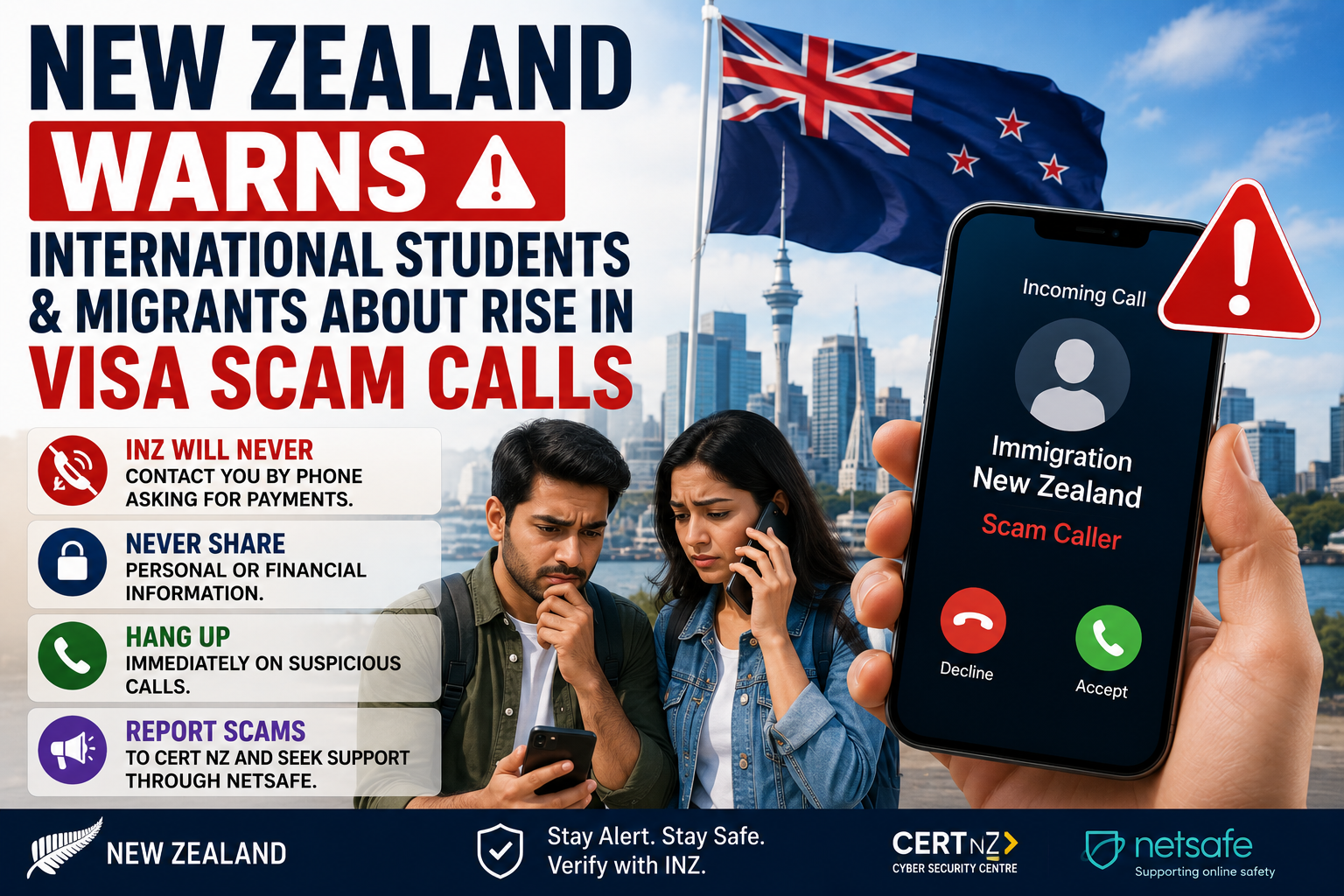
Immigration New Zealand Issues Fresh Alert After Fraudsters Target Visa Holders Using Rising Visa Scam Calls
Immigration New Zealand (INZ) has issued an urgent warning to international students, migrants, and visa holders after a sharp rise in scam phone calls from fraudsters pretending to represent immigration authorities.
In an official advisory released on:
📅 May 8, 2026
INZ said scammers are using New Zealand mobile numbers and creating panic by falsely claiming there are urgent visa problems requiring immediate action.
Authorities warned that fraudsters are attempting to steal:
- Money
- Passport details
- Bank information
- Personal data
through fake calls, messages, and threats.
Quick Summary : Rising Visa Scam Calls
| Key Detail | Information |
|---|---|
| Country | New Zealand |
| Agency | Immigration New Zealand (INZ) |
| Main Scam | Fake visa problem calls |
| Targeted Victims | International students & migrants |
| Fraud Tactics | Payment demands, threats, fake operators |
| Official Warning | INZ never asks for payment by phone |
What Is Happening?
According to Immigration New Zealand, scammers are impersonating immigration officials and contacting migrants using:
📱 New Zealand mobile phone numbers
The callers falsely claim there are:
❌ Visa issues
❌ Immigration violations
❌ Urgent legal problems
Victims are then pressured to:
- Make payments
- Share banking information
- Provide passport details
- Speak with fake “operators”
Some scam calls reportedly instruct victims to:
👉 “Press 1”
to continue speaking with a fraudulent representative.
Immigration New Zealand Issues Strong Warning
INZ clearly stated:
“Immigration New Zealand will never contact you by phone asking for payments.”
Officials urged migrants and students to:
✔ Hang up immediately
✔ Avoid sharing personal information
✔ Ignore threats or payment demands
Who Is Being Targeted?
The scams appear mainly focused on:
- International students
- Temporary visa holders
- Migrant workers
- New immigrants
- Foreign nationals unfamiliar with immigration systems
Fraudsters often target people who may fear visa cancellation or deportation.
Common Tricks Used by Scammers
Authorities say scammers often try to create:
Fear and urgency
to pressure victims into acting quickly.
Common Scam Tactics Include:
- Claiming visas will be cancelled
- Threatening arrest or deportation
- Demanding immediate payment
- Requesting bank account details
- Asking for passport information
- Pretending to transfer calls to “official departments”
Why Migrants and Students Are Frequently Targeted
International students and migrants are often vulnerable because they may:
✔ Worry about immigration status
✔ Be unfamiliar with official procedures
✔ Fear legal consequences
✔ Respond quickly to authority figures
Scammers exploit this fear to manipulate victims.
What To Do If You Receive a Scam Call
Immigration New Zealand recommends several immediate steps.
✔ End the Call Immediately
Do not continue speaking with the caller.
✔ Never Share Personal Information
Do NOT provide:
- Passport numbers
- Bank details
- Credit card information
- Visa information
- OTP or verification codes
✔ Verify Directly With INZ
Anyone concerned about their visa status should contact:
INZ Service Centre
through official government channels only.
Report the Scam to CERT NZ
Authorities are encouraging victims to report incidents to:
CERT NZ
through its official online reporting system.
CERT NZ handles cybersecurity and online fraud incidents across New Zealand.
Netsafe Support Also Available
People in New Zealand who feel affected by scams or online fraud can also seek support through:
Netsafe
which provides assistance for digital safety and cyber fraud issues.
Global Rise in Immigration Scams
The warning comes amid increasing international concern over:
Immigration-related fraud
Around the world, scammers are increasingly targeting:
- Visa applicants
- International students
- Work permit holders
- Permanent residence applicants
using:
📧 Fake emails
📱 Scam calls
💬 Fraudulent messages
🌐 Fake immigration websites
Immigration Fraud Becoming More Sophisticated
Authorities globally say scammers are now using:
✔ Caller ID spoofing
✔ Fake government logos
✔ Professional-looking emails
✔ AI-generated voices
✔ Real immigration terminology
to make scams appear more legitimate.
Important Reminder About Government Communication
Legitimate immigration authorities generally:
✔ Use official portals
✔ Send formal written communication
✔ Provide reference numbers
✔ Allow verification through official websites
Government agencies typically do NOT:
❌ Demand immediate phone payments
❌ Threaten arrest over phone calls
❌ Ask for banking information verbally
How Students Can Protect Themselves
International students are being advised to:
✔ Learn official immigration procedures
✔ Use only verified government websites
✔ Avoid responding to unknown callers
✔ Discuss suspicious calls with institutions or advisors
Expert Analysis: Immigration Fraud Is Increasing Worldwide
Immigration scams have grown rapidly because of:
- Rising international migration
- Student visa demand
- Complex immigration systems
- Fear-based manipulation tactics
Countries including:
- Canada
- Australia
- New Zealand
- United States
- United Kingdom
have all issued similar warnings recently.
FAQs : Rising Visa Scam Calls
1. What warning did Immigration New Zealand issue?
INZ warned migrants and students about Rising Visa Scam Calls from fraudsters pretending to be immigration officials.
2. Does Immigration New Zealand ask for payment over the phone?
No. INZ says it never requests payments by phone and these calls are just Rising Visa Scam Calls.
3. Who is being targeted by these scams?
International students, visa holders, migrants, and temporary workers are among the main targets.
4. What should I do if I receive a suspicious call?
Hang up immediately and contact INZ directly through official channels.
5. Where can scam incidents be reported?
Victims can report scams to CERT NZ and seek support through Netsafe.
Final Take On Rising Visa Scam Calls
New Zealand’s latest warning highlights the growing global threat of immigration-related fraud targeting migrants and international students.
The most important message from authorities is simple:
✔ Never share personal information over suspicious calls
✔ Never send money to unknown callers
✔ Always verify directly with official immigration agencies
As visa scams become more sophisticated in 2026, awareness and caution may be the strongest protection for international students and migrants worldwide.
Source : The Economic Times
Read About : Australia to Welcome Nearly 1 Million Migrants by 2029: Big Opportunity for Indian Students & Skilled Workers


One thought on “Rising Visa Scam Calls In 2026 : New Zealand Warns International Students & Migrants”