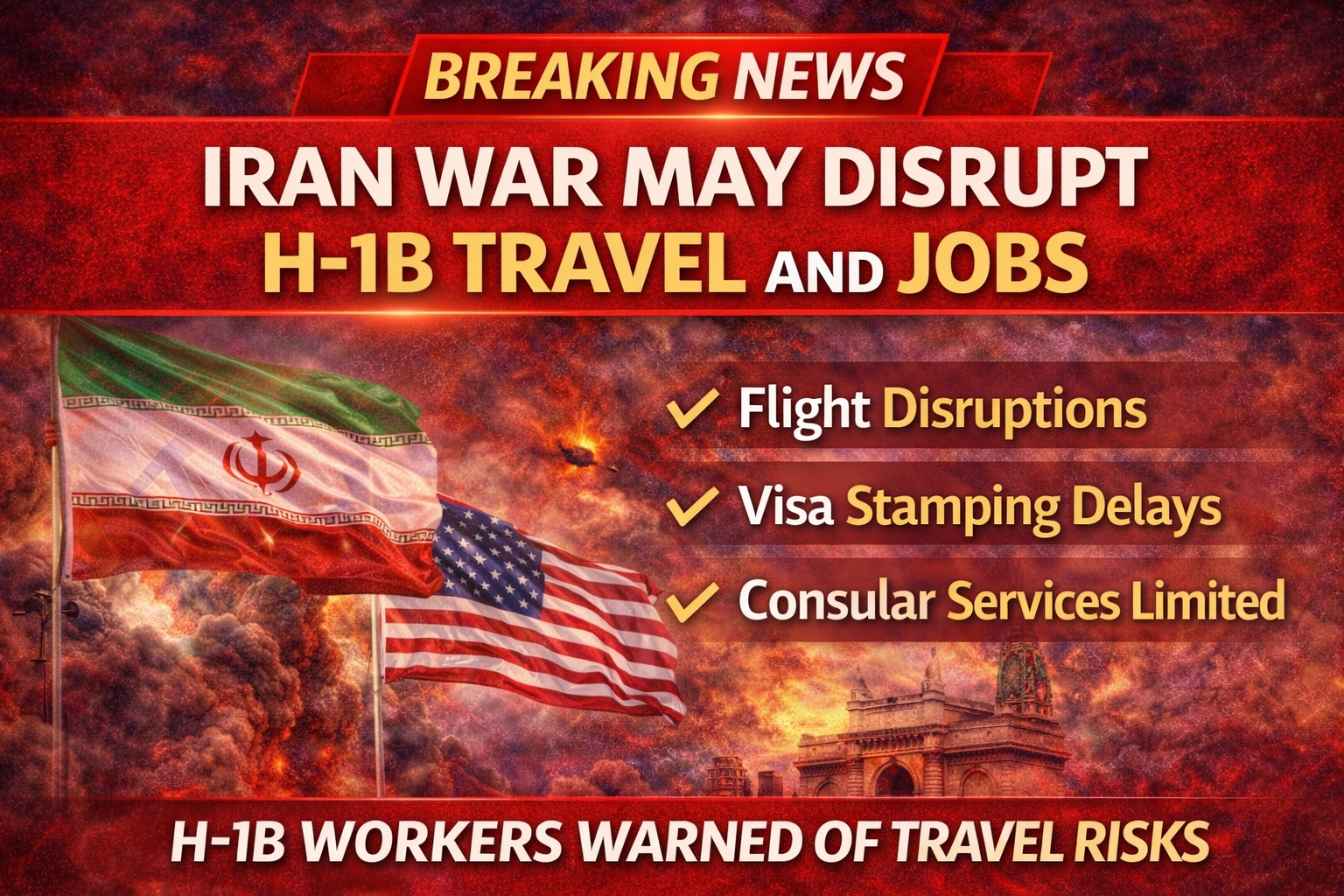
The ongoing geopolitical tensions involving Iran are raising concerns across several sectors, including immigration and international travel. Experts are increasingly warning that Iran war may disrupt H-1B travel and jobs, potentially affecting thousands of skilled foreign professionals working in the United States.
Many H-1B visa holders rely on international travel for visa stamping, family visits, or business trips. However, as tensions escalate in the Middle East, immigration attorneys and policy analysts suggest that Iran war may disrupt H-1B travel and jobs due to airline disruptions, consular service limitations, and logistical challenges affecting global travel routes.
For foreign professionals working in the US under employment-based visas such as H-1B and L-1, understanding these risks and preparing accordingly has become increasingly important.
Why Experts Say Iran War May Disrupt H-1B Travel and Jobs
Immigration attorneys have pointed out that global conflicts often create indirect disruptions to immigration processes. If the conflict expands or affects regional infrastructure, Iran war may disrupt H-1B travel and jobs through multiple channels.
Key risks include:
- Suspension or delay of visa appointments at US consulates
- Flight route disruptions through major Middle Eastern hubs
- Temporary closures of diplomatic missions
- Travel restrictions in affected regions
- Delays in visa stamping for foreign workers
These disruptions may not directly change immigration rules, but they can create logistical barriers for visa holders who depend on timely travel and consular processing.
Travel Routes Used by H-1B Workers Could Be Affected
Many foreign professionals travel between the United States and their home countries through Gulf aviation hubs such as Dubai, Doha, and Abu Dhabi. If regional instability affects these travel corridors, Iran war may disrupt H-1B travel and jobs by limiting available routes.
Major Transit Hubs Used by H-1B Workers
| Transit Hub | Importance for Visa Holders |
|---|---|
| Dubai | One of the busiest global connecting hubs for travel between the US and Asia |
| Doha | Major route for Indian and South Asian travelers |
| Abu Dhabi | Common transit point for workers traveling to and from the US |
If flights are cancelled or rerouted due to regional tensions, travelers could face delays returning to the United States—even if their visas remain valid.
Consular Services May Experience Delays
Visa stamping at US embassies and consulates is another area that could be affected. During geopolitical tensions, diplomatic missions sometimes reduce operations or temporarily suspend appointments.
In such cases, Iran war may disrupt H-1B travel and jobs by delaying the visa stamping process required for many workers returning to the United States after international travel.
Common Visa Services Affected During Global Disruptions
| Service | Possible Impact |
|---|---|
| Visa stamping appointments | Delays or cancellations |
| Emergency appointments | Limited availability |
| Administrative processing | Longer processing times |
| Consular staffing | Reduced services |
These delays can affect both employees and employers if workers are unable to return to their positions on time.
Immigration Deadlines Still Apply
One important issue experts highlight is that immigration deadlines typically do not pause automatically due to international disruptions.
For example, if a worker’s I-94 authorized stay is approaching expiration, they may still need to file an extension or status change on time. Even in situations where Iran war may disrupt H-1B travel and jobs, immigration compliance rules generally remain in effect.
Foreign nationals in the US should carefully monitor:
- I-94 expiration dates
- Visa validity
- Grace periods after job loss
- Filing deadlines for extensions or changes of status
Submitting applications before deadlines can help avoid complications related to status violations.
Employers May Need to Adjust Workplace Policies
Employers could also face operational challenges if international travel disruptions prevent employees from returning to the United States.
In such cases, companies may need to consider temporary alternatives.
Possible Employer Responses
| Scenario | Possible Employer Action |
|---|---|
| Employee stuck abroad | Temporary remote work if permitted |
| Delayed visa stamping | Extended joining dates |
| Flight disruptions | Flexible work arrangements |
If Iran war may disrupt H-1B travel and jobs, employers and HR teams may need to work closely with immigration counsel to evaluate appropriate solutions.
Timing Complicates H-1B Cap Season
Another complication is that these geopolitical developments coincide with the annual H-1B cap registration season.
US Citizenship and Immigration Services (USCIS) recently opened the FY2027 H-1B registration period, which typically runs for a few weeks each spring. Employers and applicants are already navigating complex timelines.
If travel disruptions escalate, Iran war may disrupt H-1B travel and jobs during a critical time when companies are preparing petitions, arranging visa appointments, and planning employee onboarding.
Practical Steps for H-1B Visa Holders
While global events are unpredictable, visa holders can take practical precautions to reduce potential disruptions.
Recommended steps include:
- Avoid non-essential international travel if possible
- Check visa stamping appointment availability before leaving the US
- Monitor airline routes and travel advisories
- Keep immigration documents valid and updated
- Maintain communication with employers and immigration lawyers
Taking these precautions can help workers respond quickly if Iran war may disrupt H-1B travel and jobs in the coming months.
Frequently Asked Questions (FAQs)
Why could the Iran conflict affect H-1B visa holders?
Geopolitical conflicts can disrupt travel routes, embassy operations, and visa processing timelines. This is why analysts say Iran war may disrupt H-1B travel and jobs indirectly through logistical challenges rather than immigration policy changes.
Can H-1B visa holders still travel internationally?
Yes, travel is still permitted, but experts recommend monitoring travel conditions carefully. Flight availability and visa appointment schedules may change quickly during geopolitical tensions.
What happens if an H-1B worker cannot return to the US on time?
If a worker is unable to return due to travel disruptions, employers may explore options such as temporary remote work or adjusted start dates, depending on company policies and immigration regulations.
Do immigration deadlines change during international conflicts?
In most cases, immigration deadlines continue to apply. Visa holders should monitor their status carefully and file extensions or applications on time when necessary.
Should H-1B workers cancel planned travel?
Decisions about travel should be based on current conditions, visa status, and appointment availability. Consulting an immigration professional before traveling can help evaluate risks.
Any Queries : Contact Us