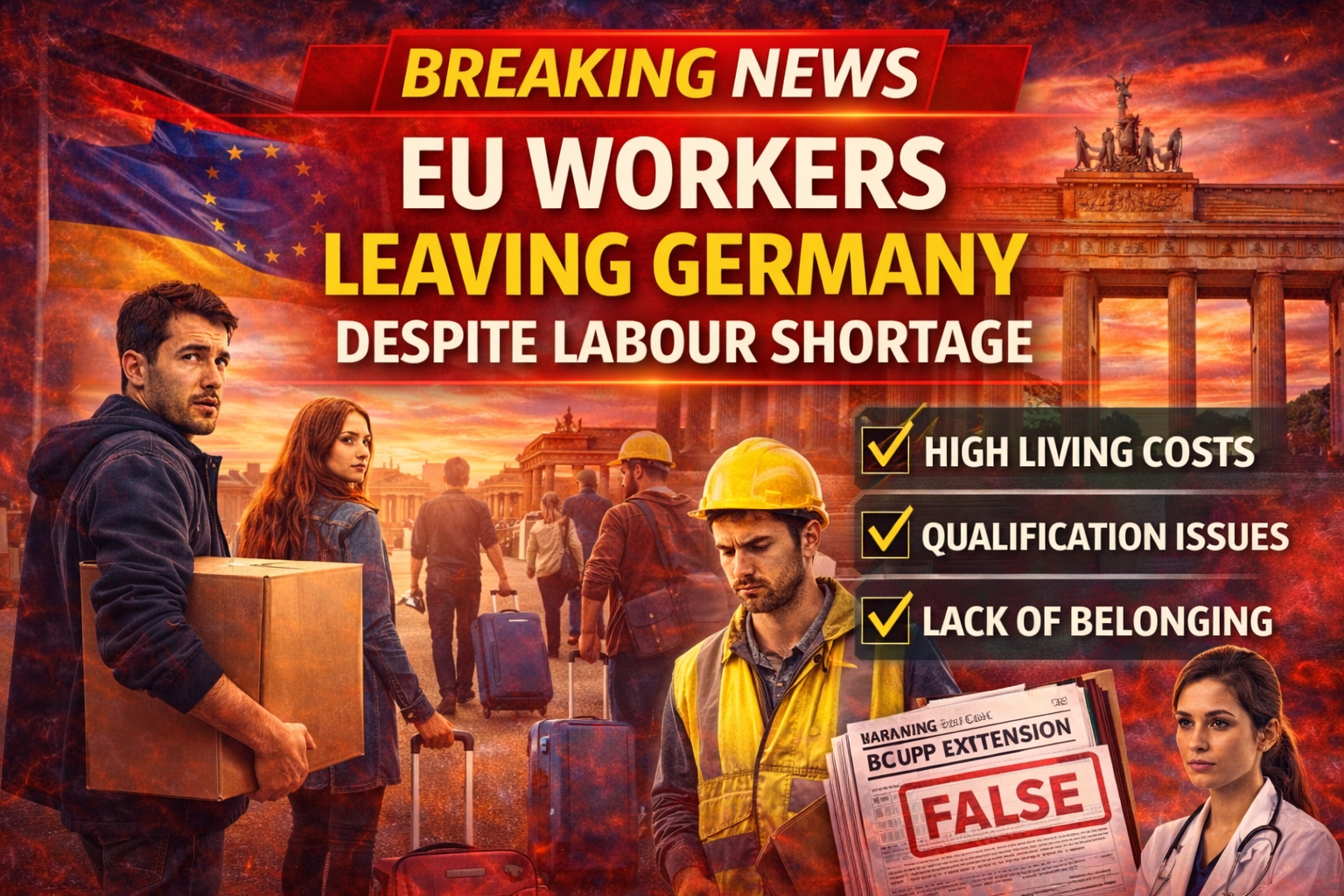
Germany has long been considered one of Europe’s strongest economic engines, attracting skilled professionals from across the European Union. However, recent reports reveal a surprising trend: EU workers leaving Germany in increasing numbers despite the country facing serious labour shortages.
A new study from Germany’s Labour Ministry highlights that many EU migrants who initially moved for better jobs and higher salaries are now reconsidering their long-term future in the country. Rising living costs, workplace challenges, and integration difficulties are among the factors driving EU workers leaving Germany earlier than expected.
This trend raises concerns about Germany’s ability to maintain its workforce, especially as the country continues to struggle with demographic decline and increasing demand for skilled professionals.
Germany’s Labour Shortage Is Growing
Germany is currently facing a major labour shortage across several sectors. According to research from the German Economic Institute (IW), more than 260,000 skilled positions remained unfilled in 2025.
The shortages are particularly severe in industries such as:
- Healthcare
- Construction
- Public administration
- Skilled trades
- Engineering
In healthcare alone, Germany reportedly faces around 46,000 vacant positions, which has already resulted in longer waiting times for medical appointments.
Despite these shortages, the phenomenon of EU workers leaving Germany continues to grow, creating additional pressure on employers and government agencies trying to recruit new talent.
Why EU Workers Are Leaving Germany
While Germany still attracts many migrants each year, the long-term retention of workers is becoming a challenge.
A recent study from the EU Equal Treatment Office found that a significant percentage of migrants leave the country within their first four years.
Several reasons explain why EU workers leaving Germany has become a noticeable trend.
High Cost of Living
One of the most commonly cited reasons is the rising cost of living in major German cities.
Housing prices and rent have increased dramatically in cities such as:
- Berlin
- Munich
- Frankfurt
- Hamburg
For many migrant workers, salaries do not always keep pace with living expenses, making it difficult to maintain a comfortable lifestyle.
Workplace Challenges and Limited Career Growth
Another factor driving EU workers leaving Germany is dissatisfaction with working conditions.
Many migrants report difficulties such as:
- Limited career progression
- Inflexible work environments
- Difficulty having qualifications recognized
- Limited opportunities to work in their trained profession
For skilled professionals who moved to Germany seeking better opportunities, these barriers can lead to frustration and eventual relocation.
Bureaucracy and Administrative Barriers
Germany is also known for its complex administrative processes.
Migrants often struggle with:
- Recognition of foreign qualifications
- Lengthy paperwork requirements
- Language barriers in official procedures
- Slow processing of permits and documentation
These bureaucratic challenges can discourage migrants from settling long-term and contribute to the growing number of EU workers leaving Germany.
Migration Patterns Among EU Workers
Germany continues to receive migrants from across the European Union, particularly from Central and Eastern Europe.
The largest groups of EU migrants currently living in Germany come from:
| Country of Origin | Migration Trend |
|---|---|
| Romania | Largest group of EU migrants |
| Poland | Second largest migrant group |
| Bulgaria | Significant labour migration |
| Italy | Skilled professionals and workers |
| Hungary | Growing migration flow |
| Spain | Young professionals and graduates |
However, migration patterns are changing. In 2024, Germany recorded a sharp drop in net migration from EU countries.
Net migration from EU states fell to 38,735 people, representing a 66.8% decline compared with the previous year.
This decline suggests that EU workers leaving Germany may continue if economic and social challenges remain unresolved.
Social Integration Challenges
Beyond economic factors, many migrants also report social difficulties that influence their decision to leave.
A survey conducted by the EU Equal Treatment Centre found that:
- 38.8% of migrants said they did not feel comfortable living in Germany
- 49.4% reported experiencing discrimination in the workplace
Feeling excluded or disconnected from local communities can reduce the desire to remain in the country long term.
Experts believe improving social integration and workplace inclusion could help reduce the number of EU workers leaving Germany.
Germany’s Aging Workforce
Germany’s demographic situation adds another layer of urgency to the problem.
The country’s population is aging rapidly, and large numbers of baby boomers are retiring from the workforce.
According to the Federal Employment Agency:
- Employment among German nationals is declining
- Retirements are increasing each year
- Migration remains essential to fill labour gaps
Without enough migrant workers staying long term, Germany may struggle to maintain economic growth.
Possible Solutions to Retain EU Workers
Experts suggest several strategies to address the issue of EU workers leaving Germany.
Improve Housing Affordability
Lower housing costs could make German cities more attractive to international workers.
Simplify Bureaucracy
Streamlining administrative processes would help migrants integrate faster.
Recognize Foreign Qualifications Faster
Improving credential recognition could allow migrants to work in their trained professions sooner.
Strengthen Workplace Integration
Encouraging inclusive workplace cultures and fair career opportunities could improve retention rates.
If these changes are implemented effectively, Germany may be able to reverse the trend of EU workers leaving Germany.
The Future of Migration in Germany
Despite the challenges, Germany remains one of Europe’s largest labour markets and continues to attract skilled professionals from across the continent.
However, retaining talent will require stronger policies that address both economic and social barriers faced by migrants.
As labour shortages continue to grow, ensuring that EU migrants feel welcome, supported, and economically secure will be critical to Germany’s long-term workforce strategy.
Frequently Asked Questions (FAQ)
Why are EU workers leaving Germany?
Many migrants cite high living costs, workplace challenges, discrimination, and complex bureaucracy as reasons for leaving Germany.
Which sectors face the biggest labour shortages in Germany?
Healthcare, construction, engineering, and public administration are among the sectors with the largest labour shortages.
Which EU countries send the most workers to Germany?
Romania, Poland, Bulgaria, Italy, Hungary, and Spain are among the largest sources of EU migrants working in Germany.
How serious is Germany’s labour shortage?
Germany currently has more than 260,000 unfilled skilled jobs, highlighting the scale of the labour market challenge.
What can Germany do to retain migrant workers?
Experts recommend improving housing affordability, reducing bureaucracy, recognizing foreign qualifications faster, and strengthening workplace integration.
Any Queries : Contact Us