
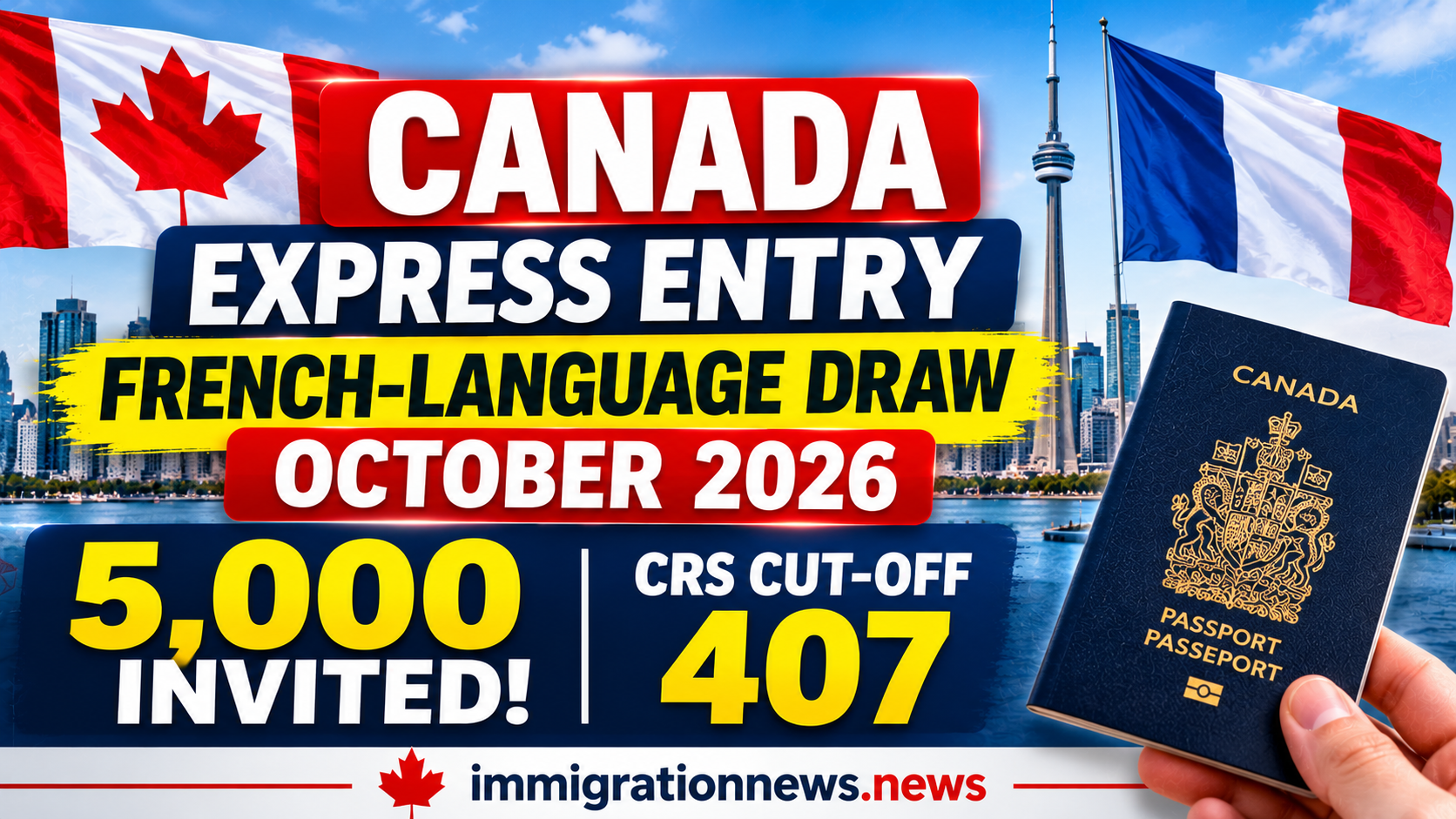
Canada has issued 5,000 invitations to apply for permanent residence to French-speaking immigration candidates through its Express Entry system, with the latest draw setting a minimum Comprehensive Ranking System (CRS) score of 407. The October 27, 2026, selection round represents a 28-point decrease from the previous French-language proficiency draw held on October 16, when the cutoff stood at 435.
The latest Canada Express Entry French-language draw October 2026 is significant for candidates who have demonstrated strong French-language abilities and meet the eligibility requirements of an immigration programme managed through Express Entry. It also highlights Canada’s continued use of category-based selection to attract candidates with specific skills and language abilities.
Immigration, Refugees and Citizenship Canada (IRCC) selected candidates who had a CRS score of at least 407 and created their Express Entry profiles before 7:22 p.m. UTC on July 13, 2026.
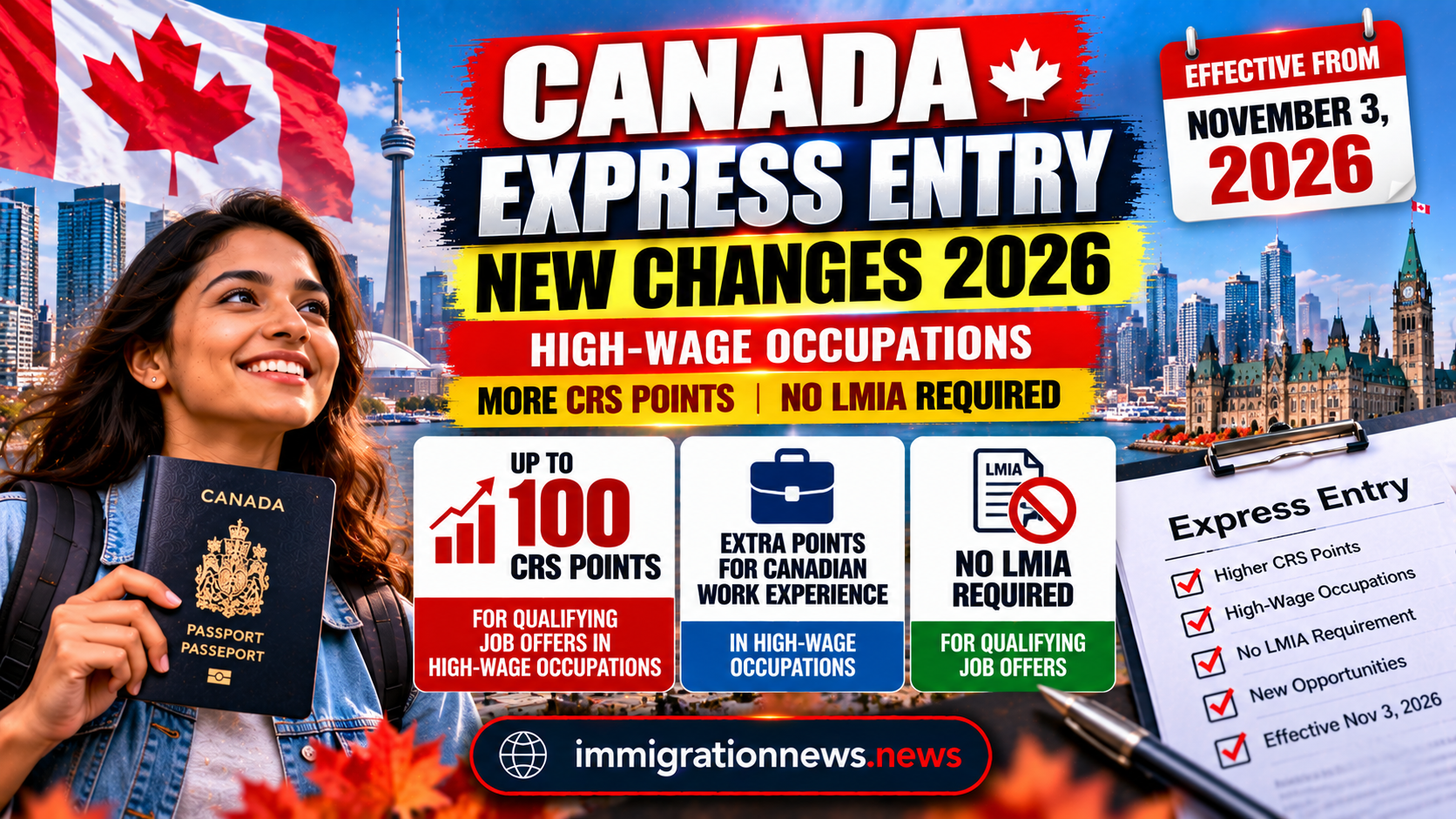
The latest round comes as Canada prepares to introduce major changes to Express Entry scoring on November 3, 2026. Under the upcoming changes, eligible candidates may receive additional CRS points for Canadian work experience in high-wage occupations or qualifying job offers in such occupations.
For prospective immigrants, the latest draw offers an important update on French-language selection, while the upcoming scoring reforms may affect how some candidates are ranked in future rounds.
Canada Express Entry French-Language Draw October 2026: Key Results
The October 27 draw was specifically for candidates eligible under the French-language proficiency category.
The main details are summarised below.
| Draw detail | Result |
|---|---|
| Draw date | October 27, 2026 |
| Immigration authority | Immigration, Refugees and Citizenship Canada (IRCC) |
| Draw type | French-language proficiency |
| Invitations issued | 5,000 |
| Minimum CRS score | 407 |
| Profile creation deadline | Before 7:22 p.m. UTC on July 13, 2026 |
| Previous French-language draw | October 16, 2026 |
| Previous CRS cutoff | 435 |
| Change in cutoff | Decrease of 28 points |
The cutoff score is the CRS score of the lowest-ranked candidate invited in this round. Candidates needed to meet the minimum score and satisfy the relevant category and programme requirements to receive an invitation.
A CRS score of 407 does not guarantee selection in future French-language draws. Each round has its own invitation number, eligibility conditions, cutoff score and tie-breaking rule.
CRS Cutoff Falls by 28 Points From the Previous French Draw
The October 27 selection round had a CRS cutoff of 407, compared with 435 in the previous French-language proficiency draw on October 16.
This represents a decrease of 28 points.
Both draws issued 5,000 invitations, but the minimum score required to receive an invitation was lower in the latest round.
| Draw date | Category | CRS cutoff | Invitations |
|---|---|---|---|
| October 27, 2026 | French-language proficiency | 407 | 5,000 |
| October 16, 2026 | French-language proficiency | 435 | 5,000 |
The change may be relevant to candidates whose CRS scores fall between 407 and 434, provided they satisfy the requirements for the applicable draw and meet its tie-breaking rule.
However, candidates should not interpret a lower cutoff as a promise that the score will remain at the same level. Express Entry cutoffs depend on the number of invitations issued, the composition of the candidate pool and the eligibility rules for each round.
The Canada Express Entry French-language draw October 2026 results nevertheless show that the latest round invited a large group of French-speaking candidates at a lower CRS threshold than the preceding French-language selection.
Who Was Eligible for the October 27 French-Language Draw?
The draw was intended for candidates who met the French-language proficiency category requirements and were eligible for at least one of the immigration programmes managed through Express Entry.
IRCC’s category-based selection rules generally require candidates in the French-language proficiency category to demonstrate a minimum score of 7 in all four language abilities under the Niveaux de compétence linguistique canadiens (NCLC).
These abilities are:
- Listening
- Speaking
- Reading
- Writing
Candidates must provide valid French-language test results accepted by IRCC and satisfy the instructions applicable to the specific draw.
Meeting the language requirement does not automatically guarantee an invitation. Candidates must also be eligible for an Express Entry-managed programme, have an eligible profile in the pool and meet the cutoff and tie-breaking requirements of the round.
Why French-language proficiency matters
Canada uses category-based selection to invite candidates who meet specific economic and labour market objectives. French-language proficiency is one of the categories used to select candidates who can contribute to French-speaking communities and support the country’s Francophone immigration objectives.
French-language ability can also help candidates improve their CRS scores through the language factors in the Comprehensive Ranking System, depending on their results and other profile characteristics.
Candidates should review the official category requirements and calculate their CRS scores using their actual language test results rather than relying on informal estimates.
How Many Express Entry Draws Has Canada Conducted in 2026?
Following the October 27 French-language draw and the October 26 Provincial Nominee Program round, Canada has conducted 64 Express Entry draws in 2026, according to the updated draw summary reported by CIC News.
The selection rounds have included programme-specific and category-based draws for candidates with provincial nominations, Canadian work experience, French-language proficiency and experience in selected occupations.
The reported distribution is as follows.
| Draw type | Number of draws |
|---|---|
| Provincial Nominee Program | 21 |
| Canadian Experience Class | 18 |
| French-language proficiency | 12 |
| Physicians with Canadian work experience | 3 |
| Healthcare and social services | 3 |
| Senior managers with Canadian work experience | 3 |
| Trades | 2 |
| Transport | 1 |
| Skilled military recruits | 1 |
| Total | 64 |
The draw distribution indicates that provincial nominees and candidates with Canadian work experience have featured prominently in 2026 selections, alongside French-speaking candidates.
The number of draws does not indicate how many candidates ultimately become permanent residents. It records selection rounds and invitations issued, which are separate from the later stages of provincial and federal application processing.
Canada Has Issued 149,259 Express Entry Invitations in 2026
The updated figures reported after the October 27 draw show that IRCC has issued 149,259 invitations to apply for permanent residence through Express Entry in 2026.
The invitations have been distributed across multiple selection categories.
| Draw type | Invitations issued in 2026 |
|---|---|
| Canadian Experience Class | 57,250 |
| French-language proficiency | 60,000 |
| Provincial Nominee Program | 10,814 |
| Healthcare and social services | 11,500 |
| Trades | 6,500 |
| Transport | 300 |
| Physicians with Canadian work experience | 891 |
| Senior managers with Canadian work experience | 1,000 |
| Skilled military recruits | 4 |
| Total | 149,259 |
French-language proficiency draws account for 60,000 invitations in the reported figures, making this one of the major selection categories in the 2026 Express Entry programme.
Canadian Experience Class draws have also accounted for a substantial number of invitations, reflecting the continued selection of candidates with Canadian work experience.
These totals represent invitations to apply, not final permanent residence approvals. Some invited candidates may choose not to apply, while others may have applications refused or remain in processing.
For candidates planning to immigrate to Canada, the figures provide context for the Canada Express Entry French-language draw October 2026 but should not be used to predict future invitation numbers.
Upcoming Express Entry Changes From November 3, 2026
Canada is preparing to change how certain CRS points are awarded for Canadian work experience and qualifying job offers beginning November 3, 2026.
The new Labour Market Integration Factor will compare two potential scoring options: points for eligible Canadian work experience, including additional points for qualifying high-wage occupations, and points for a qualifying job offer in an eligible high-wage occupation.
Candidates will receive the option that provides the higher score under the new framework. The points from Canadian work experience and a qualifying job offer will not be combined.
Additional points for high-wage Canadian work experience
Eligible candidates with at least one year of Canadian work experience in a qualifying high-wage occupation may receive additional points based on the occupation’s wage level.
The new framework will allow additional points to be awarded according to the relevant high-wage occupation level, alongside the existing points associated with the duration of Canadian work experience.
The maximum under the Labour Market Integration Factor is 150 points for candidates without an accompanying spouse or common-law partner and 140 points for candidates with an accompanying spouse or common-law partner.
New CRS points for qualifying job offers
Under the revised rules, qualifying job offers in eligible high-wage occupations may receive the following points:
| Occupation wage level | CRS points for a qualifying job offer |
|---|---|
| At least twice the average median wage | 100 |
| At least 1.5 times, but less than twice the average median wage | 70 |
| At least 1.3 times, but less than 1.5 times the average median wage | 50 |
| Occupations that do not meet the qualifying high-wage thresholds | 0 under this factor |
The qualifying occupation must appear on the applicable high-wage occupation list, and the job offer must meet IRCC’s requirements.
The changes will also remove the Labour Market Impact Assessment (LMIA) requirement for qualifying job offers used to obtain CRS points or meet specified job-offer requirements under the Federal Skilled Worker Program and Federal Skilled Trades Program, subject to the applicable rules.
An LMIA will no longer provide additional CRS points or priority simply because it has been issued. Officers will continue to assess whether a job offer is genuine and meets the relevant requirements.
IRCC Plans a Temporary Pause in Express Entry Draws
To implement the revised CRS scoring system, IRCC has stated that it will temporarily pause Express Entry invitation rounds while it recalculates scores in existing candidate profiles.
The recalculation process could take up to two weeks.
During this period, candidates may not receive invitations through new rounds until IRCC completes the update and resumes selections.
The pause is an administrative step associated with implementing the new scoring framework. It does not mean that Express Entry has been permanently suspended or that existing profiles have been cancelled.
Candidates should ensure that their profiles contain accurate information about their employment history, language results, education, qualifying job offers and other relevant factors.
Those who have a valid job offer that is not yet included in their profile should review IRCC’s guidance and update the information where appropriate before the new rules take effect.
The new scoring system may change the ranking of some candidates, but receiving additional points does not guarantee an invitation. Future selection will continue to depend on the type of draw, the number of invitations issued and the applicable cutoff score.
Can Candidates in Canada Apply for a Bridging Open Work Permit?
Some Express Entry candidates who are already in Canada and have submitted a permanent residence application may be eligible for a Bridging Open Work Permit (BOWP).
A BOWP can allow an eligible applicant to continue working while their permanent residence application is processed, subject to the relevant requirements.
Work permit holders who apply for a BOWP before their existing permit expires may benefit from maintained status if they meet the conditions. This can allow them to continue working under the conditions of their previous permit while awaiting a decision, provided they remain in Canada and satisfy the applicable rules.
Eligible family members may also qualify for open work permits, depending on their circumstances and the current eligibility requirements.
However, an invitation to apply for permanent residence does not itself grant a BOWP. Candidates must first submit their permanent residence application and meet the requirements for the work permit category.
Applicants should check the official IRCC guidance before relying on maintained status or making decisions about employment.
What Should French-Speaking Candidates Do Now?
The latest Canada Express Entry French-language draw October 2026 provides a useful opportunity for eligible candidates to review their profiles and prepare for the next stages of the immigration process.
Candidates should consider the following steps:
- Check French-language results. Confirm that accepted test results meet the required minimum in all four abilities.
- Verify Express Entry eligibility. Ensure that the profile meets the requirements of an eligible Express Entry-managed programme.
- Review the CRS score. Use accurate details about education, work experience, age, language ability and other relevant factors.
- Check the tie-breaking rule. Candidates who meet the cutoff should also verify whether their profile creation date and time satisfy the draw instructions.
- Update employment information. Review job-offer and Canadian work-experience details before the November 3 scoring changes.
- Prepare supporting documents. Keep language test results, educational assessments, employment records and other required documents ready.
- Monitor official announcements. Use IRCC’s official Express Entry pages for current draw results and programme requirements.
Candidates should not assume that the cutoff of 407 will apply to future draws or that every French-speaking applicant will receive an invitation.
FAQs : Canada Express Entry French-language draw October 2026
1. How many candidates were invited in Canada’s October 27, 2026, Express Entry draw?
IRCC issued 5,000 invitations to apply for permanent residence in the French-language proficiency category.
2. What was the CRS cutoff for the October 27 draw?
The minimum CRS score was 407, which was 28 points lower than the cutoff of 435 in the October 16 French-language proficiency draw.
3. What was the Express Entry profile deadline for this draw?
Candidates needed to have created their Express Entry profile before 7:22 p.m. UTC on July 13, 2026, in addition to meeting the other applicable requirements.
4. What French-language level is required for category-based selection?
Candidates generally need to demonstrate at least NCLC 7 in listening, speaking, reading and writing, using accepted French-language test results, and must satisfy the other requirements of the applicable round.
5. Will Express Entry draws stop in November 2026?
IRCC has announced a temporary pause in invitation rounds while it recalculates CRS scores for the November 3 changes. The department has indicated that the process could take up to two weeks.
6. Will a qualifying high-wage job offer guarantee permanent residence?
No. A qualifying job offer may provide additional CRS points under the new rules, but candidates must still meet programme requirements and receive an invitation. An invitation also does not guarantee final permanent residence approval.
Final Takeaway On Canada Express Entry French-language draw October 2026
Canada’s October 27, 2026, Express Entry draw issued 5,000 invitations to French-speaking candidates with a minimum CRS score of 407. The cutoff was 28 points lower than the previous French-language draw, while the overall programme continued to select candidates through provincial nomination, Canadian work experience and occupation-based categories.
The Canada Express Entry French-language draw October 2026 is particularly relevant to candidates who meet the French-language requirements and have competitive Express Entry profiles.
With new CRS scoring rules scheduled for November 3, candidates should also review their job-offer and Canadian work-experience information. IRCC plans to pause invitation rounds temporarily while it recalculates existing scores.
Candidates should continue to monitor official announcements, verify their eligibility and ensure that their Express Entry profiles accurately reflect their qualifications. A lower cutoff can create opportunities for eligible candidates, but it does not guarantee selection in a future draw.
Source : CIC News
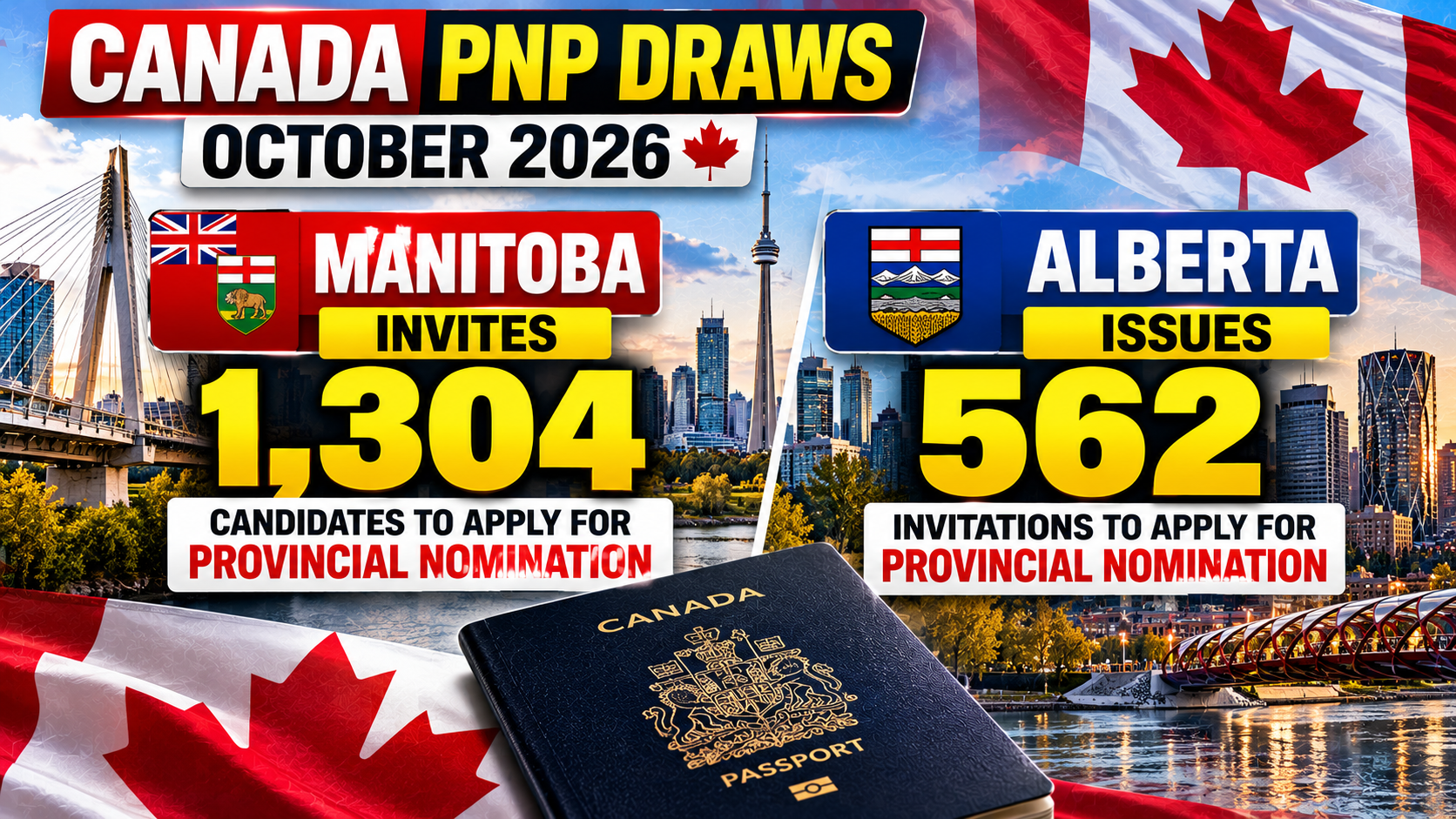
Read About : Canada PNP Draws October 2026: Manitoba Invites 1,304 Candidates as Alberta Issues 562 Invitations


One thought on “Canada Express Entry French-Language Draw October 2026: 5,000 ITAs Issued as CRS Cut-Off Drops to 407”