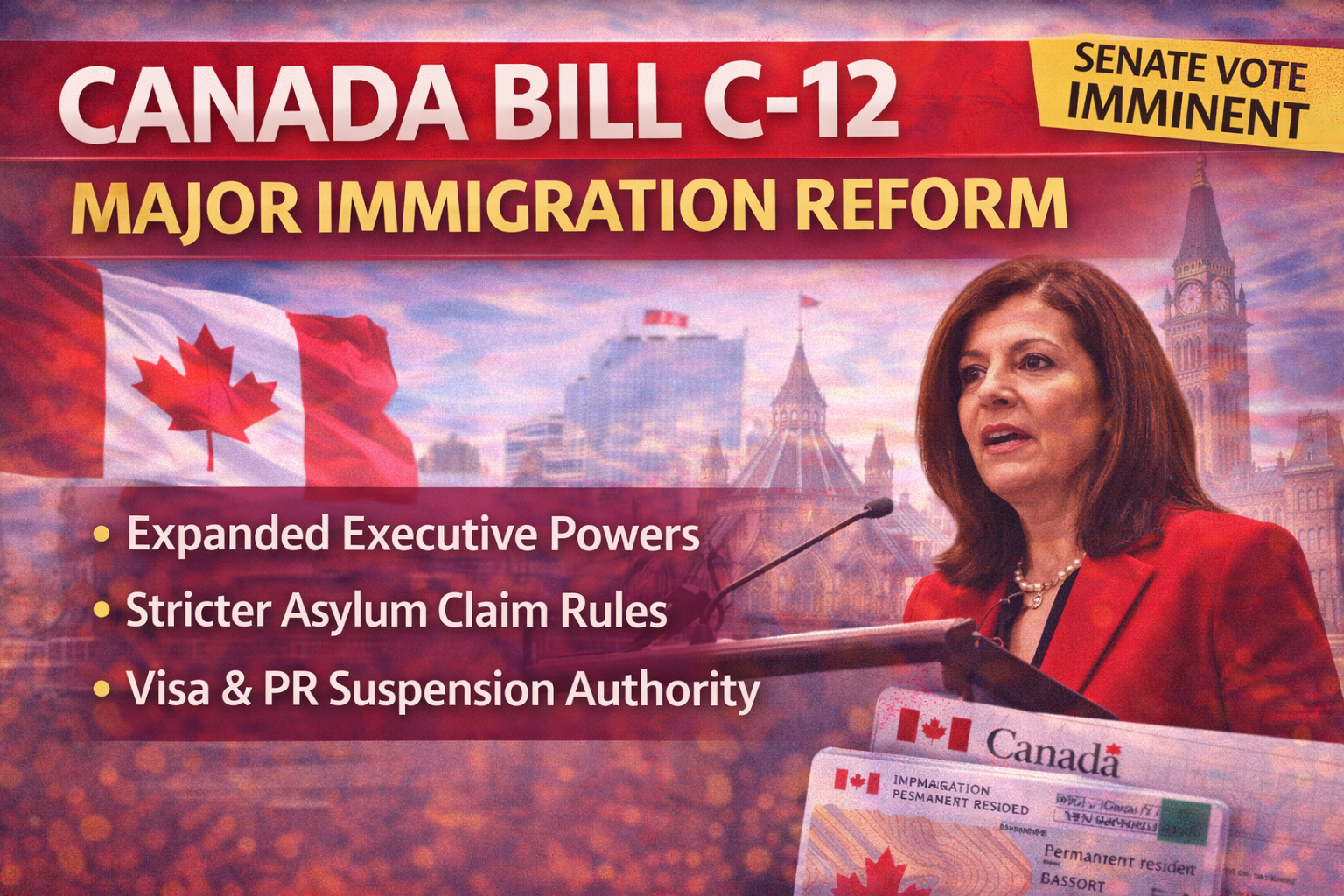
Canada’s proposed immigration reform legislation, Canada Bill C-12, is moving forward in Parliament without new amendments after being reported back to the Senate by the Standing Committee on National Security, Defence and Veterans Affairs.
If passed in its current form, Canada Bill C-12 would introduce sweeping changes to the country’s immigration system, including expanded executive authority over immigration documents and a significant overhaul of Canada’s asylum process.
The legislation is now set for third reading in the Senate. If approved, it would only require royal assent to officially become law.
What Is Canada Bill C-12?
Officially titled “An Act respecting certain measures relating to the security of Canada’s borders and the integrity of the Canadian immigration system and respecting other related security measures,” Canada Bill C-12 proposes major structural reforms to immigration governance.
The bill would grant expanded powers to the Governor in Council — meaning the Governor General acting on the advice of the Prime Minister and Cabinet — allowing executive intervention in immigration matters under specific circumstances deemed to be in the public interest.
Expanded Executive Powers Under Canada Bill C-12
One of the most controversial aspects of Canada Bill C-12 is its provision granting the executive branch authority to:
- Vary, suspend, or cancel work permits, study permits, and permanent resident visas
- Cease accepting new immigration applications
- Suspend or terminate processing of existing applications
- Impose additional conditions on temporary residents
These powers could be exercised when deemed necessary in the “public interest.”
However, earlier amendments introduced by the House of Commons placed guardrails on how these powers can be used.
Guardrails Added to the Bill
In December 2025, Members of Parliament adopted amendments narrowing the definition of “public interest” to cases involving:
- Administrative errors
- Fraud
- Public health
- Public safety
- National security
The amended version of Canada Bill C-12 also requires the Immigration Minister to table a report before Parliament after issuing any executive order under these powers. The report must justify the action and outline its impact.
These accountability measures were designed to address concerns about unchecked executive authority.
Changes to Canada’s Asylum System
Another major feature of Canada Bill C-12 is its proposed overhaul of refugee eligibility rules.
Under the bill:
- Individuals who entered Canada after June 24, 2020, and wait more than one year before claiming asylum would be ineligible.
- Those who cross into Canada from the United States between official ports of entry would also be deemed ineligible for refugee protection.
- Refugee claims would be suspended if the claimant is outside Canada.
Currently, individuals entering between ports of entry may still make asylum claims under certain conditions. The proposed reforms would tighten these rules significantly.
If enacted, some provisions would apply retroactively to claims made after the bill’s introduction.
Committee Review and Senate Progress
Canada Bill C-12 was reviewed by multiple Senate committees.
The Standing Committee on National Security, Defence and Veterans Affairs — the primary reviewing body — reported the bill without amendments.
However, the Standing Committee on Social Affairs, Science and Technology (SOCI) recommended substantial changes, including:
- Removing expanded executive powers
- Eliminating asylum system reforms
- Restricting expanded data-sharing provisions
Since SOCI was not the primary reporting committee, its suggestions remain recommendations rather than formal amendments.
The Senate will now proceed to third reading, where senators may pass, amend, or reject the bill.
Information-Sharing Provisions
Canada Bill C-12 also includes provisions allowing increased information sharing by immigration authorities.
While the government argues this measure strengthens border security and fraud detection, critics have raised concerns about privacy implications and data protection standards.
Political and Public Debate
Immigration Minister Lena Metlege Diab has defended the proposed reforms, particularly the asylum restrictions, stating that individuals who have resided in Canada for over a year should not be claiming refugee protection.
Supporters of Canada Bill C-12 argue the reforms are necessary to:
- Strengthen border integrity
- Reduce system abuse
- Improve application processing efficiency
- Address backlogs
Critics, however, question whether the expanded executive authority could undermine procedural fairness.
What Happens Next?
For Canada Bill C-12 to become law, it must:
- Pass third reading in the Senate.
- Receive royal assent.
If the Senate introduces amendments, the bill will return to the House of Commons for further consideration.
Until then, the legislation remains under active parliamentary review.
Final Takeaway
Canada Bill C-12 represents one of the most significant proposed shifts in Canada’s immigration framework in recent years. By expanding executive authority and tightening asylum eligibility, the legislation aims to strengthen border security and system integrity.
Whether it becomes law without further amendment will depend on the Senate’s final vote and royal assent.
Frequently Asked Questions (FAQ)
1. What is Canada Bill C-12?
Canada Bill C-12 is proposed federal legislation introducing major reforms to immigration governance and asylum eligibility rules.
2. What powers does the bill grant?
The bill grants the Governor in Council authority to suspend, cancel, or modify immigration documents and application processing under defined public interest conditions.
3. Does the bill change asylum rules?
Yes. It would make certain individuals ineligible for refugee protection, including those who delay claims for over one year or cross outside official ports of entry.
4. Has the bill passed?
As of now, it has advanced to third reading in the Senate but has not yet received royal assent.
5. Are there accountability measures included?
Yes. Amendments require the Immigration Minister to report to Parliament after issuing executive orders under the bill’s expanded powers.
Any Queries : Contact Us