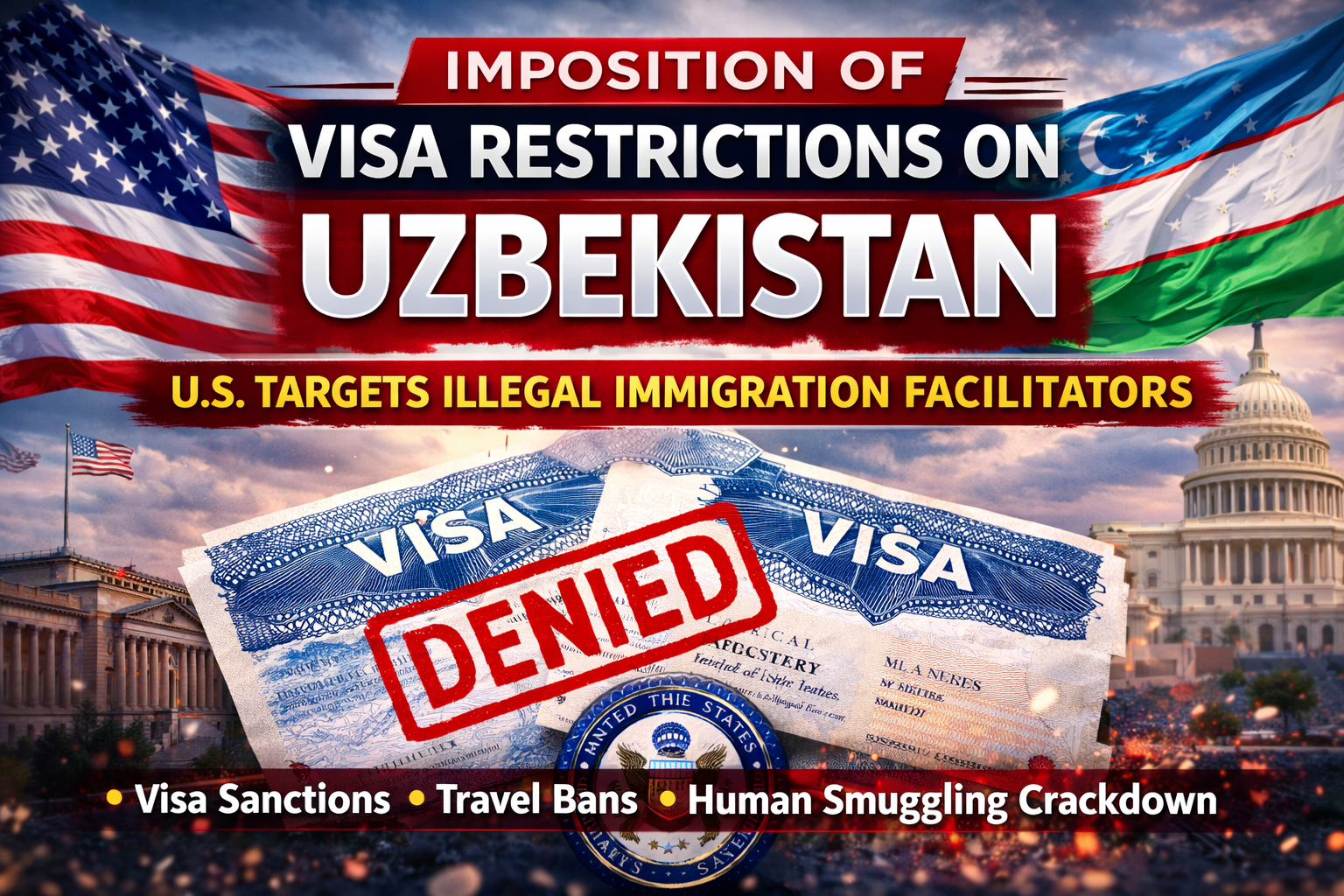
The Imposition of visa restrictions on Uzbekistan has been formally announced by the United States government, targeting individuals accused of facilitating illegal immigration into the country. The decision represents a firm diplomatic and immigration enforcement measure aimed at disrupting transnational smuggling networks and protecting U.S. border integrity.
According to official statements, the action focuses specifically on individuals who have allegedly organized, supported, or profited from unlawful migration to the United States.
This development underscores Washington’s continued efforts to combat irregular migration while holding facilitators accountable.
Why the Imposition of Visa Restrictions on Uzbekistan Was Announced
The Imposition of visa restrictions on Uzbekistan is part of a broader U.S. strategy to deter illegal immigration by targeting those who enable it. Rather than penalizing migrants alone, U.S. authorities are increasingly focusing on third-party actors who exploit immigration systems.
Activities that may trigger such restrictions include:
- Organizing or coordinating smuggling routes
- Providing fraudulent travel documents
- Assisting in visa misuse or misrepresentation
- Profiting from illegal border crossings
- Facilitating fraudulent asylum or immigration claims
By announcing the Imposition of visa restrictions on Uzbekistan, U.S. officials aim to send a clear message that individuals involved in unlawful migration schemes may face serious travel consequences.
Importantly, the measure is directed at specific individuals, not the general population of Uzbekistan.
What the Visa Restrictions Mean in Practice
Visa restrictions typically involve denying entry to the United States. Those affected by the Imposition of visa restrictions on Uzbekistan may face:
- Immediate denial of visa applications
- Revocation of existing visas
- Long-term or permanent travel bans
- Increased scrutiny of future applications
In certain circumstances, close family members of the targeted individuals may also face restrictions.
Such actions are commonly used as diplomatic tools to combat international crime, including human smuggling and migration fraud.
Broader U.S. Immigration Enforcement Strategy
The Imposition of visa restrictions on Uzbekistan aligns with broader U.S. immigration enforcement efforts in 2026. In recent years, U.S. authorities have increasingly targeted facilitators of irregular migration rather than focusing solely on migrants themselves.
This strategy includes:
- Sanctions against human smuggling networks
- Visa bans for foreign officials or private actors linked to illegal migration
- Enhanced intelligence sharing with foreign governments
- Diplomatic engagement to strengthen migration controls
By targeting organizers and financial beneficiaries of illegal immigration, the U.S. government aims to weaken the infrastructure that sustains unlawful migration flows.
Impact on Uzbek Nationals and Travelers
For most Uzbek citizens who travel legally, the Imposition of visa restrictions on Uzbekistan does not change the standard visa application process.
Law-abiding applicants who comply with U.S. immigration requirements should not experience additional restrictions solely due to this policy announcement.
However, individuals connected to illegal migration facilitation may face:
- Visa denials
- Travel bans
- Increased background checks
- Long-term ineligibility for entry
Travelers are encouraged to ensure full compliance with immigration regulations and avoid involvement in activities that could jeopardize future travel eligibility.
Diplomatic and Security Implications
While visa restrictions can carry diplomatic implications, they are often used as targeted enforcement tools rather than broad sanctions. Governments frequently cooperate in combating human smuggling and transnational crime.
The Imposition of visa restrictions on Uzbekistan may serve as a signal of the United States’ intention to:
- Strengthen border enforcement
- Promote international accountability
- Deter future facilitation of illegal immigration
- Encourage cooperation in combating migration fraud
As global migration pressures continue, policy responses such as targeted visa restrictions are expected to remain part of international enforcement strategies.
Frequently Asked Questions (FAQ)
1. What is the Imposition of visa restrictions on Uzbekistan?
It refers to the U.S. government’s decision to deny visas to specific individuals from Uzbekistan accused of facilitating illegal immigration into the United States.
2. Does this affect all Uzbek citizens?
No. The restrictions apply only to individuals allegedly involved in facilitating unlawful migration. Law-abiding travelers are not broadly targeted.
3. What activities could lead to visa restrictions?
Activities may include organizing smuggling networks, providing fraudulent documentation, misrepresenting visa applications, or profiting from illegal migration.
4. Can existing visas be revoked?
Yes. Individuals subject to the restrictions may have existing visas cancelled or revoked.
5. Is this part of a larger immigration enforcement policy?
Yes. The action aligns with broader U.S. efforts to deter illegal immigration and dismantle transnational smuggling networks.
Any Queries : Contact Us