

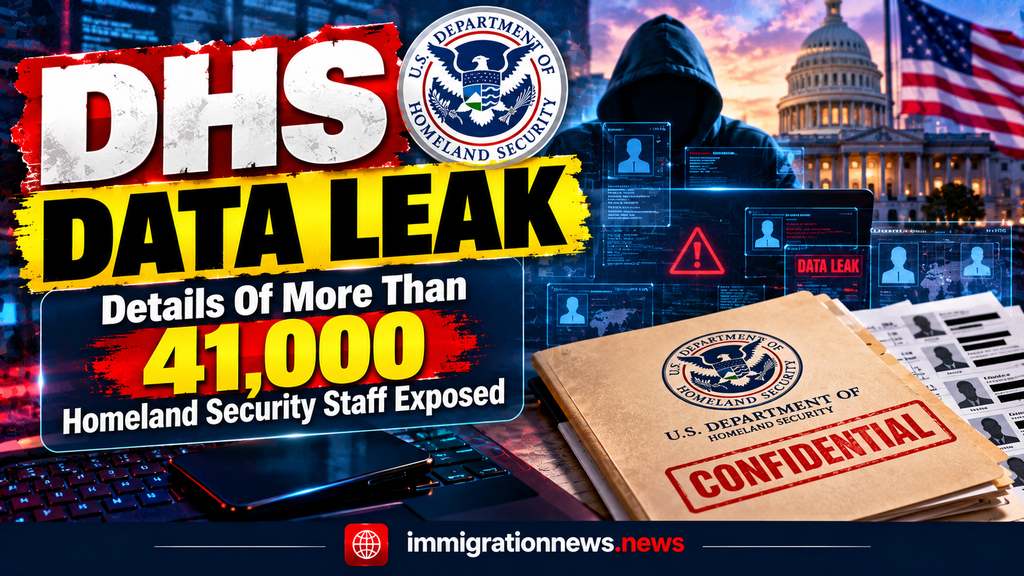
A searchable database containing details of more than 41,000 current and former employees of the US Department of Homeland Security has been published online, in what appears to be an unprecedented breach of staff information. The DHS data leak went public late on Wednesday, October 28, 2026, and includes thousands of people who work in immigration enforcement.
A group calling itself the Department of Peace says it obtained the information, and the nonprofit Distributed Denial of Secrets (DDoSecrets) published it. DHS says it is aware of a potential breach and is working to address it, while the group says it wants to replace “anonymity with accountability.”
This article does not link to or reproduce the data, and it names no individual officers. The focus is on what has been reported and why it matters.
Quick Highlights : DHS Data Leak
- The DHS data leak covers more than 41,000 personnel, though some outlets report a figure just above 40,000
- The data includes names, work addresses, phone numbers, and descriptions of the work each person does
- More than 21,000 of the people listed work for Customs and Border Protection (CBP), and nearly 6,600 for Immigration and Customs Enforcement (ICE)
- Records also cover Homeland Security Investigations, the Federal Protective Service, and the Cybersecurity and Infrastructure Security Agency
- The group says it obtained the data through the Okta single sign-on service, a claim Okta says it has no evidence to support
- DHS says it takes all threats against its employees seriously
- It is the third government agency targeted by a leak or hack in recent weeks
What Was Leaked
According to reporting, the DHS data leak includes names, work addresses, and phone numbers of DHS staff, together with descriptions of the work they do for each agency. The material was put into a searchable database, which made it easy to look up individuals.
The leak also reportedly includes dozens of previously unknown operation names, the officers who led and worked on them, and some of the technology used, including tools from Cellebrite and Palantir. That suggests the data covers more than a simple staff directory.
Who Published It and Why
The Department of Peace says it accessed the information, while journalist and cybersecurity researcher maia crimew and DDoSecrets put it online. The groups said the aim was not to publish a directory of every DHS employee. Emma Best, a co-founder of DDoSecrets, said the project was meant to replace “anonymity with accountability.”
Best said the DHS data leak identifies officials who oversee covert and undercover operations, the government’s hunt for leakers, and the failed BlueLeaks investigation, as well as key personnel in deportation and rendition programs. BlueLeaks refers to a 2020 leak of US police data that DDoSecrets also hosted.
The Department of Peace pointed to a July 17 statement by Markwayne Mullin, who became Homeland Security Secretary in March, that he was “turning up the heat.” The group’s spokesperson wrote that this is what happens to ICE when that is done.
The Okta Claim
The Department of Peace says it reached the DHS profiles through Okta, a widely used single sign-on service that organisations use to control who can log in to internal platforms. The claim has not been confirmed.
An Okta spokeswoman said the company is aware of the claims but that “Okta is secure,” and it has no evidence its data or systems were compromised. No court filing or technical disclosure from DHS has explained how the data left the department, so how the DHS data leak happened remains unclear.
How DHS Responded
A DHS spokesperson said the department is “aware of a potential breach and is actively working to address the situation swiftly and effectively.” The spokesperson added that DHS takes all security threats against its employees and officers seriously, will work to ensure they are properly protected, and will update the public when more information is available.
DHS has reacted strongly to earlier disclosures of staff information. In January 2026, about 4,500 employees’ details were published in a smaller leak, and the department condemned it. The latest incident is much larger.
What the Numbers Show
The data shows a heavy weighting toward border enforcement. More than 21,000 of the listed personnel work for CBP, and nearly 6,600 work for ICE. Others are with Homeland Security Investigations, the Federal Protective Service, and the Cybersecurity and Infrastructure Security Agency.
| Component | Reported Records |
|---|---|
| Total dataset | More than 41,000 (some outlets say more than 40,000) |
| CBP | More than 21,000 |
| ICE | Nearly 6,600 |
The exact total is still disputed. Because reports differ, the counts may be revised as more analysis is done.
Safety and Legal Concerns
Publishing officers’ work contact details raises safety questions. Law enforcement groups and DHS have warned that exposure can lead to harassment or threats, including for families, and that undercover work can be compromised when identities become public.
Supporters of the disclosure argue that public officials who carry out controversial policies should be identifiable. The data in this case reportedly consists of work contact details, not home addresses, but the line between the two can blur. Courts and prosecutors may eventually examine whether the hack and publication broke the law.
The Accountability Argument
The leak comes amid a dispute over agents’ identification. The BBC reported that ICE agents often carry out enforcement operations with their faces covered by masks and sunglasses, and that they rarely identify themselves, despite requirements to do so. US politicians have publicly called on DHS to enforce those rules.
Critics of the hack say that breaking into government systems is the wrong way to seek transparency, and that identification rules should be enforced through oversight, courts, and legislation. Whatever the view, the DHS data leak has moved the debate over anonymity in immigration enforcement into the open.
The Wider Enforcement Backdrop
Public backlash against US immigration enforcement has been building as the Trump administration has pushed a large increase in arrests and deportations. According to the Migration Policy Institute data cited by the BBC, the US has carried out nearly 1 million deportations since Trump returned to office, and more than 70% were of people with no criminal record.
The BBC also reported that immigration operations this year have repeatedly turned violent, with ICE agents shooting at more than two dozen people and killing at least nine, including Alex Pretti and Renée Good in Minnesota. Those cases drew national attention and are part of the tension surrounding the leak.
A Pattern of Government Hacks
The DHS data leak is the third time in recent weeks that a government agency has been hit by a leak or hack. Last month, the FBI was hacked by a group called ShinyHunters, which took personal information about thousands of agents. In recent days, the Federal Election Commission was taken offline because of a suspected hacking attempt.
Together, the incidents raise questions about how well government systems protect staff data, and about whether third-party identity services such as single sign-on are a weak point.
What It Means for Immigrants and Employers
The leak does not change anyone’s immigration case, rules, or deadlines. People with pending applications or hearings should keep following the instructions in their official notices.
There are a few practical cautions. Do not try to contact, identify, or confront individual officers using leaked information, since that could create legal trouble and put others at risk. Be wary of scammers who use the news to offer “inside access” or to claim they can influence a case, a tactic USCIS has warned about. Anyone worried about enforcement should speak to a qualified immigration attorney or accredited representative.
What to Watch Next
Several questions remain open. DHS has yet to explain how the data was taken, and Okta disputes the claim that its service was the entry point. Investigators may seek to identify the Department of Peace, and platforms may face pressure to remove the database.
Further reporting may also settle the number of people affected and clarify how many are current staff rather than former employees or contractors.
Key Takeaways On DHS Data Leak
The DHS data leak put the names, work contact details, and job descriptions of more than 41,000 Homeland Security personnel online, including about 21,000 at CBP and nearly 6,600 at ICE. A group called the Department of Peace claims to have obtained the data via Okta, which says it has no evidence of a compromise, and DHS says it is working to protect its employees. The leak raises serious questions about safety, security, and transparency in immigration enforcement, though it does not alter any individual’s immigration case.
FAQs : DHS Data Leak
What was exposed in the DHS data leak?
Names, work addresses, phone numbers, and descriptions of the work of more than 41,000 DHS personnel, including staff at ICE, CBP, Homeland Security Investigations, and other agencies.
Who published the data?
A group called the Department of Peace says it accessed the information, and the nonprofit Distributed Denial of Secrets published it, with journalist maia crimew.
Was Okta hacked?
The group claims it used Okta’s single sign-on service, but Okta says it has no evidence its data or systems were compromised, and the claim is unconfirmed.
What has DHS said?
DHS says it is aware of a potential breach, is working to address it, takes threats against employees seriously, and will provide updates.
Does this affect immigration cases?
No. The leak does not change any application, rule, or deadline, and people should keep following official instructions.
Source : BBC
Read About : USCIS Filing Deadline Rules Change October 23: What Green Card and H-1B Applicants Must Know



One thought on “DHS Data Leak Exposes Details Of More Than 41,000 US Homeland Security Staff”