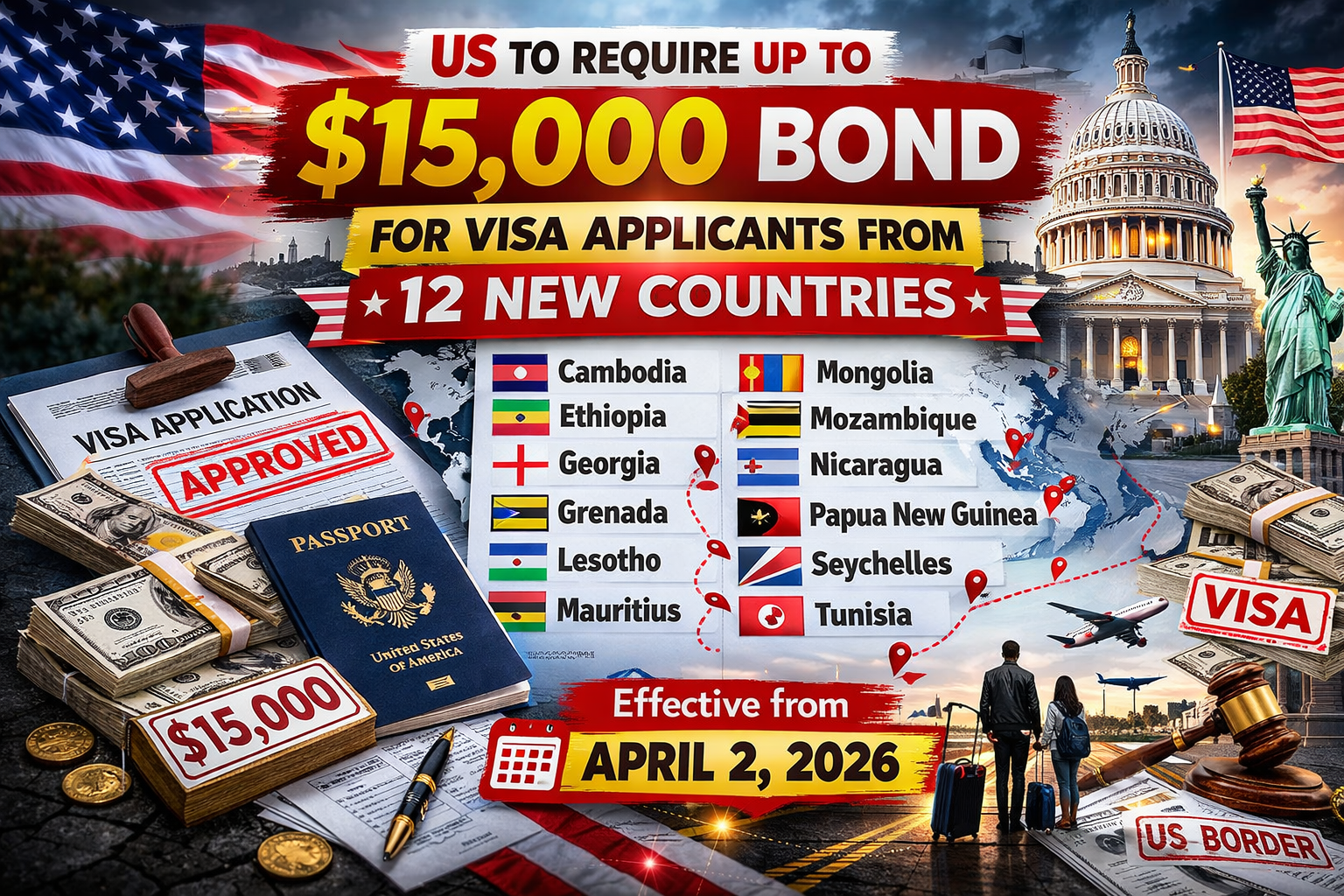
Under the new rule, visa applicants from 12 additional countries may now be required to pay a bond of up to $15,000 to enter the US.
The policy, introduced by the US Department of State, is part of a broader effort to reduce visa overstays and tighten immigration controls.
The US Visa Bond Rule 2026 will officially take effect from April 2, 2026.
US Visa Bond Rule 2026: What Is the Visa Bond System
The visa bond system requires certain applicants to deposit money before entering the United States.
| Feature | Details |
|---|---|
| Maximum Bond | $15,000 |
| Minimum Bond | $5,000 |
| Visa Type | B-1 (Business), B-2 (Tourist) |
| Refund Condition | If visa rules are followed |
The bond is refundable if the applicant:
- Leaves the US within the visa period
- Does not violate immigration rules
- Or if the visa is denied
US Visa Bond Rule 2026: New Countries Added to the List
The US Visa Bond Rule 2026 now applies to 12 newly added countries.
| Country List |
|---|
| Cambodia |
| Ethiopia |
| Georgia |
| Grenada |
| Lesotho |
| Mauritius |
| Mongolia |
| Mozambique |
| Nicaragua |
| Papua New Guinea |
| Seychelles |
| Tunisia |
This expansion brings the total number of affected countries to 50.
US Visa Bond Rule 2026: Bond Amount Structure
The bond amount is decided during the visa interview.
| Bond Tier | Amount |
|---|---|
| Tier 1 | $5,000 |
| Tier 2 | $10,000 |
| Tier 3 | $15,000 |
The final amount depends on immigration risk factors assessed by US officials.
US Visa Bond Rule 2026: Why the Policy Was Introduced
According to the US government, the US Visa Bond Rule 2026 is aimed at reducing visa overstays.
Officials claim:
- Around 97% of bond applicants returned on time
- The program has already issued 1,000 visas successfully
| Objective | Purpose |
|---|---|
| Reduce overstays | Ensure compliance |
| Increase screening | Identify high-risk applicants |
| Save enforcement costs | Reduce illegal stays |
US Visa Bond Rule 2026: Criticism and Concerns
The policy has sparked criticism from various groups.
Key Concerns:
- High bond amounts may affect low-income applicants
- Majority of affected countries are non-Western nations
- Could reduce tourism and travel access
Critics argue the US Visa Bond Rule may create barriers for genuine travellers.
US Visa Bond Rule 2026: Does Paying the Bond Guarantee a Visa?
No, paying the bond does not guarantee visa approval.
| Scenario | Outcome |
|---|---|
| Visa approved | Bond held until exit |
| Visa denied | Full refund |
| Rules followed | Refund after departure |
| Overstay | Bond forfeited |
This makes the bond a compliance tool, not an approval guarantee.
US Visa Bond Rule 2026: Broader Immigration Policy Changes
The visa bond program is part of a wider immigration crackdown.
Recent measures include:
- Suspension of visa processing from multiple countries
- Increased deportations
- Stricter asylum policies
- Reduced refugee admissions
The US Visa Bond Rule 2026 reflects a broader shift toward stricter immigration control.
US Visa Bond Rule 2026: Impact on Travelers
The new rules could affect:
- Tourists planning short visits
- Business travelers applying for B-1 visas
- First-time visa applicants
Applicants may now need to show financial readiness in addition to eligibility.
Key Takeaways from US Visa Bond Rule 2026
The US Visa Bond Rule 2026 introduces significant changes to US visa policies.
- Up to $15,000 bond required
- Applies to 50 countries total
- Targets visa overstays
- Refundable if rules are followed
- Begins April 2, 2026
Conclusion
The US Visa Bond Rule 2026 marks a major shift in how the US manages temporary visitors.
While the policy may help reduce overstays, it also raises concerns about fairness and accessibility.
Travelers from affected countries should carefully prepare for additional financial requirements before applying.
FAQs
What is the US Visa Bond Rule 2026?
It is a policy requiring certain visa applicants to deposit up to $15,000 before entering the US.
When will the rule start?
The rule will take effect on April 2, 2026.
Is the bond refundable?
Yes, if the applicant follows visa conditions or if the visa is denied.
Does paying the bond guarantee a visa?
No, visa approval is still subject to eligibility.
Which visas are affected?
B-1 (business) and B-2 (tourist) visas.
Any Queries : Contact Us