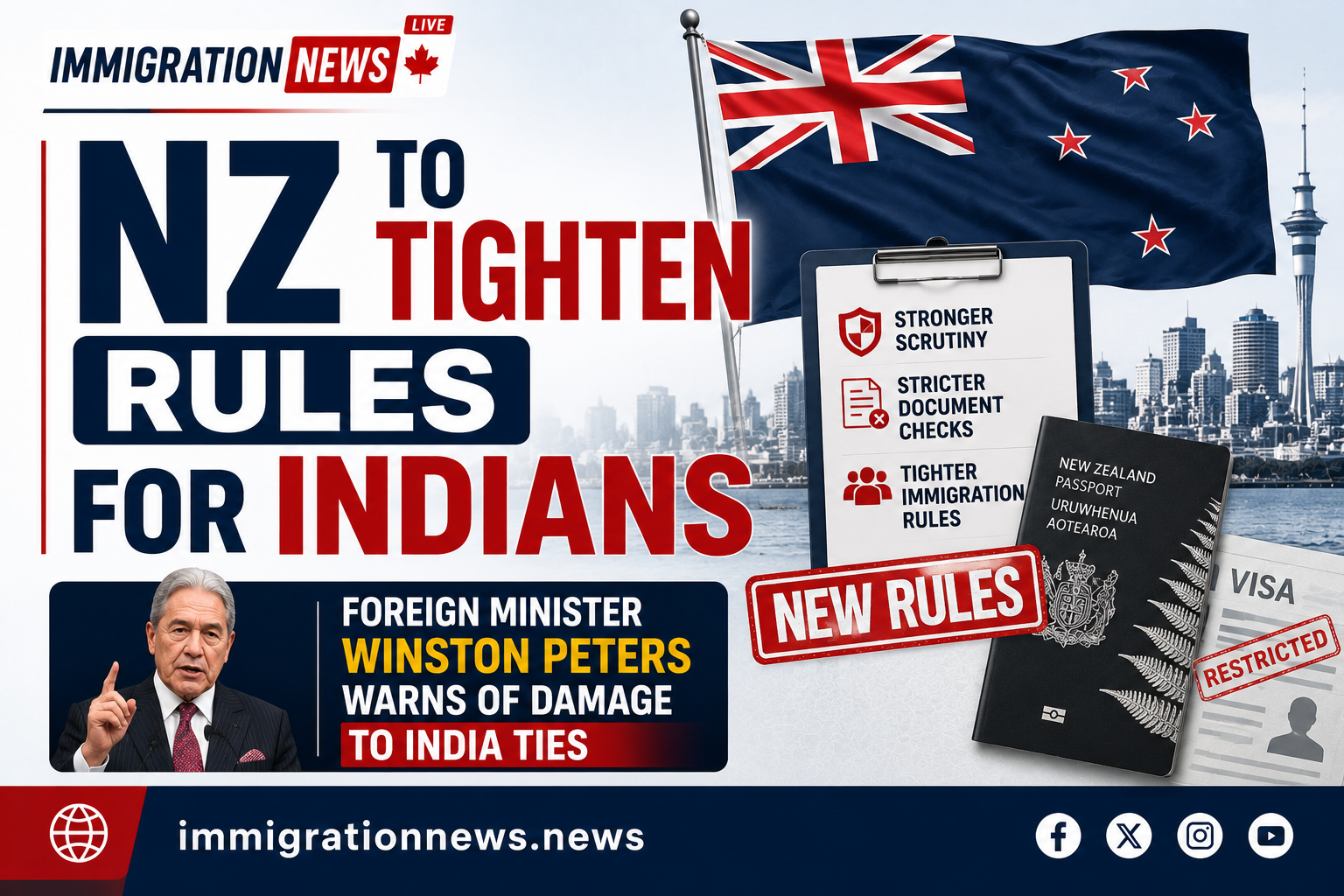
New Zealand is preparing to significantly tighten immigration rules for Indians, a move Foreign Minister Winston Peters says could seriously damage relations between the two nations. The controversy comes at an especially sensitive moment—just as a comprehensive Free Trade Agreement with India awaits final approval in New Zealand’s Parliament, and days before Indian Prime Minister Narendra Modi is expected to visit the country.
Work to implement these changes to New Zealand immigration rules for Indians is already underway, according to a report by the Post that cited an unnamed source. Immigration Minister Erica Stanford confirmed that a draft of the proposed changes has been circulated to ministers, though she stressed no final decisions have yet been made.
Quick Highlights : New Zealand Immigration Rules For Indians
- New Zealand is preparing tighter immigration rules for Indians, according to Foreign Minister Winston Peters
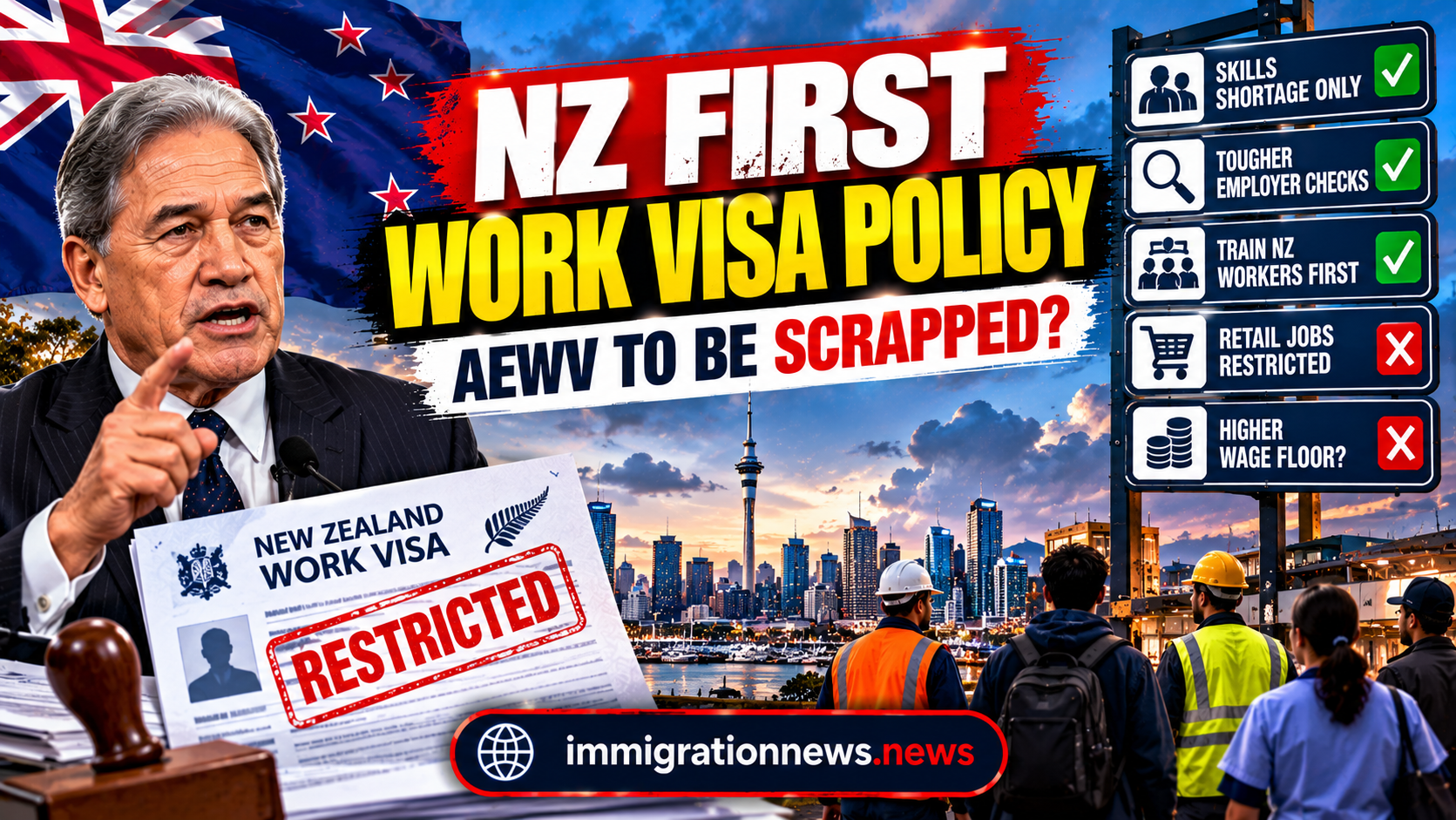
- The changes would impose a labour market and economic needs test on Indian citizens not applied to other FTA partner nationals
- Indian citizens would be barred from applying for a temporary employment entry visa from within New Zealand—an option available to other trade partners
- Work experience gained on temporary visas would not count toward residency for Indians, unlike citizens of China, Thailand, and South Korea
- The India-New Zealand FTA, signed in April 2026, passed its first parliamentary reading 93 votes to 29 on June 25
- Trade Minister Todd McClay has dismissed Peters’s claims as “wrong” and accused his party of spreading misinformation
- PM Modi is expected to visit New Zealand as part of a trip covering Indonesia, Australia, and New Zealand from July 6
What Winston Peters Is Actually Alleging
Peters, leader of coalition partner New Zealand First, has been the most vocal critic of the proposed New Zealand immigration rules for Indians. Speaking in Parliament, he stated plainly: “We’ve recently received the evidence in the form of a briefing from officials and the consequent decisions made by the Minister of Immigration that immigration policy settings are being made more restrictive in a way which targets India and India alone.”
According to Peters, officials warned ministers that these more restrictive settings could damage bilateral and trade relations with India, harm New Zealand’s reputation as a place to do business, potentially be open to legal challenge, and even invite retaliatory action from India.
“This is our concern as Foreign Minister, because they are potentially damaging to our reputation as a country that is transparent in dealings and one whose word can be relied upon,” Peters told Parliament, demanding the government explain why these restrictions would apply specifically to India and not to New Zealand’s other FTA partners.
The Specific Changes Peters Says Are Being Considered
Peters has detailed several concrete measures he alleges are part of the tightened New Zealand immigration rules for Indians, each of which he says creates unequal treatment compared to citizens of other free trade agreement partners such as China, Thailand, and South Korea.
A labour market and economic needs test: Indian citizens would reportedly face this additional test, which would not apply to nationals of comparable FTA partner countries.
Restricted temporary employment entry visa applications: Indian citizens would be prevented from applying for a temporary employment entry visa from within New Zealand—an option that remains available to citizens of other relevant trade partners.
Work experience not counting toward residency: Under the alleged changes, work experience gained by Indian citizens on a temporary employment entry visa would not count toward meeting residency requirements, unlike the recognition extended to citizens of other FTA partner nations.
Different treatment for partners and children: Peters has also claimed that Indian citizens would face different, less favourable provisions regarding visas for partners and children compared to other FTA nationals.
“The Indian Government has the right to know about National’s intention to treat Indian citizens in a discriminatory manner relative to citizens of other FTA partners such as China, Thailand, or South Korea,” Peters said.
Why the Timing Makes This So Politically Sensitive
The controversy over New Zealand immigration rules for Indians is unfolding at a particularly delicate moment for the bilateral relationship. The comprehensive India-New Zealand Free Trade Agreement was signed in April 2026 and is currently awaiting ratification by the New Zealand Parliament. The FTA bill passed its first reading on June 25 with 93 votes in favour to 29 against, with support from the governing National Party, the opposition Labour Party, and ACT New Zealand. Notably, New Zealand First—Peters’s own party, despite sitting within the governing coalition—voted against the bill, an unusual position for a coalition partner.
Adding further weight to the timing, Indian Prime Minister Narendra Modi is expected to travel to New Zealand this month as part of a broader regional visit that reportedly also includes stops in Indonesia and Australia, beginning around July 6. Any perception that New Zealand is quietly restricting immigration access for Indians specifically, just ahead of a high-profile prime ministerial visit and while a major trade deal awaits ratification, carries significant diplomatic risk.
Peters has publicly accused the government of trying to keep these changes quiet specifically to avoid provoking an Indian reaction, telling Parliament that officials had discussed “not announcing these changes for fear of the Indian reaction,” which he characterised as “bad faith.”
The Government’s Response To New Zealand Immigration Rules For Indians
Trade Minister Todd McClay has firmly rejected Peters’s characterization of the New Zealand immigration rules for Indians controversy, calling the allegations “wrong” and accusing New Zealand First of spreading misinformation for political gain.
“Whilst they are free to differentiate themselves in respect of the FTA, they should stop promoting misinformation for the sake of gaining votes,” McClay said. He described the FTA as reflecting the strength of the relationship with India and called it the beginning of a “new and exciting chapter” in bilateral ties.
Immigration Minister Erica Stanford, for her part, has confirmed only that a draft of proposed changes has been circulated among ministers, while maintaining that no final decisions have been made on the substance of any new immigration settings.
Peters’s Underlying Political Position
It is worth noting that Peters has consistently opposed embedding immigration concessions within trade agreements, arguing this approach is not beneficial for New Zealand more broadly. He has stated that for six months, New Zealand First has warned that the India-New Zealand FTA would, under current policy settings, effectively mean “open slather immigration from India to New Zealand.”
His current objection, however, is more specific and pointed: not that immigration settings are being tightened, but that they are allegedly being tightened for Indian citizens exclusively, while comparable provisions for other FTA partner nationals remain unchanged. Peters has argued that if additional restrictions are genuinely necessary, “the only consistent and principled step would be to apply these restrictions to citizens of all FTA partners,” rather than singling out India.
What This Means Going Forward
The dispute over New Zealand immigration rules for Indians has moved beyond a simple policy disagreement into a broader question of transparency, diplomatic trust, and whether New Zealand can implement a major trade agreement without appearing to treat one partner nation differently from others. With the FTA bill still awaiting further parliamentary stages, PM Modi’s visit approaching, and Peters continuing to press the government publicly, further clarification from Wellington is likely in the coming weeks.
For Indian nationals currently navigating New Zealand’s immigration system, or considering future visa applications under the FTA framework, the practical details of any final settings remain unconfirmed. Immigration Minister Stanford’s statement that no final decisions have been made suggests there is still room for the proposed measures to be revised before formal implementation.
Key Takeaways Of New Zealand Immigration Rules For Indians
The controversy over New Zealand immigration rules for Indians centres on allegations from Foreign Minister Winston Peters that the government is quietly implementing India-specific restrictions—including a unique labour market test, barred in-country visa applications, and residency requirements that don’t recognize Indian applicants’ work experience the way they do for other FTA partners. The government has pushed back, calling the claims misinformation, while confirming only that draft changes exist without final decisions. With the FTA still before Parliament and PM Modi’s visit imminent, the issue carries real diplomatic stakes for both nations.
FAQs : New Zealand Immigration Rules For Indians
What are the proposed New Zealand immigration rules for Indians?
According to Foreign Minister Winston Peters, proposed changes include a labour market and economic needs test applied only to Indian citizens, a ban on applying for temporary employment entry visas from within New Zealand, exclusion of work experience from counting toward residency, and different treatment for partners and children compared to other FTA partner nationals.
Has the New Zealand government confirmed these immigration changes?
Immigration Minister Erica Stanford has confirmed only that a draft of proposed changes has been circulated to ministers. She has stated that no final decisions have been made regarding New Zealand immigration rules for Indians.
Why is this immigration issue linked to the India-New Zealand FTA?
The FTA, signed in April 2026 and currently awaiting parliamentary ratification, includes mobility provisions for Indian citizens. Peters alleges the government is quietly restricting these provisions specifically for India while maintaining more favourable terms for citizens of other FTA partners like China, Thailand, and South Korea.
How has the New Zealand government responded to Peters’s allegations?
Trade Minister Todd McClay has called Peters’s claims “wrong” and accused New Zealand First of spreading misinformation for political gain, describing the FTA as the start of a positive new chapter in India-New Zealand relations.
Could tighter New Zealand immigration rules for Indians affect the trade relationship?
Yes. Peters has warned that officials cautioned the changes could damage bilateral and trade relations with India, harm New Zealand’s reputation as a transparent business partner, invite legal challenges, and potentially provoke retaliatory action from India.
Source : Hindustan Times
Read About : New Zealand OET At-Home Test Ban Takes Effect July 13 For Immigration Applicants